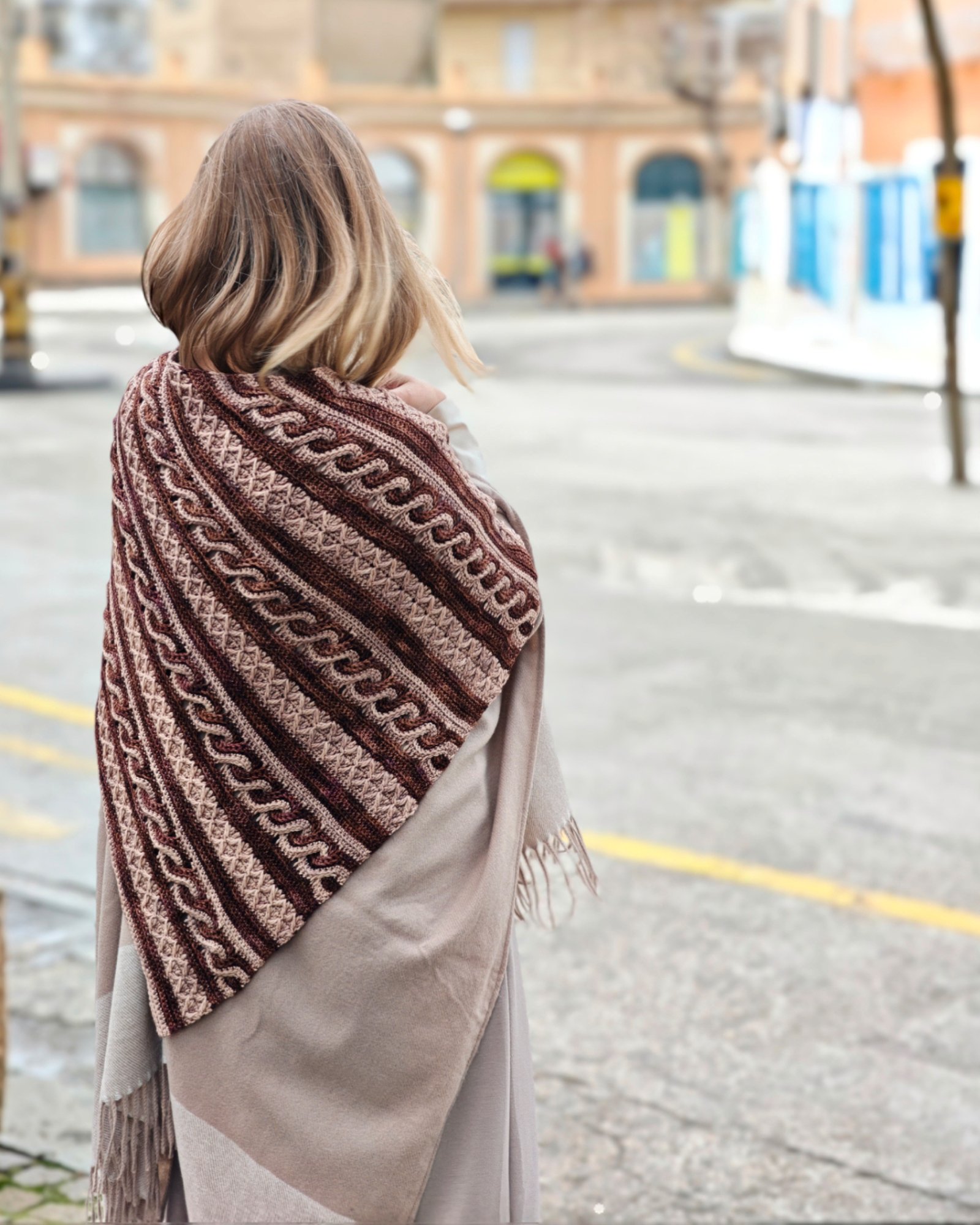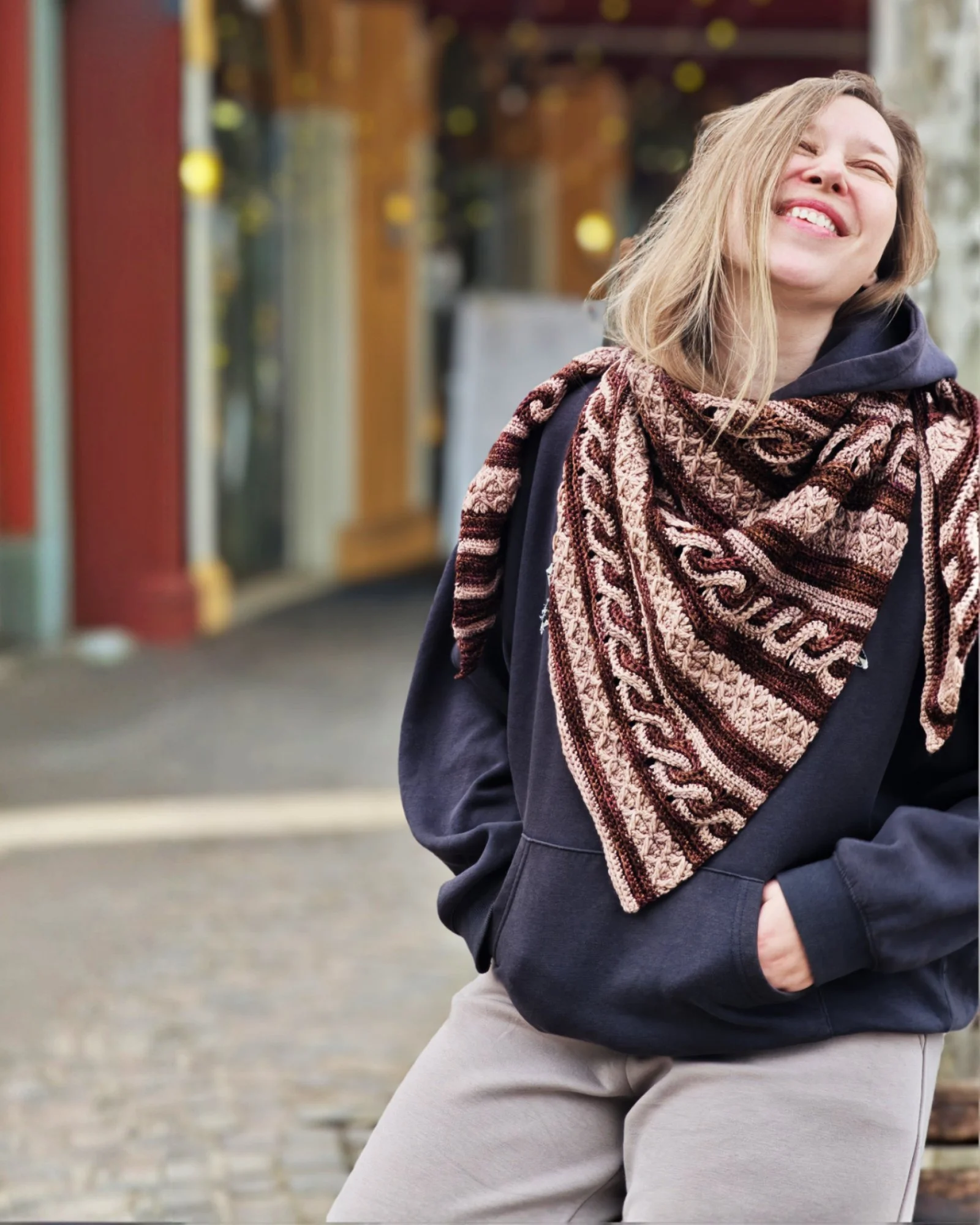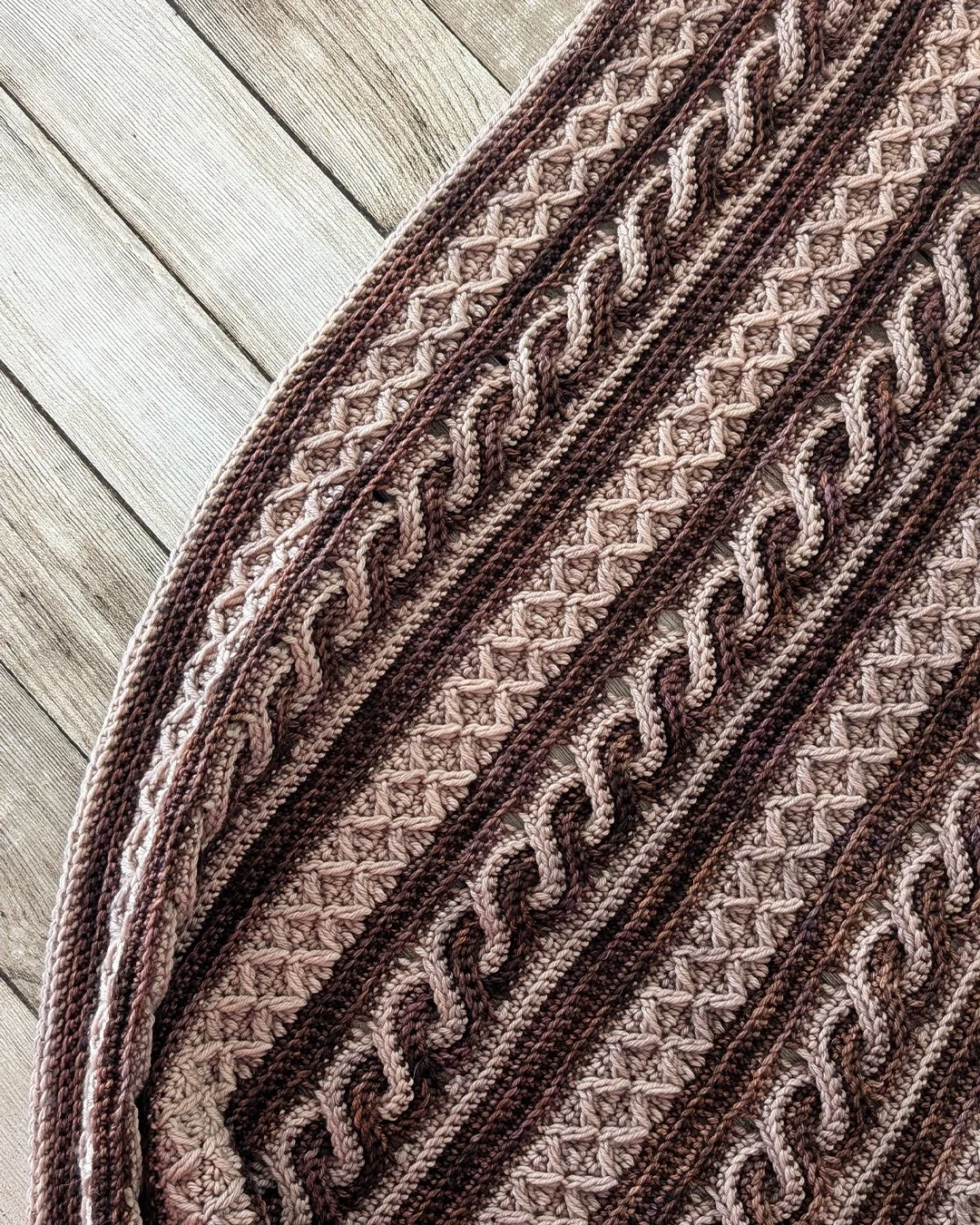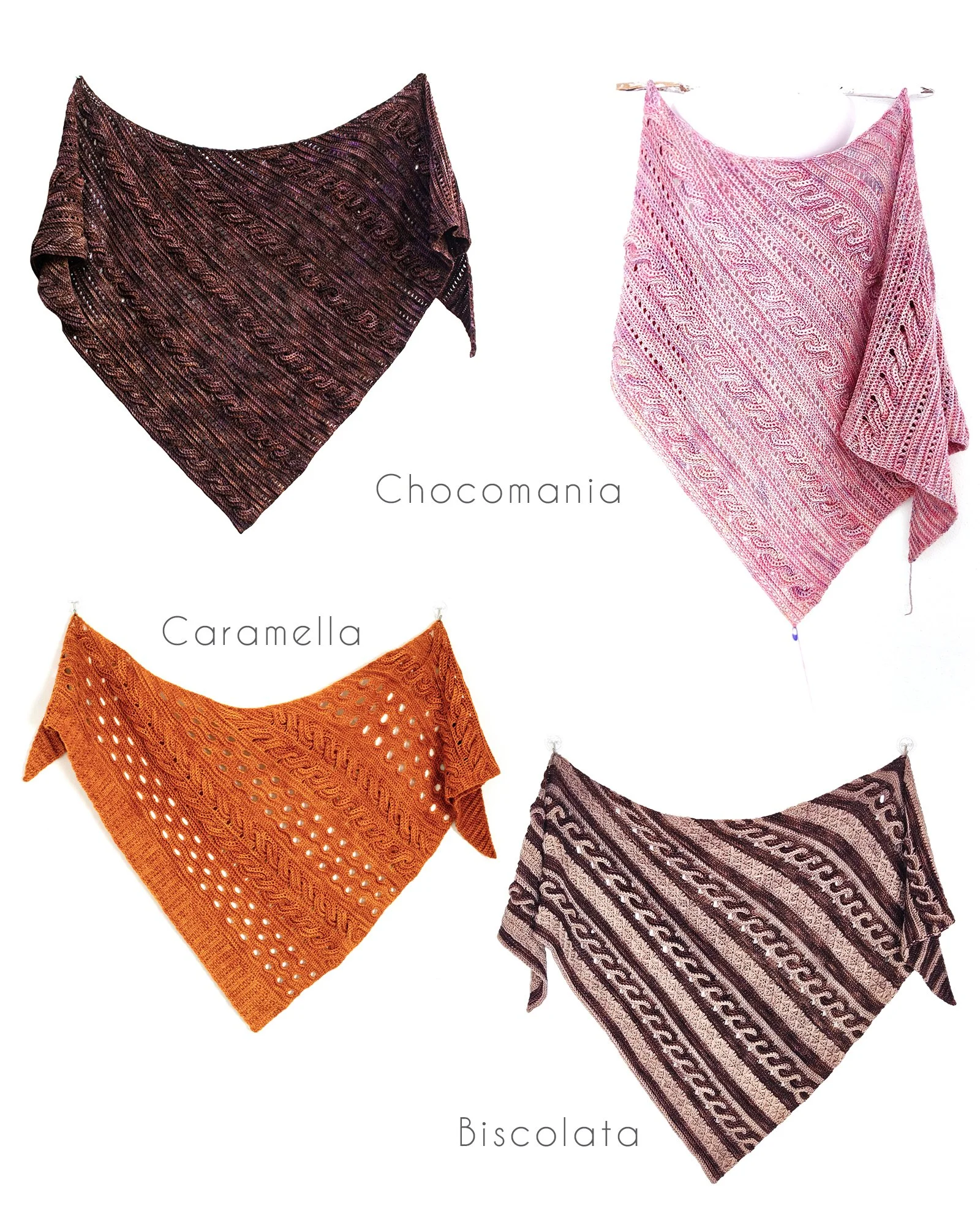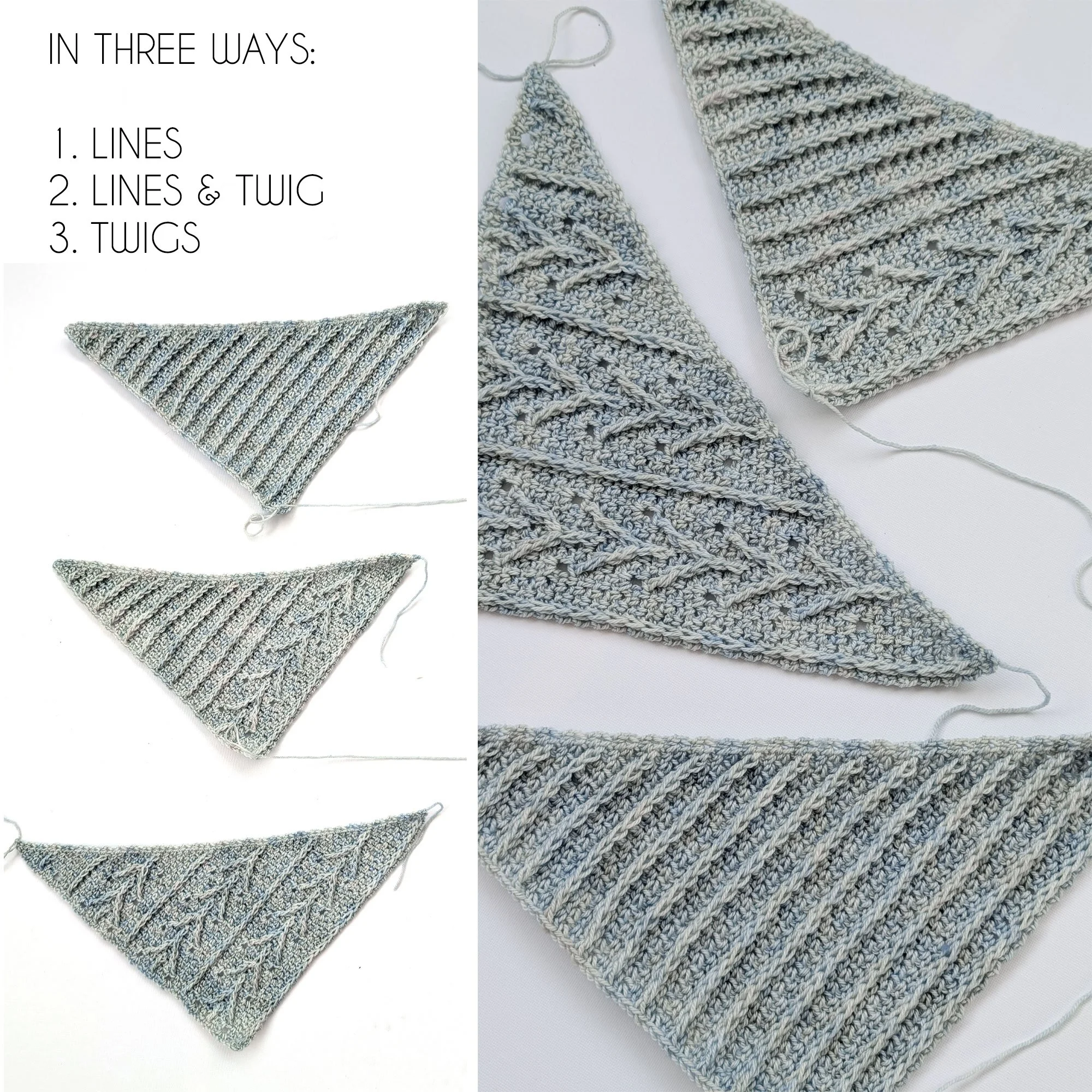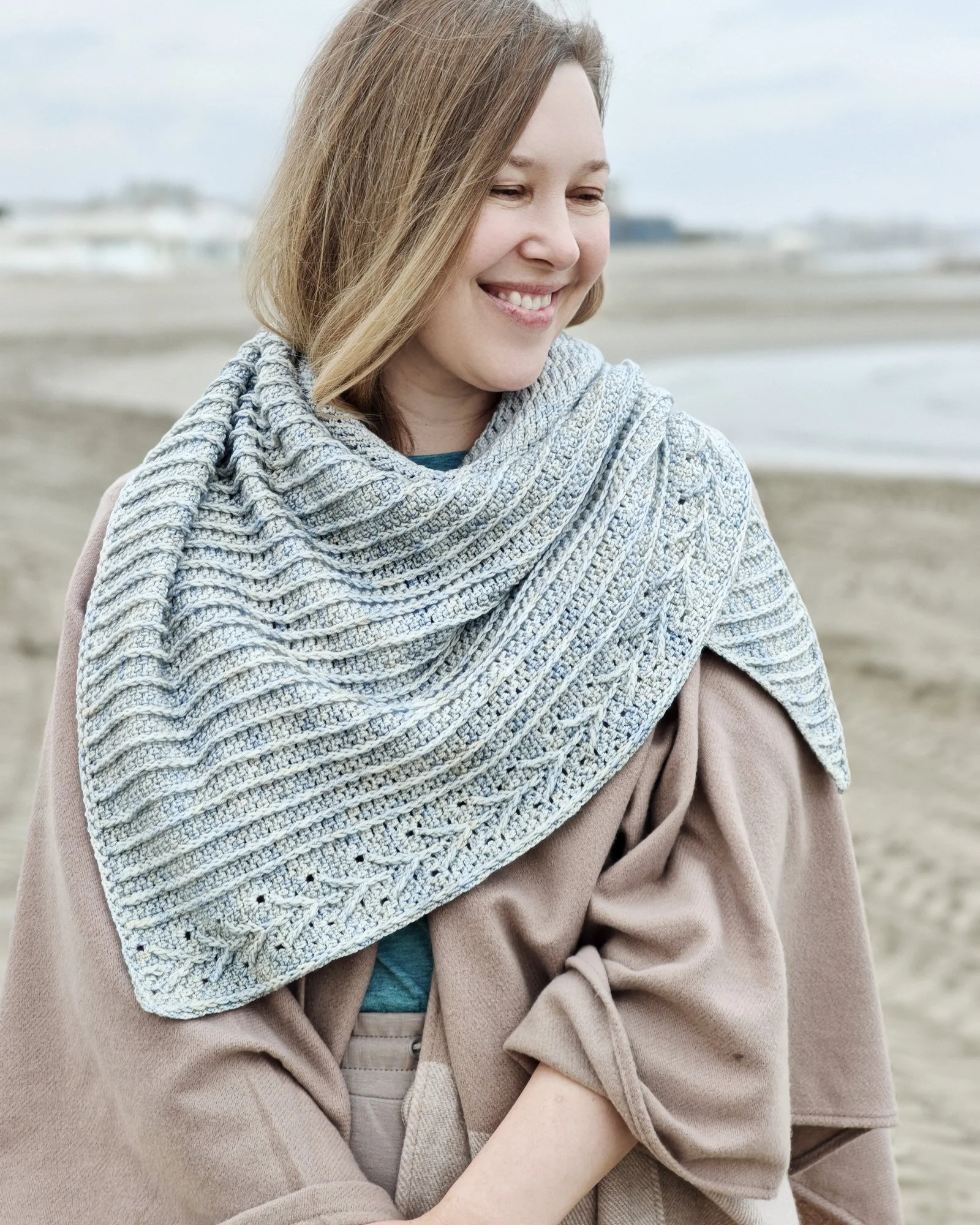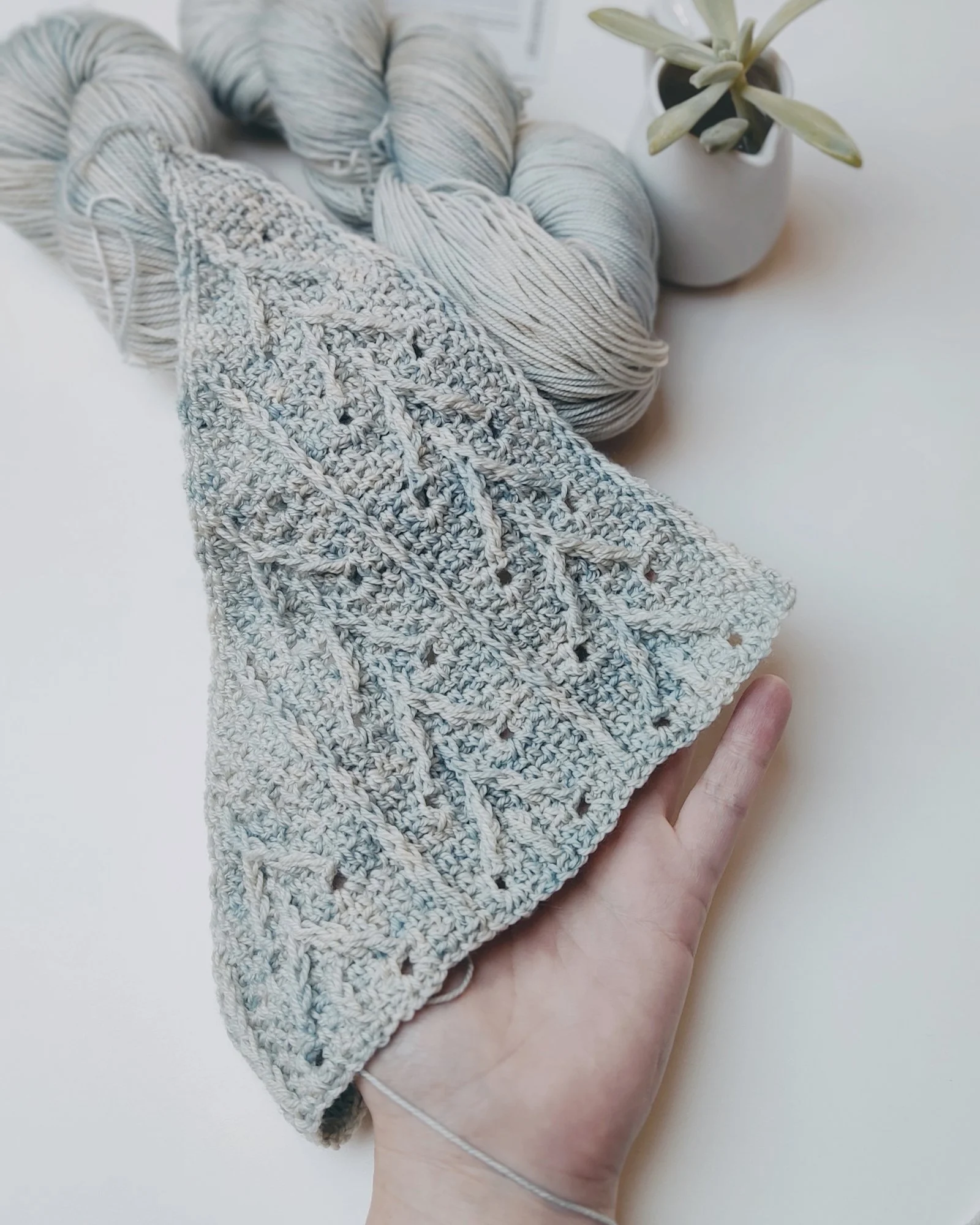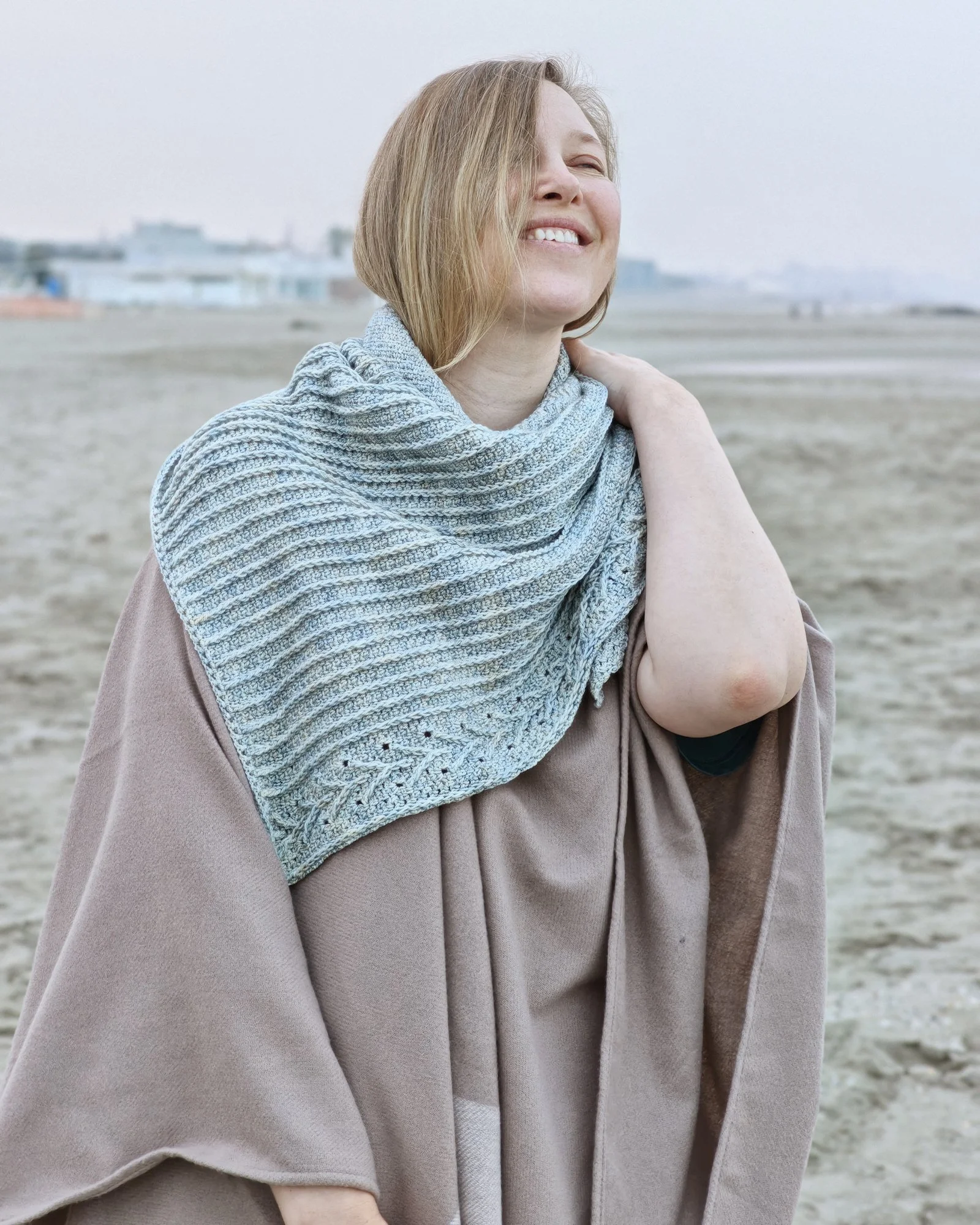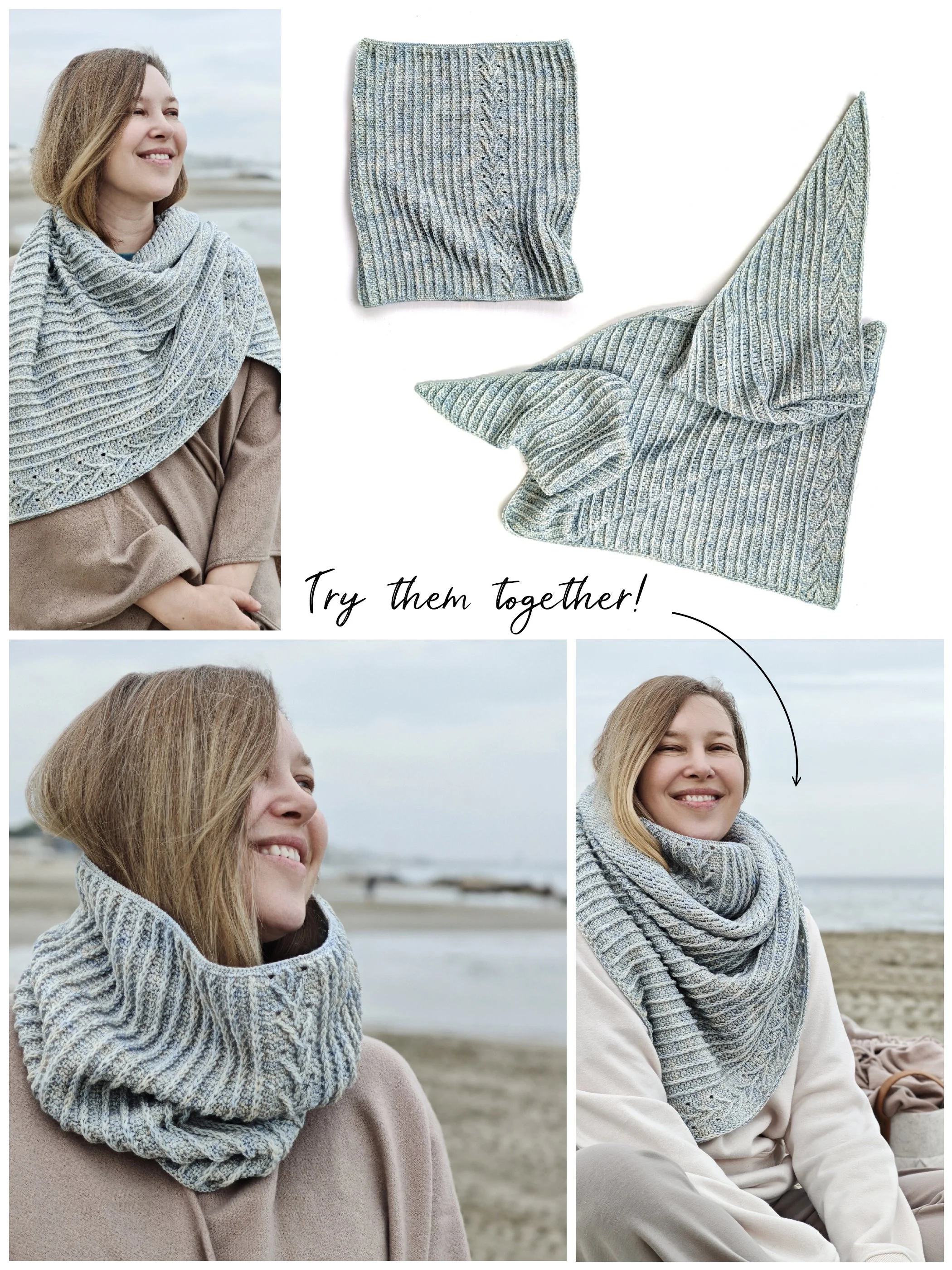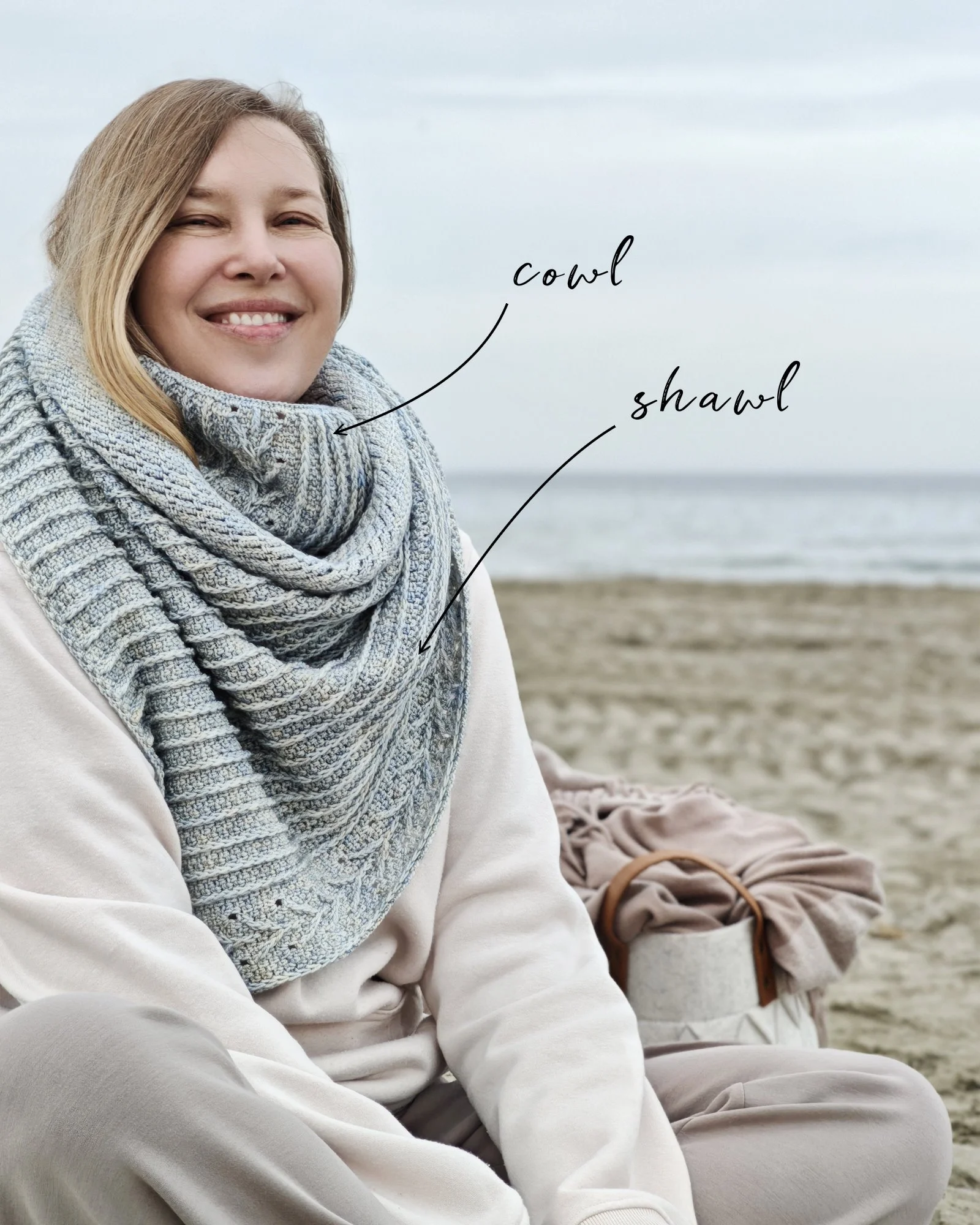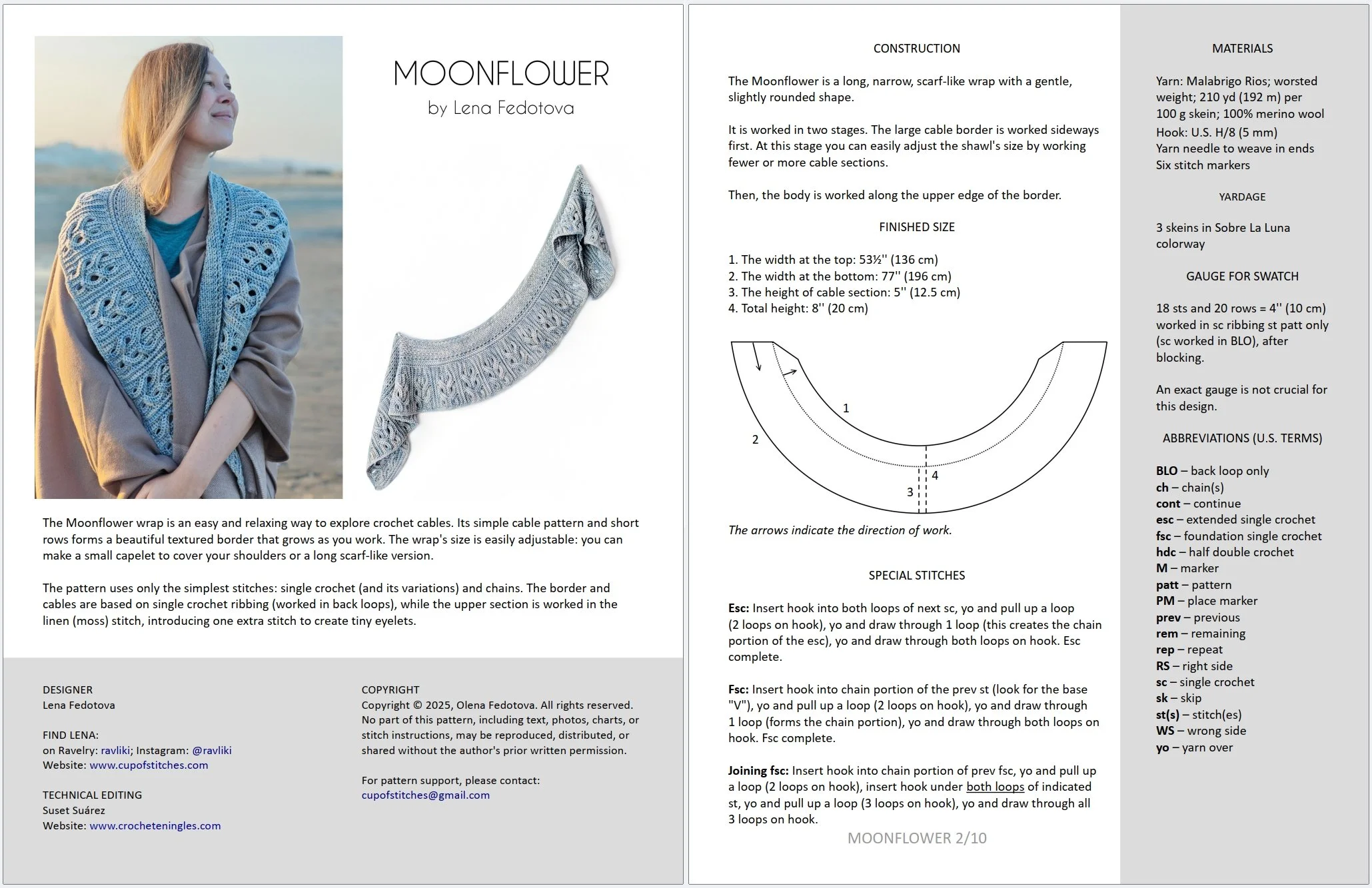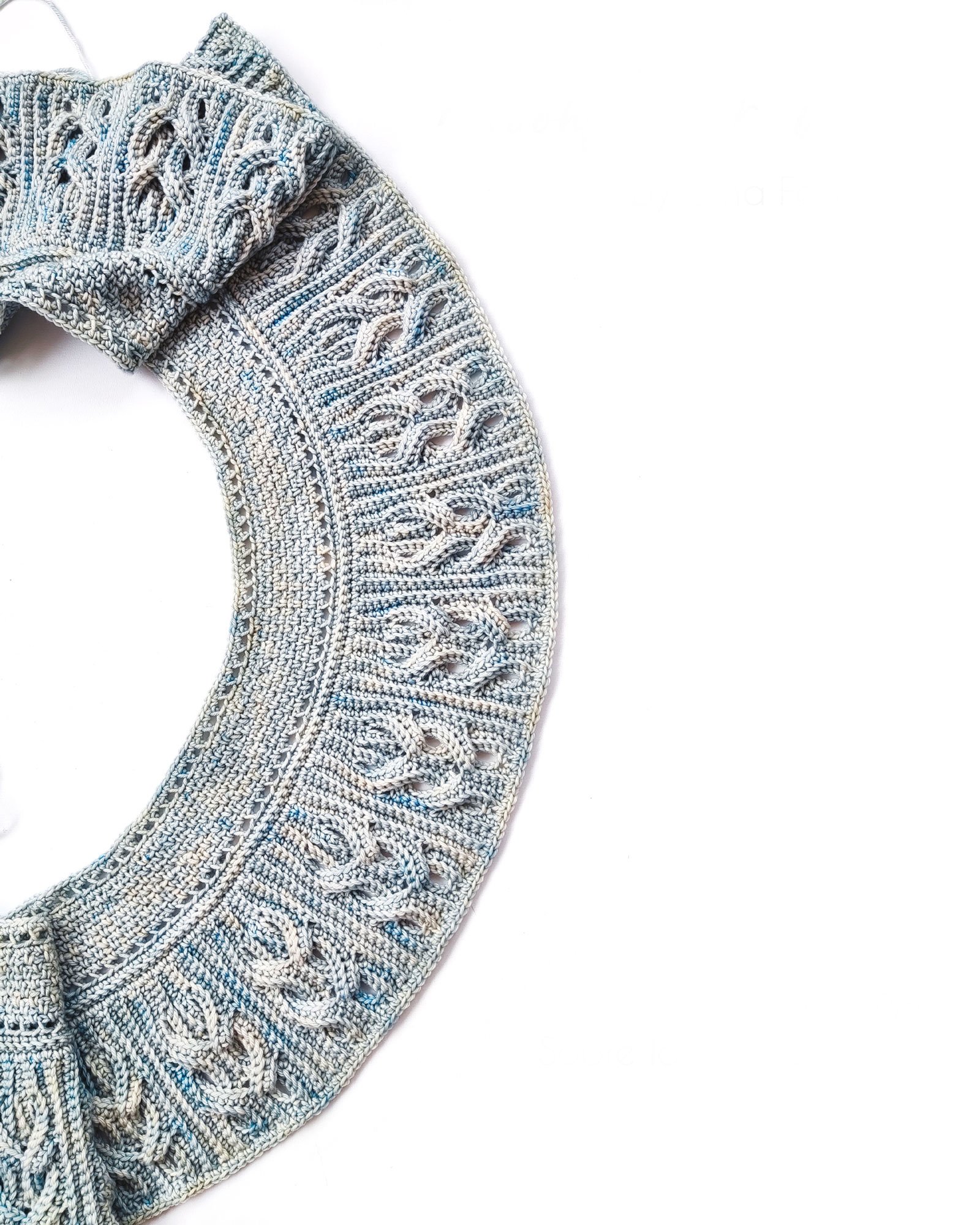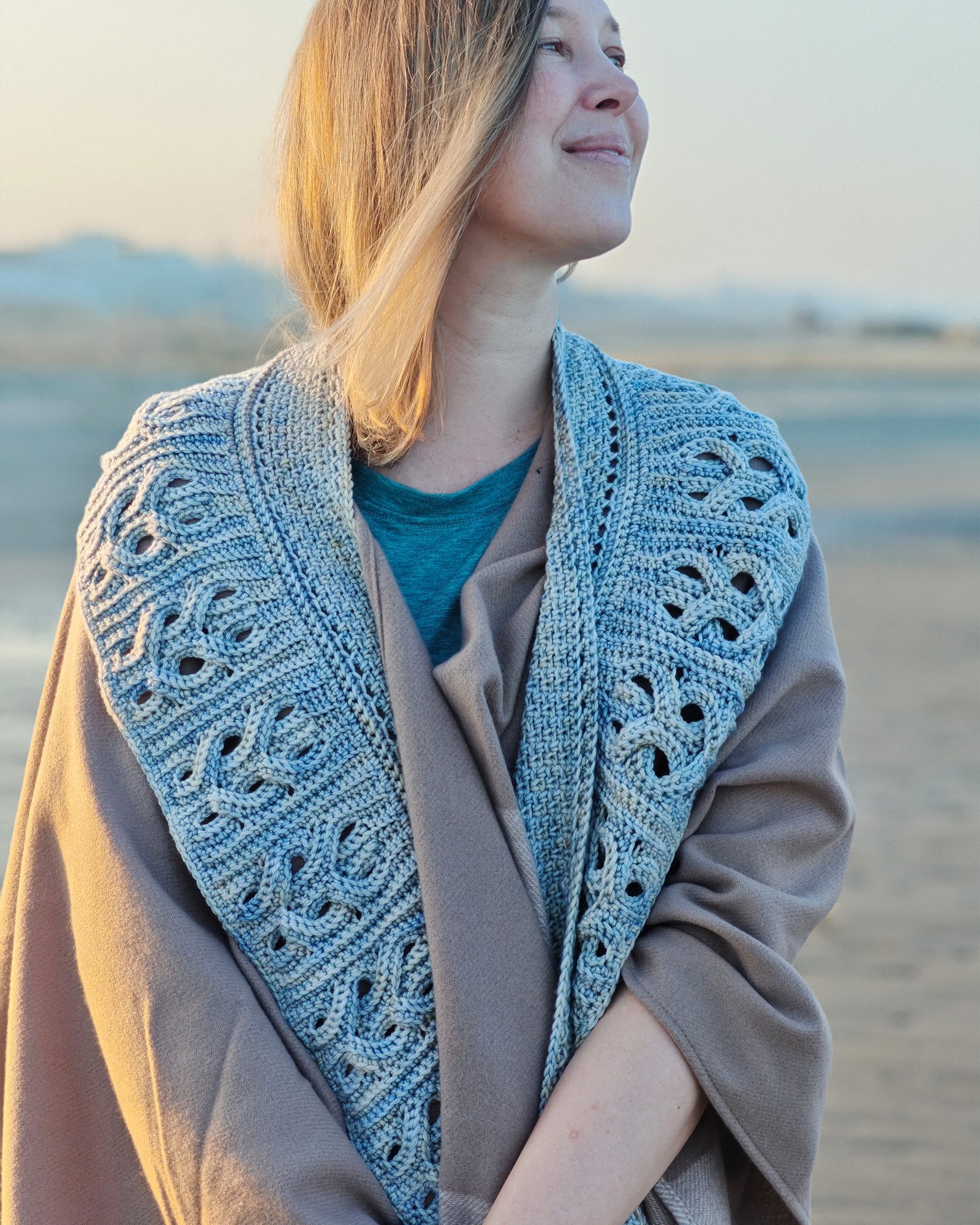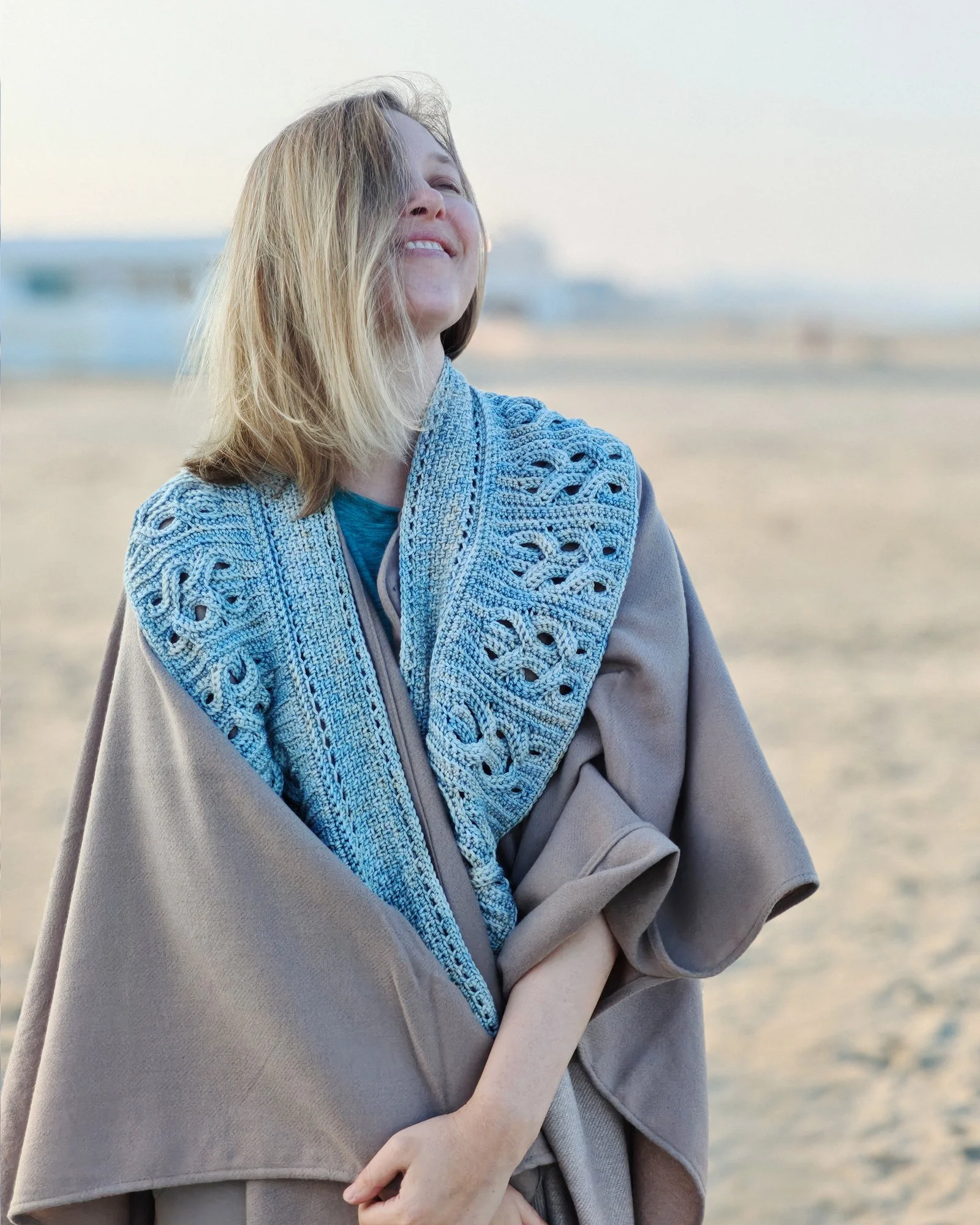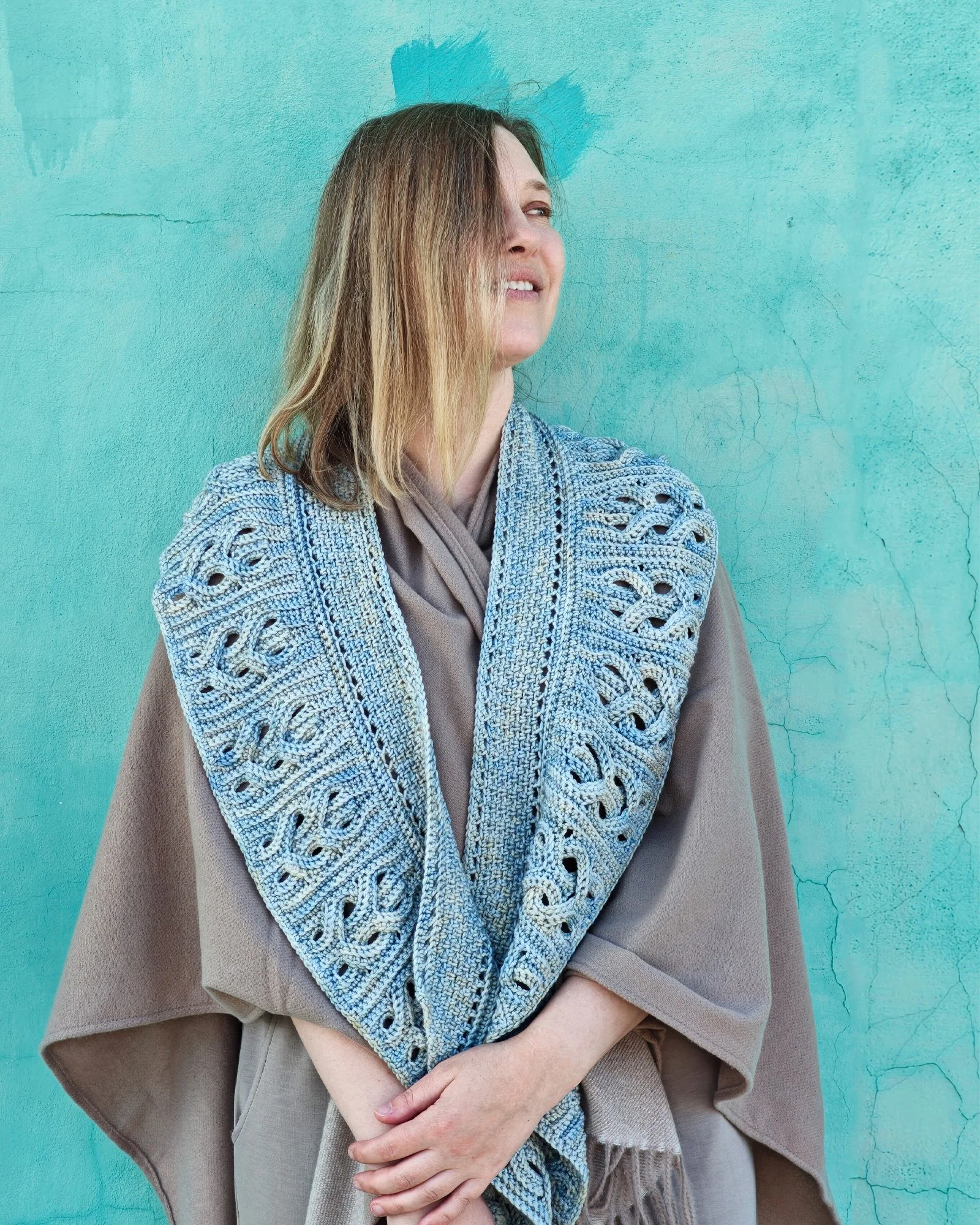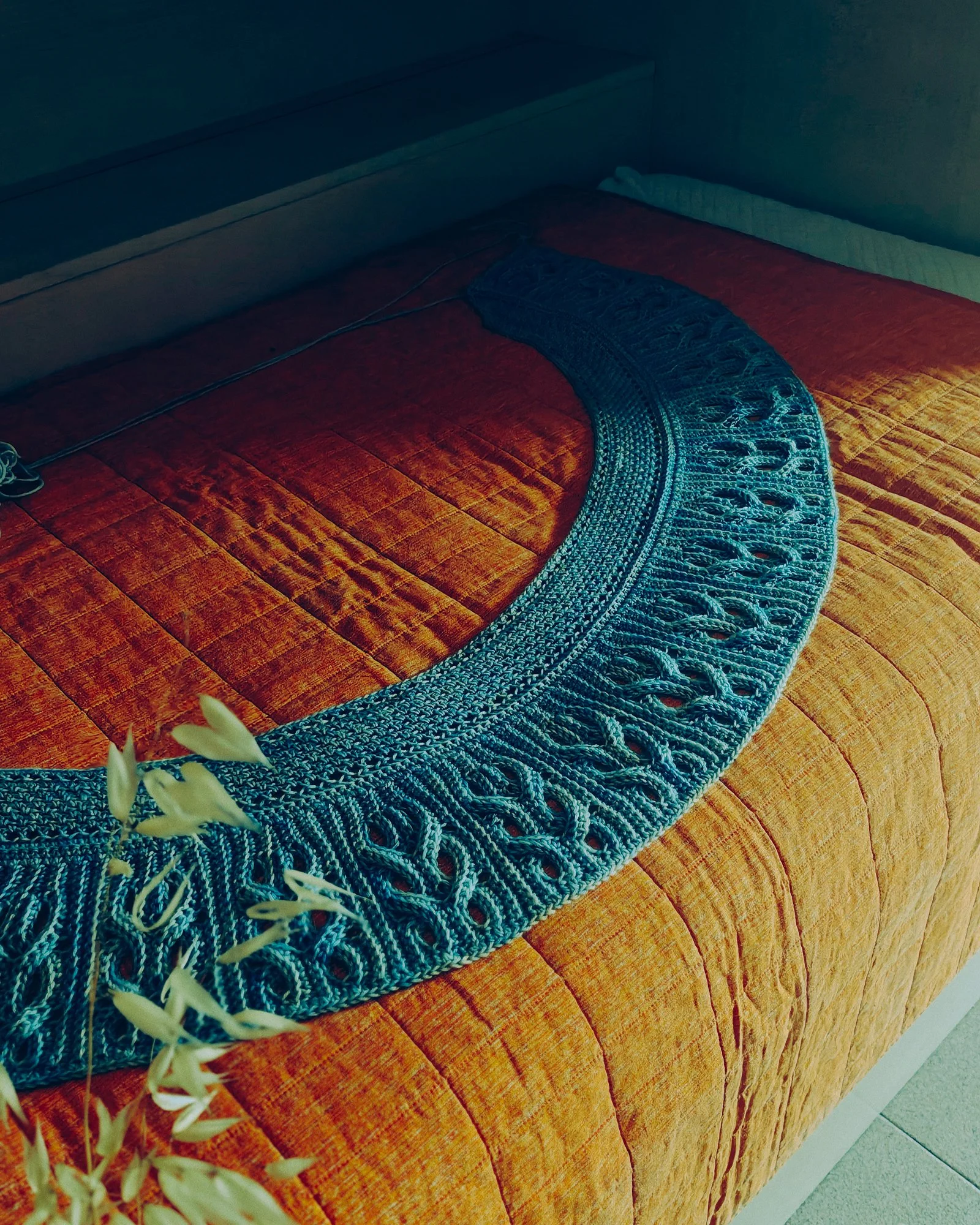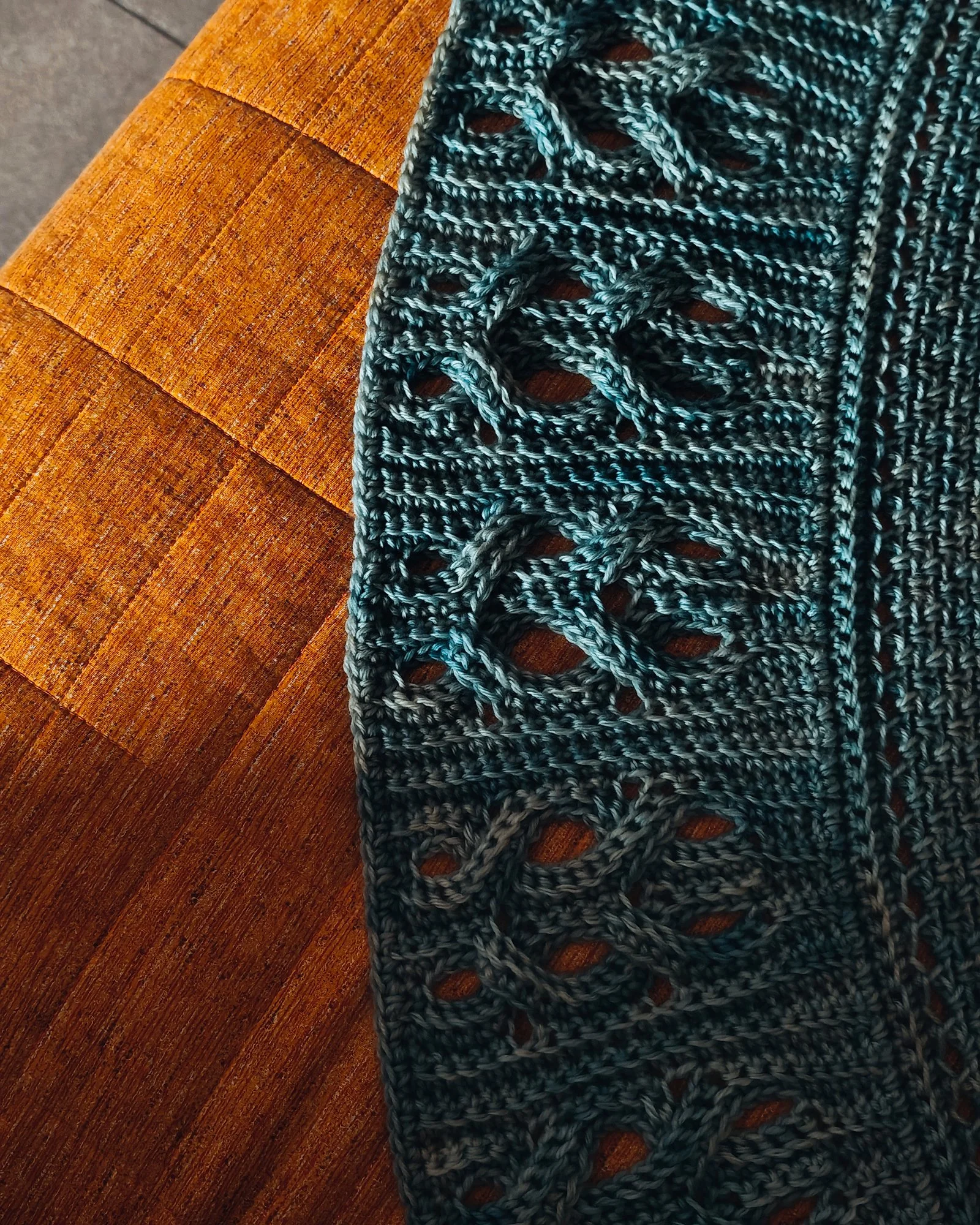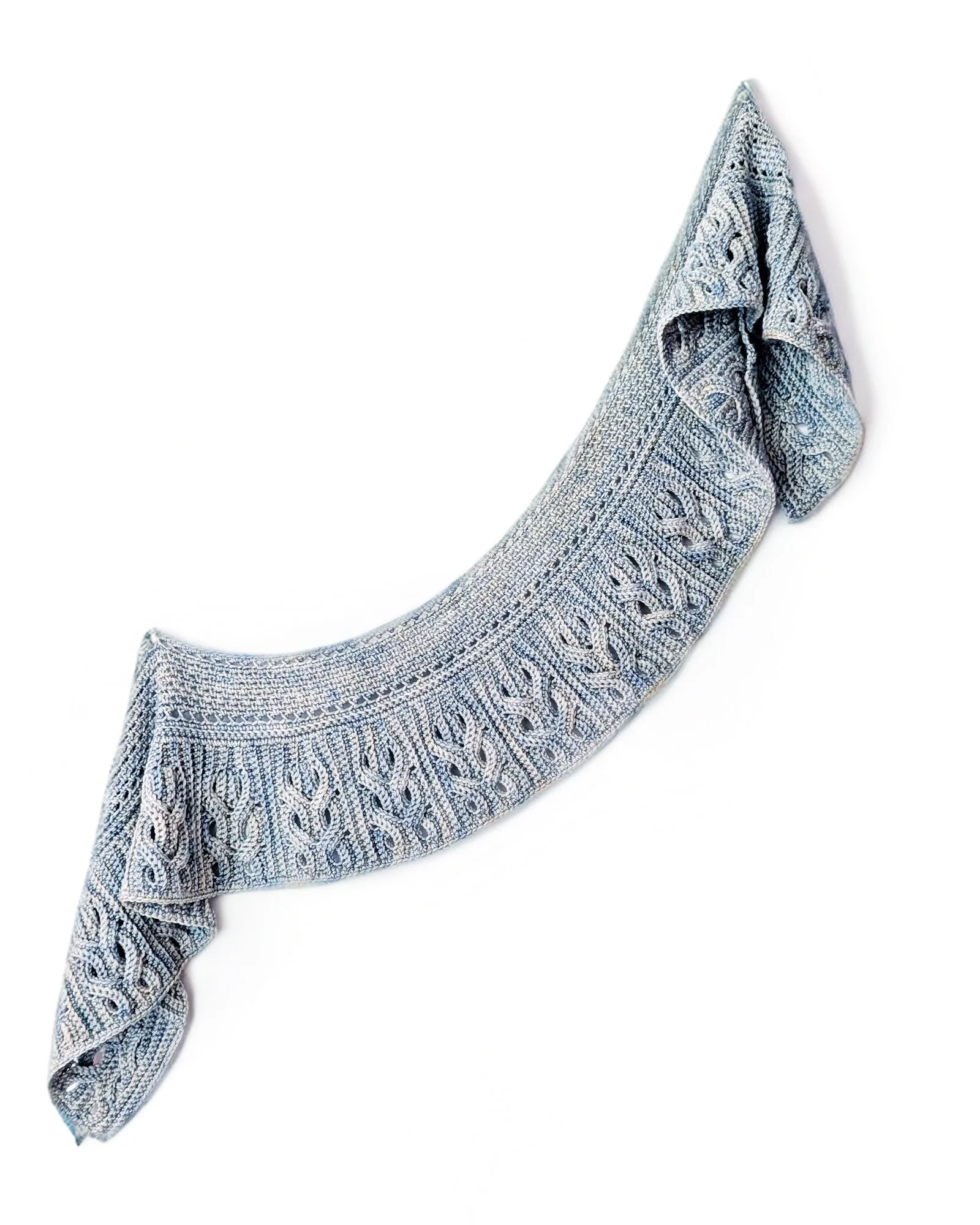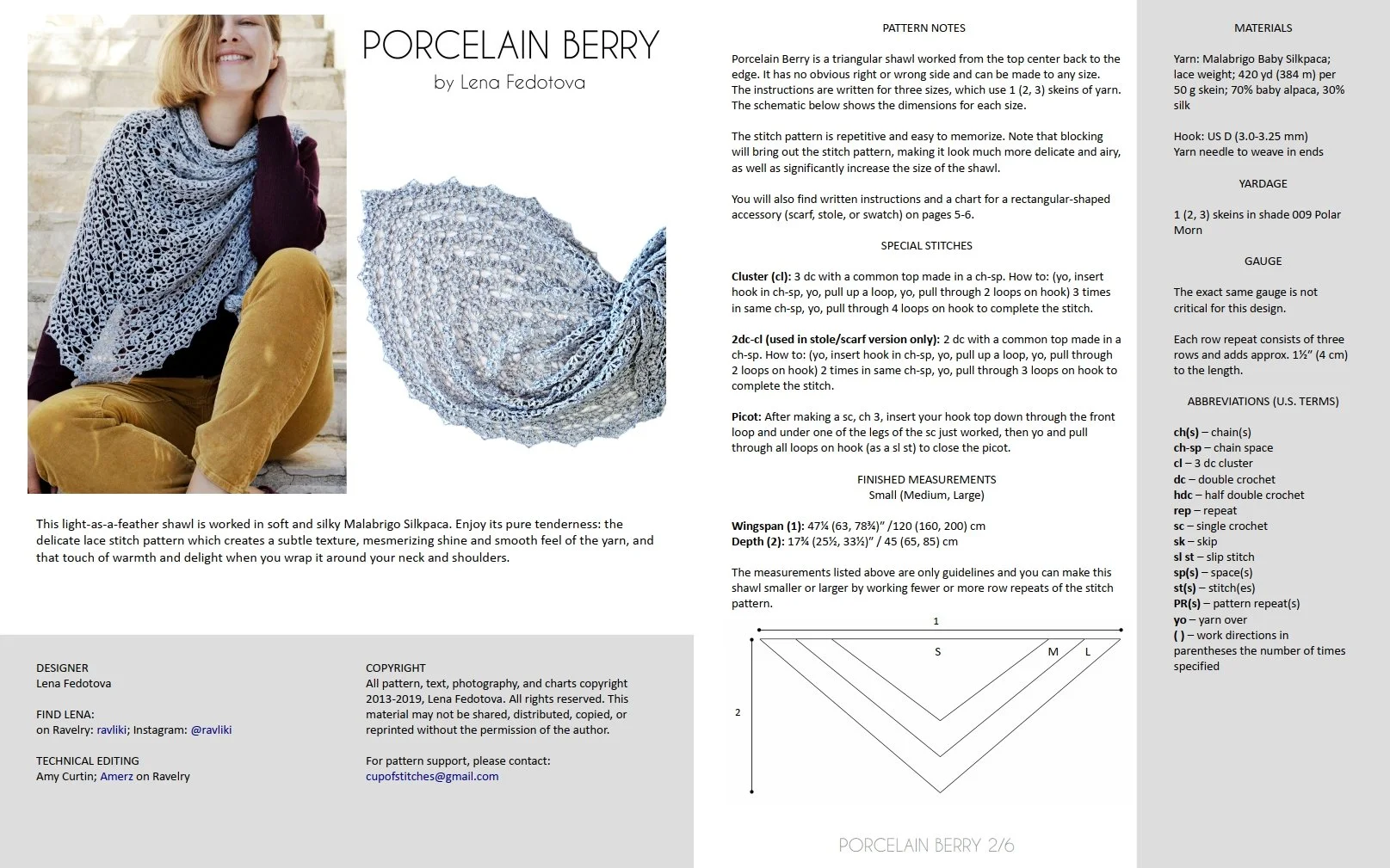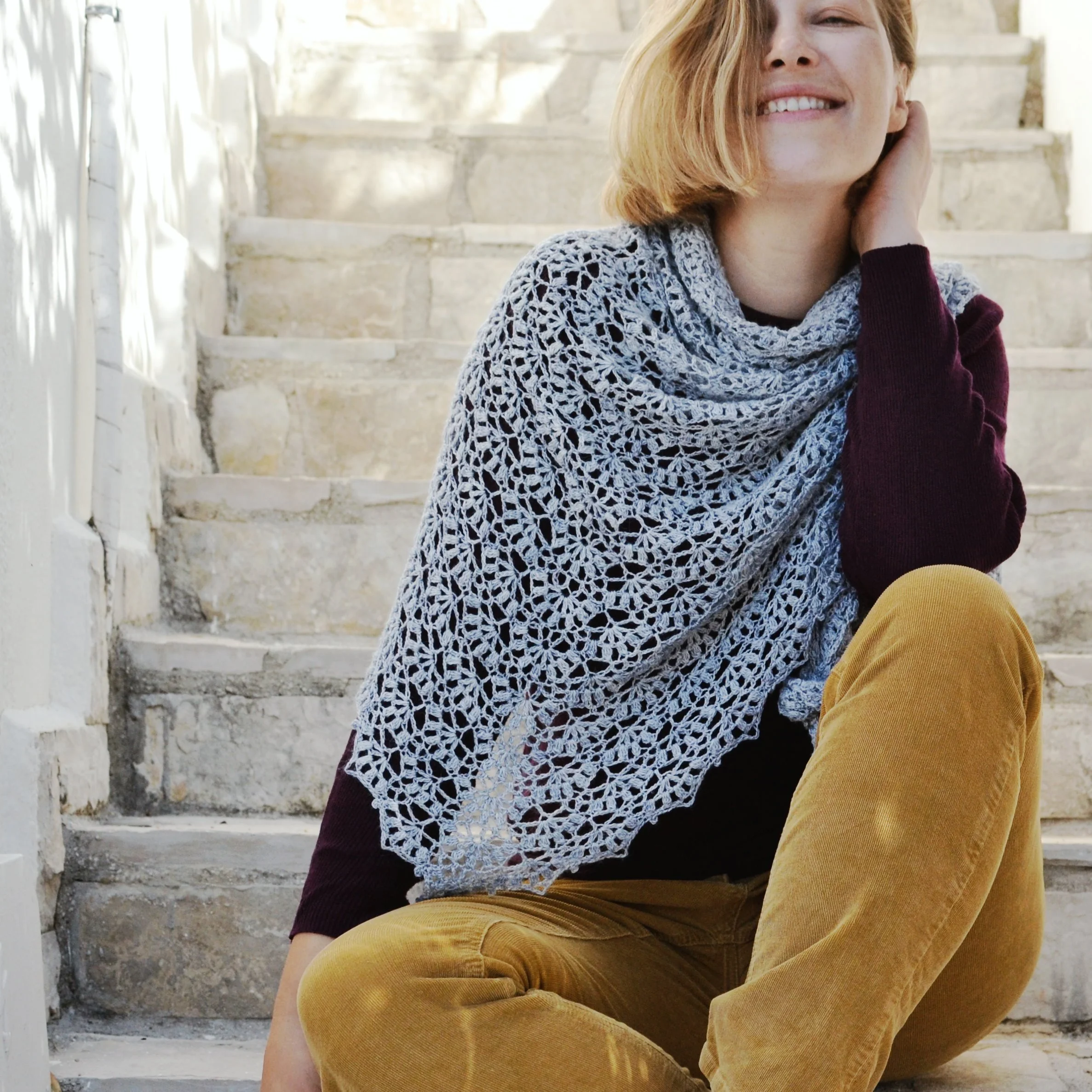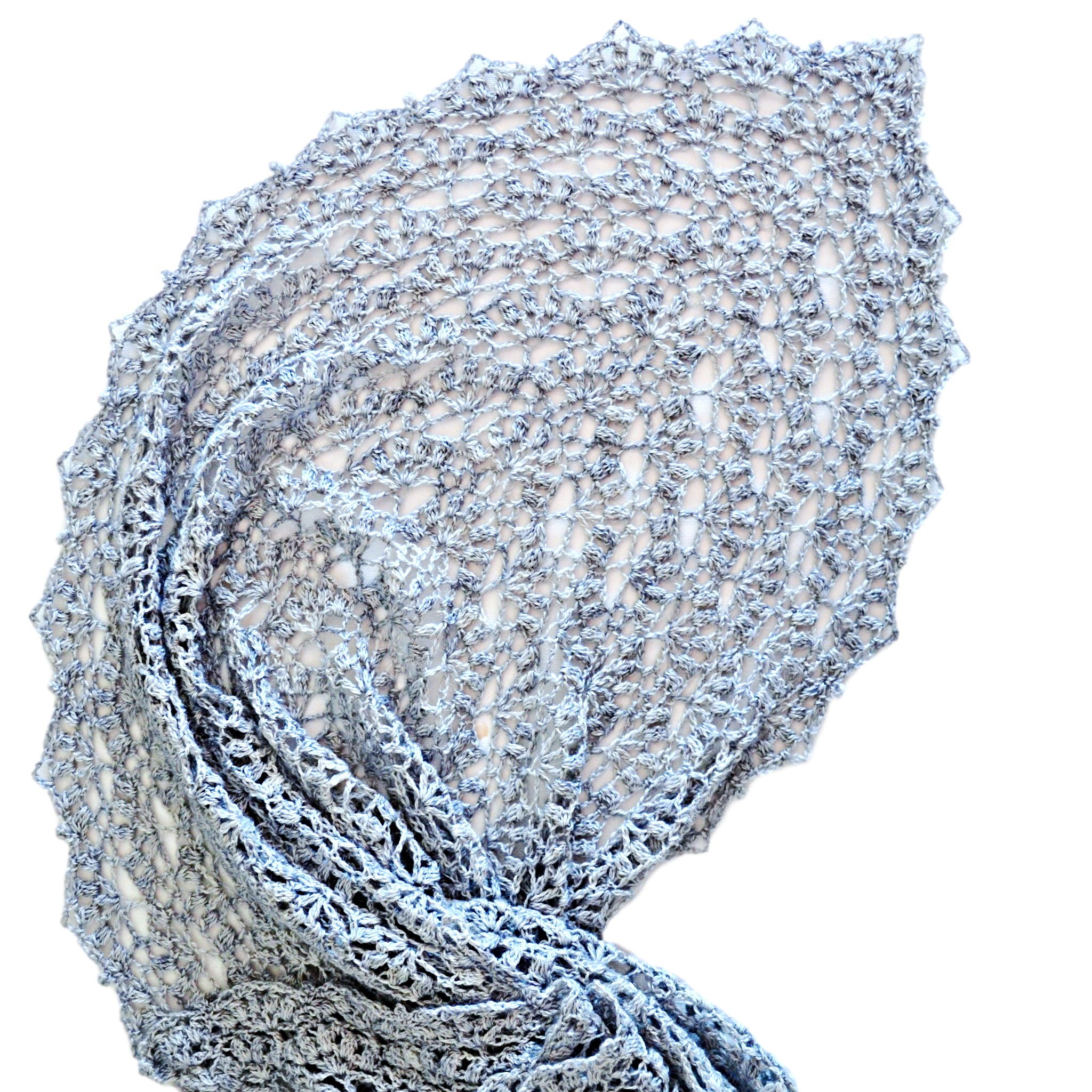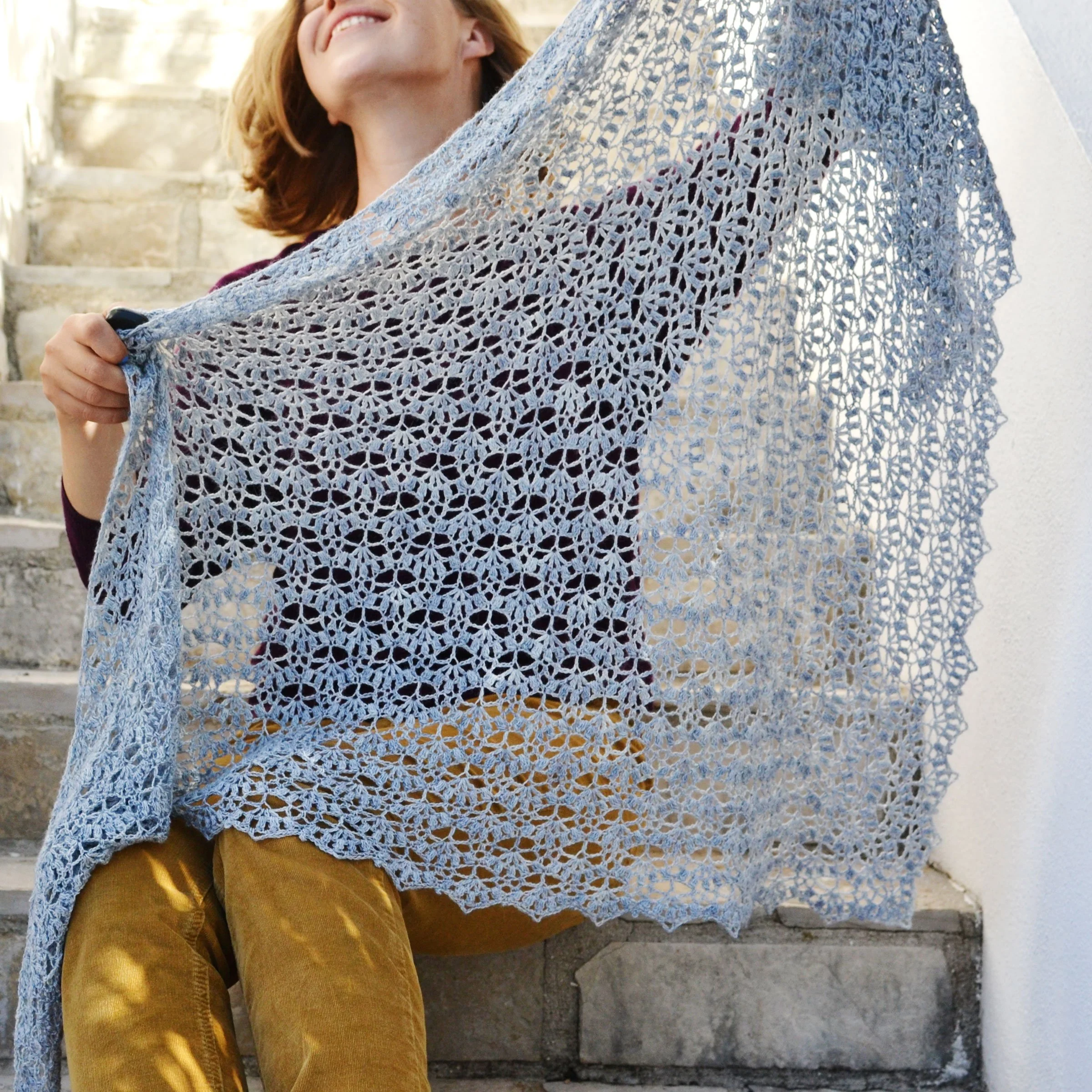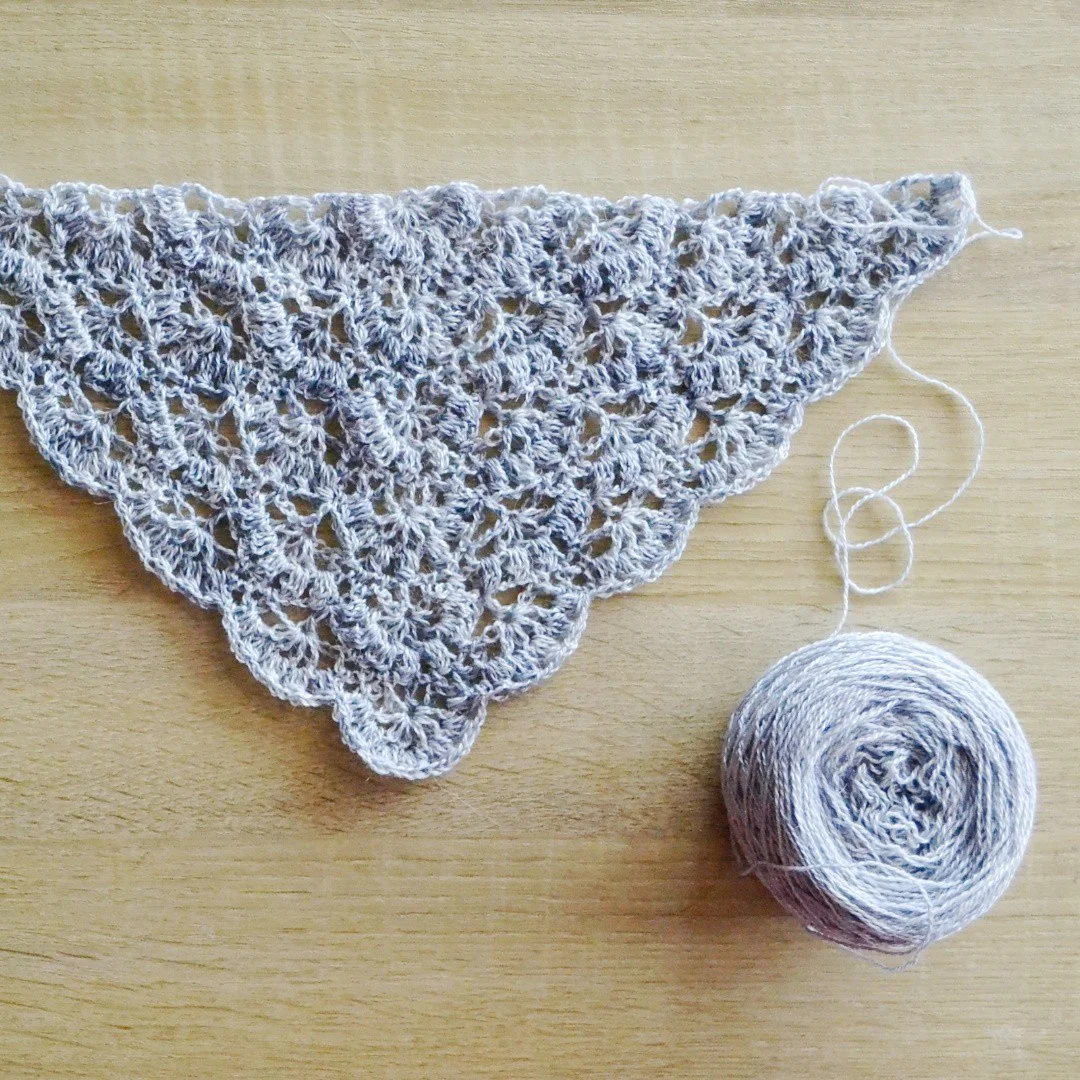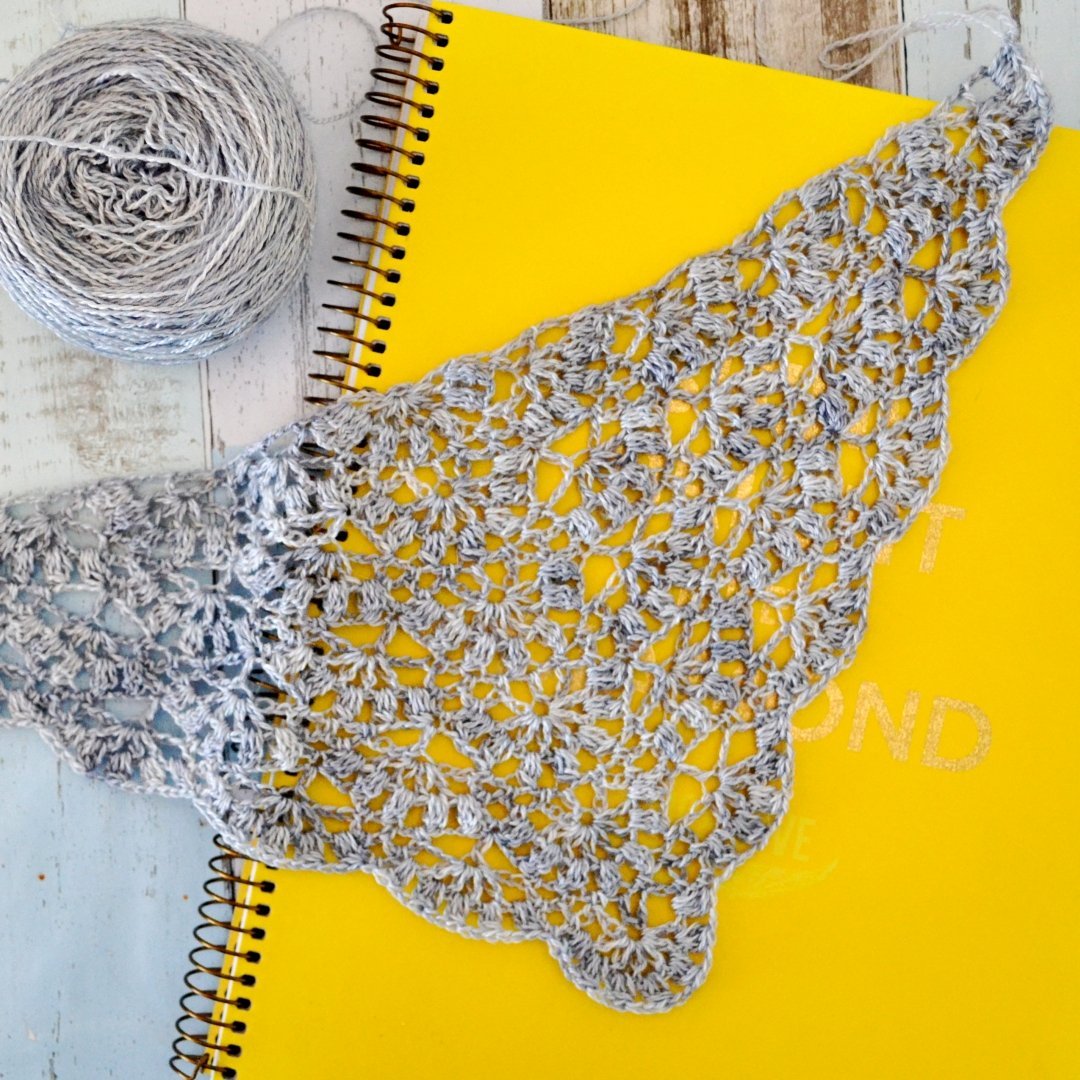
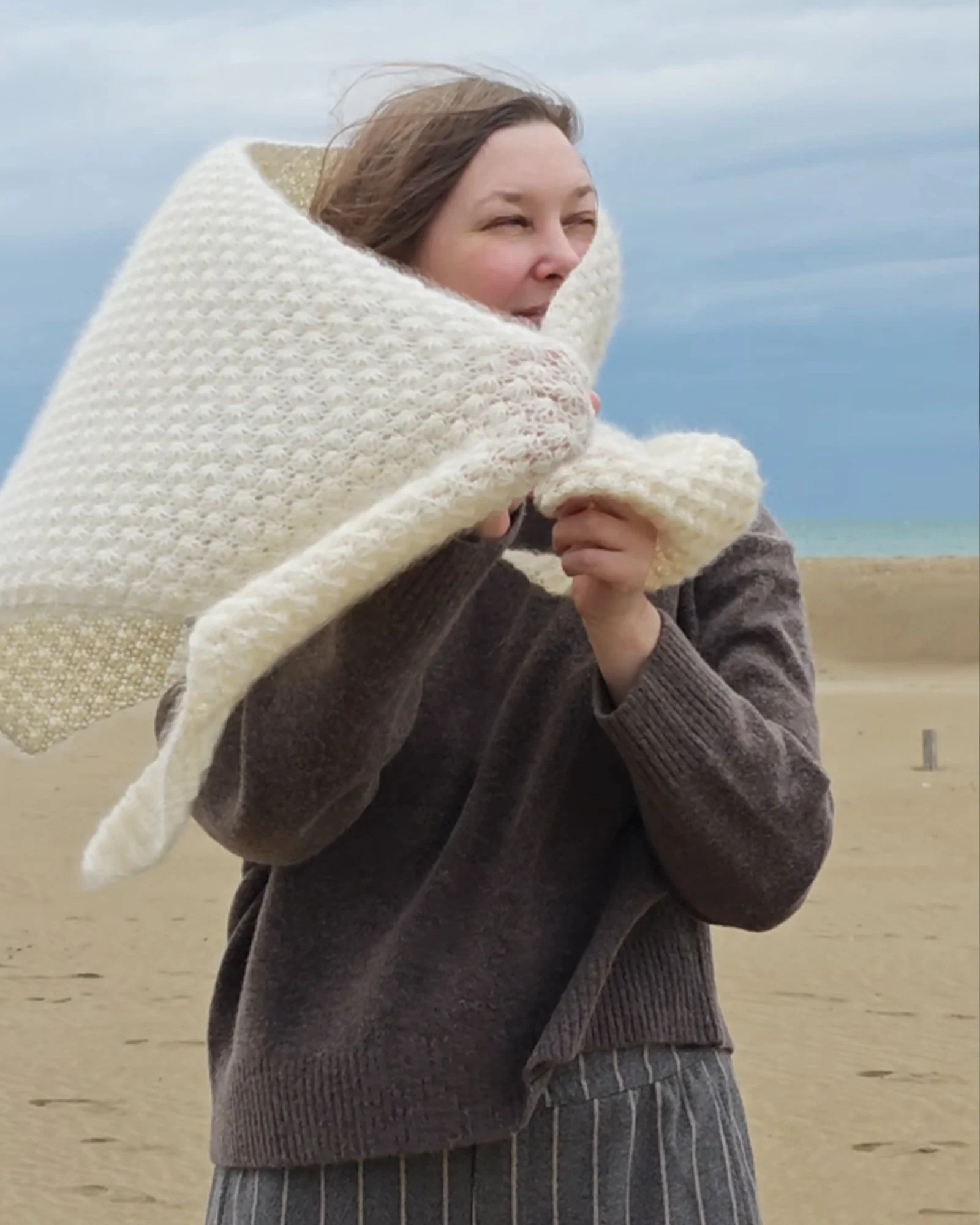
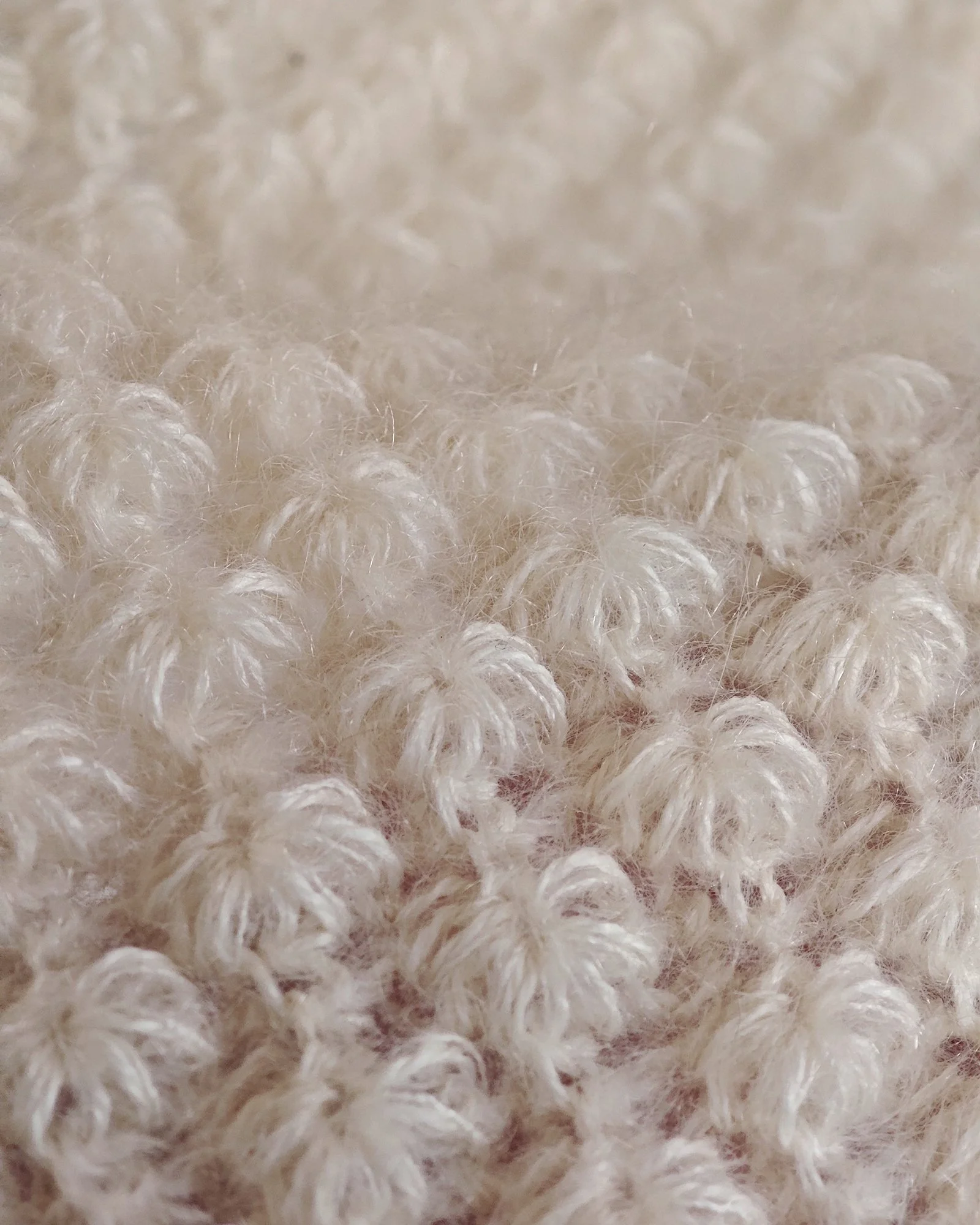
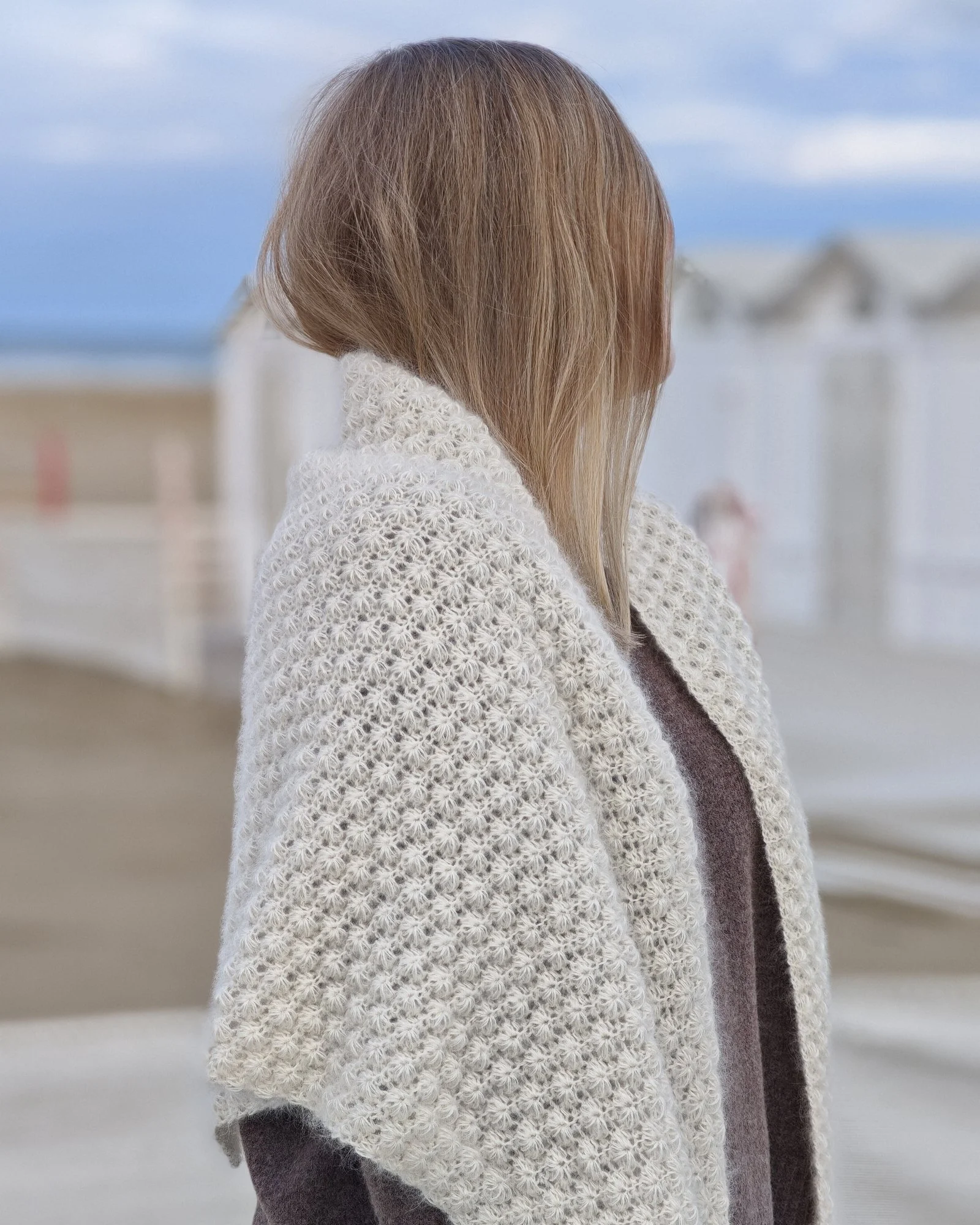
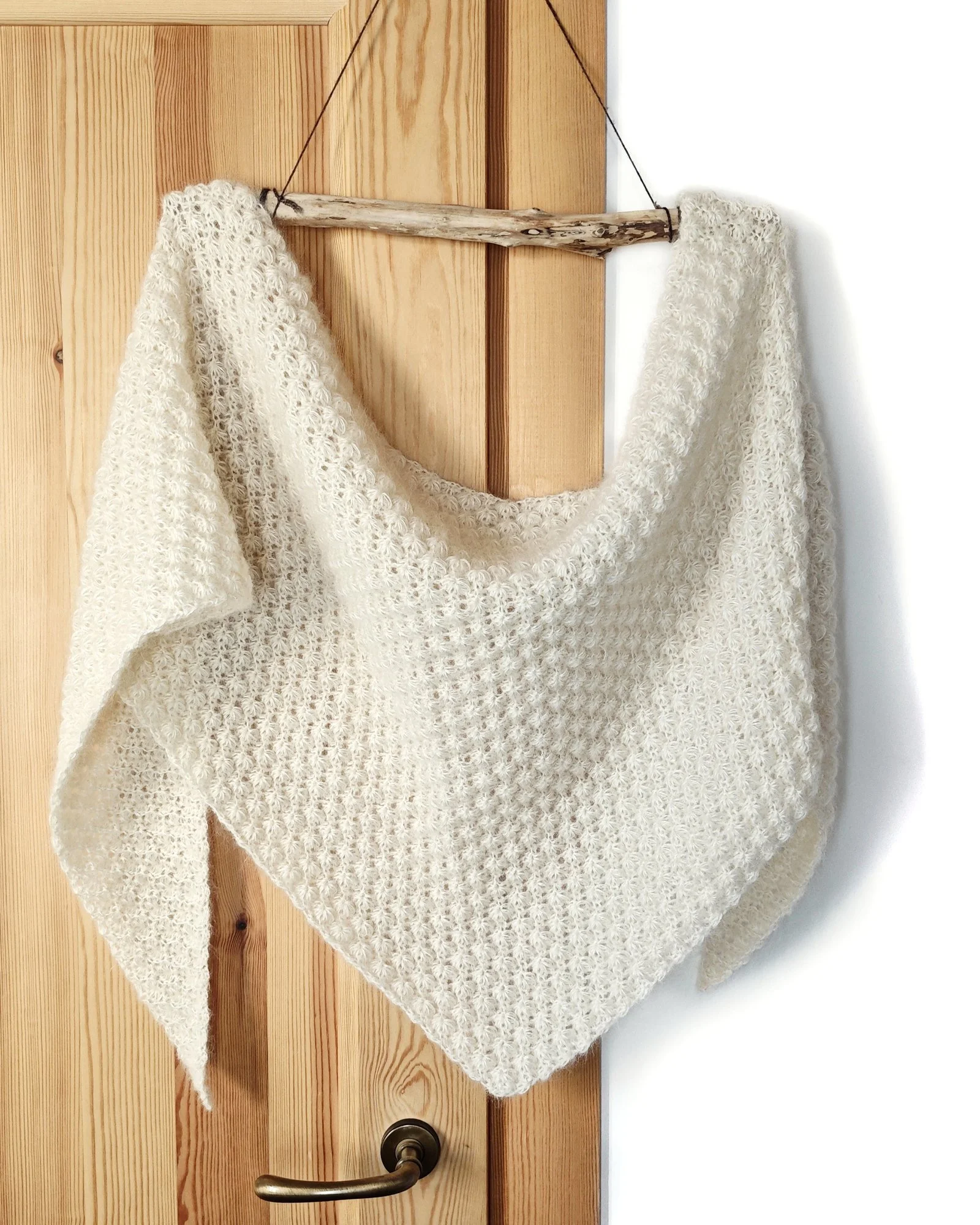
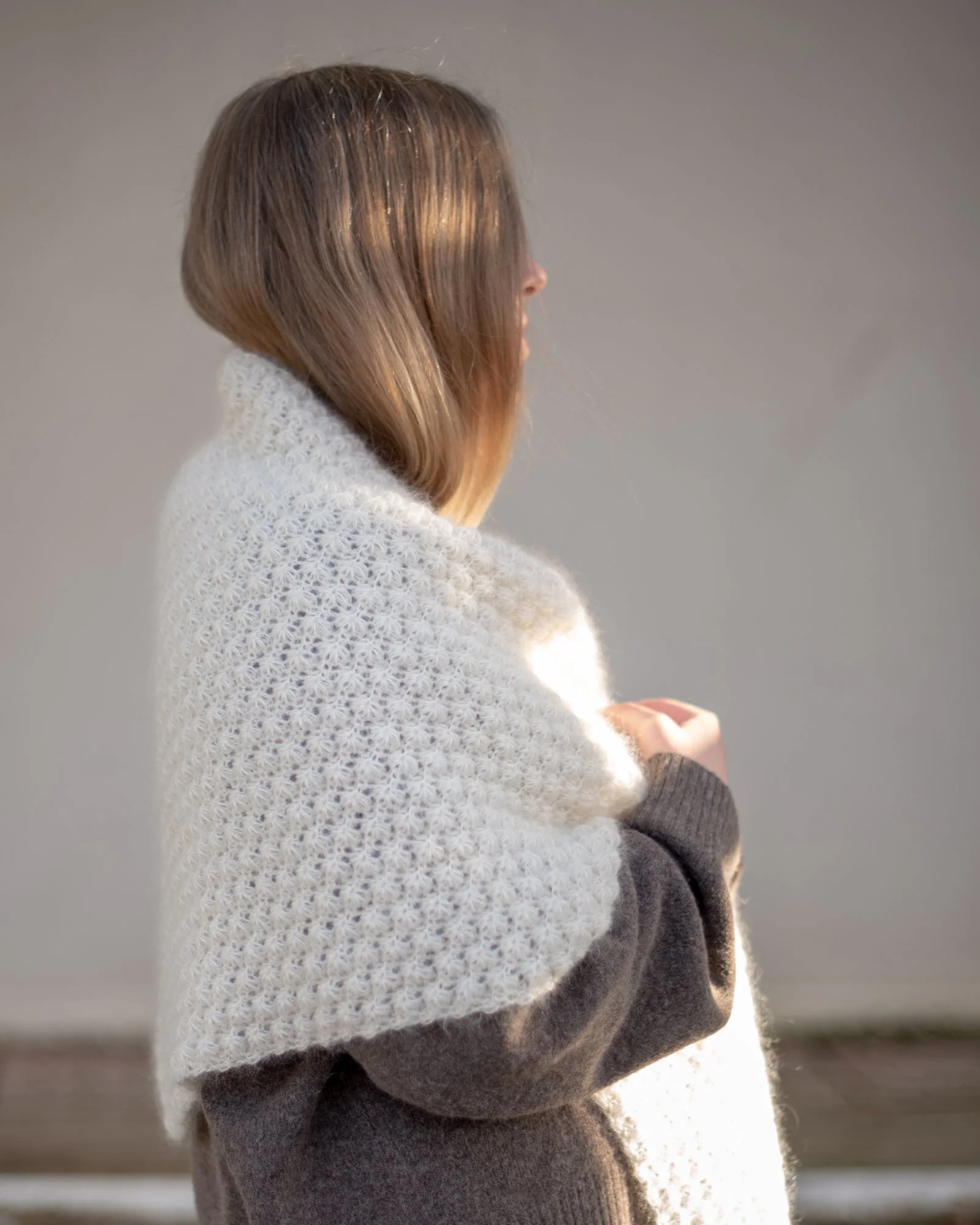
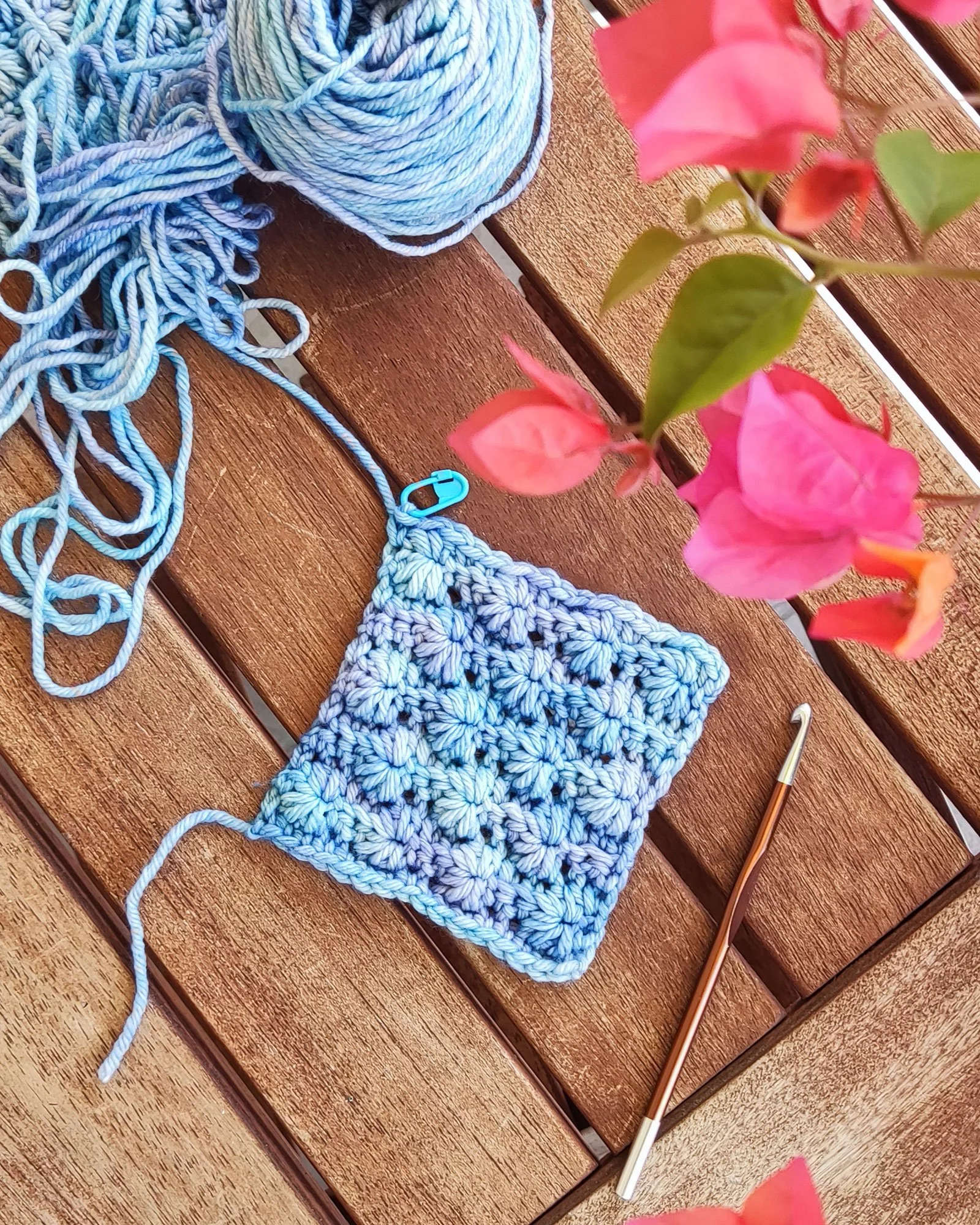
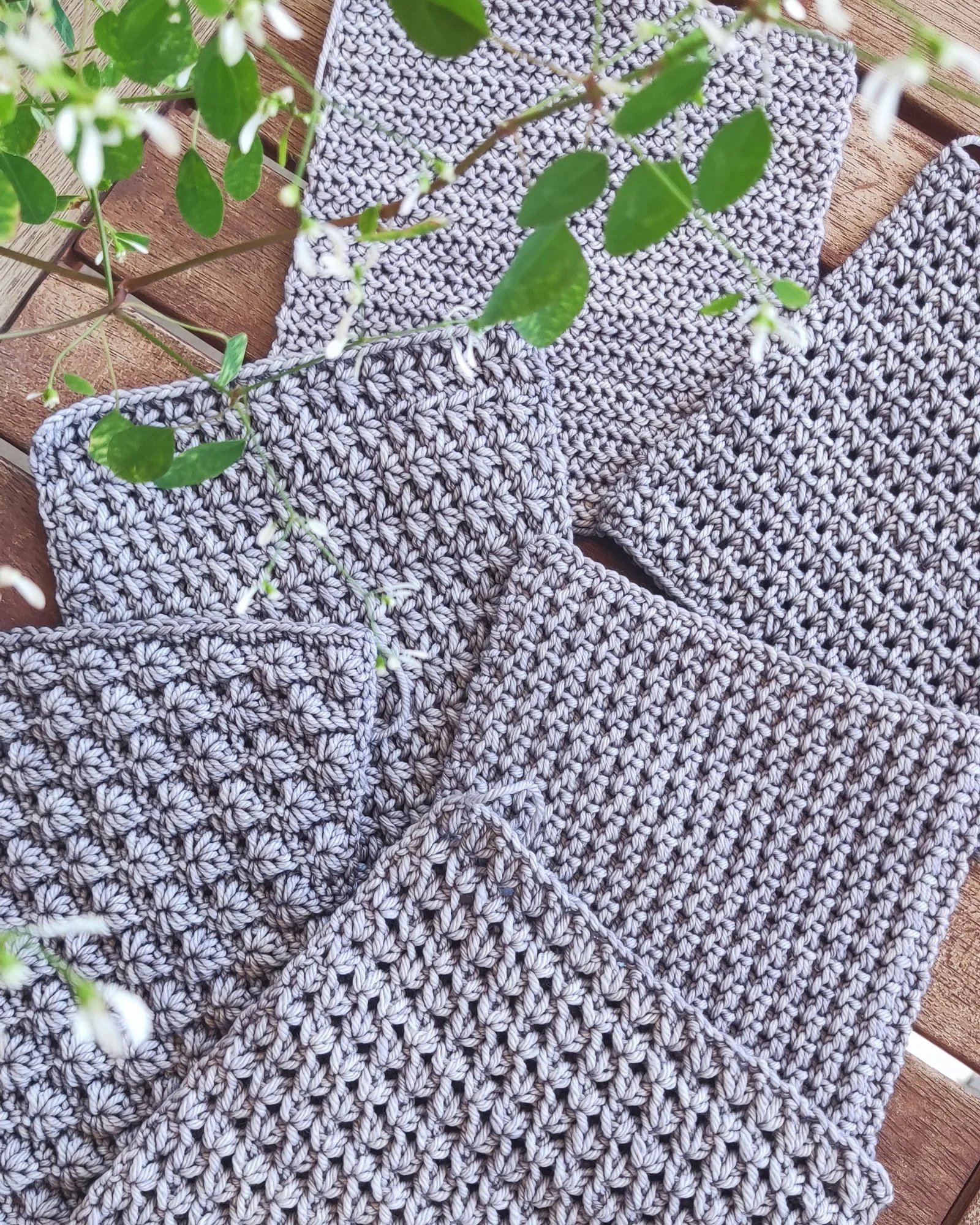
CONSTRUCTION
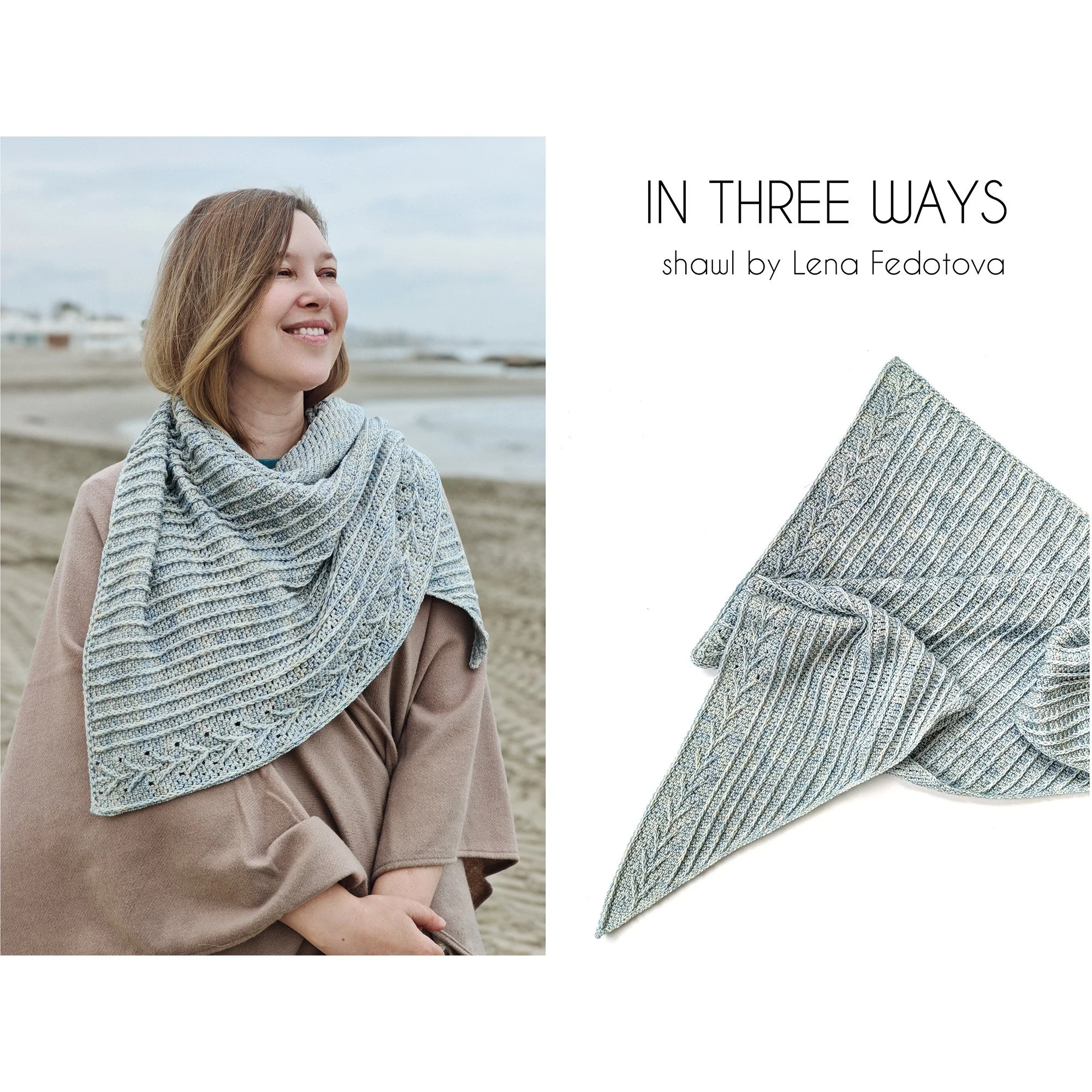
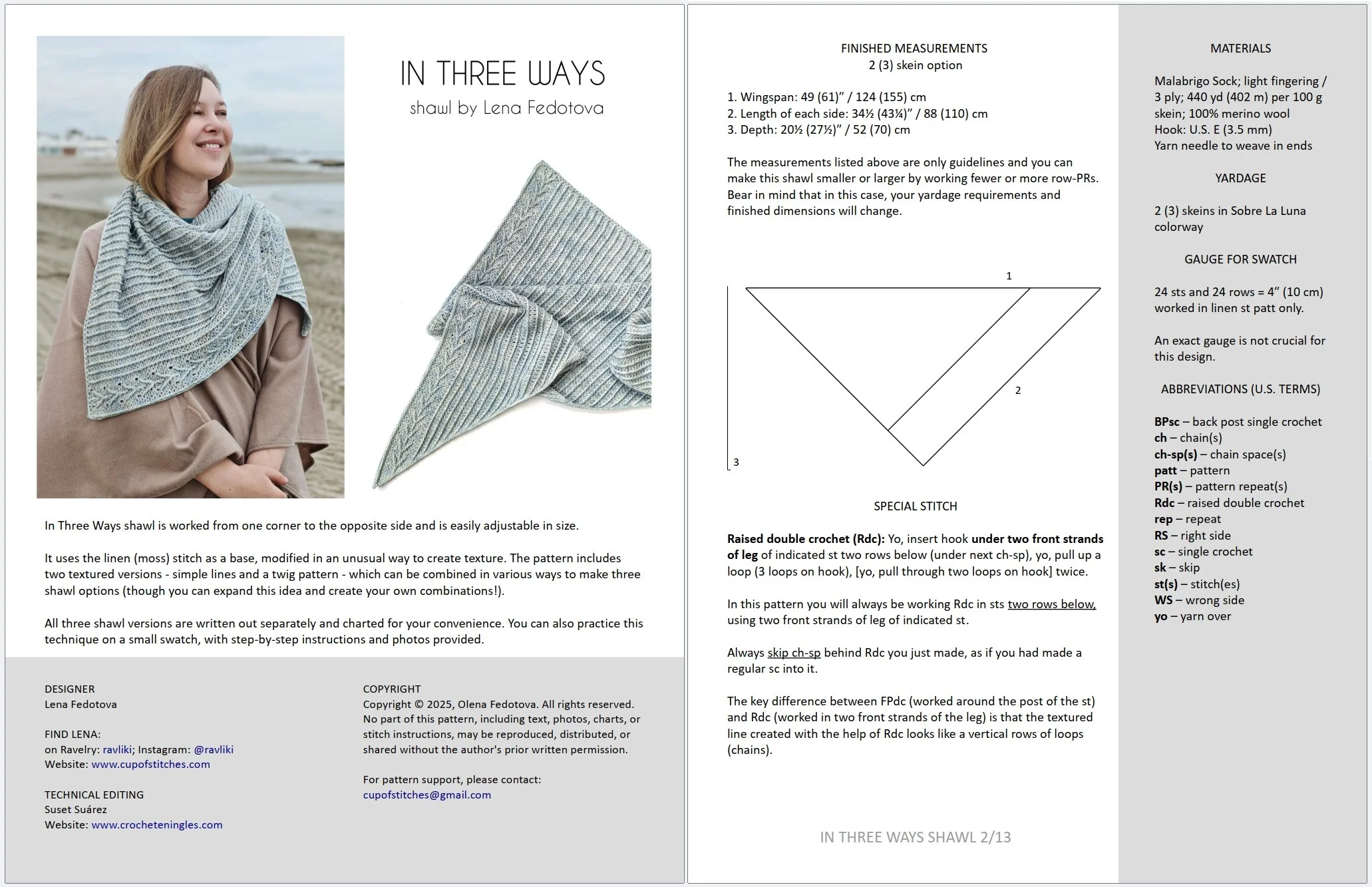
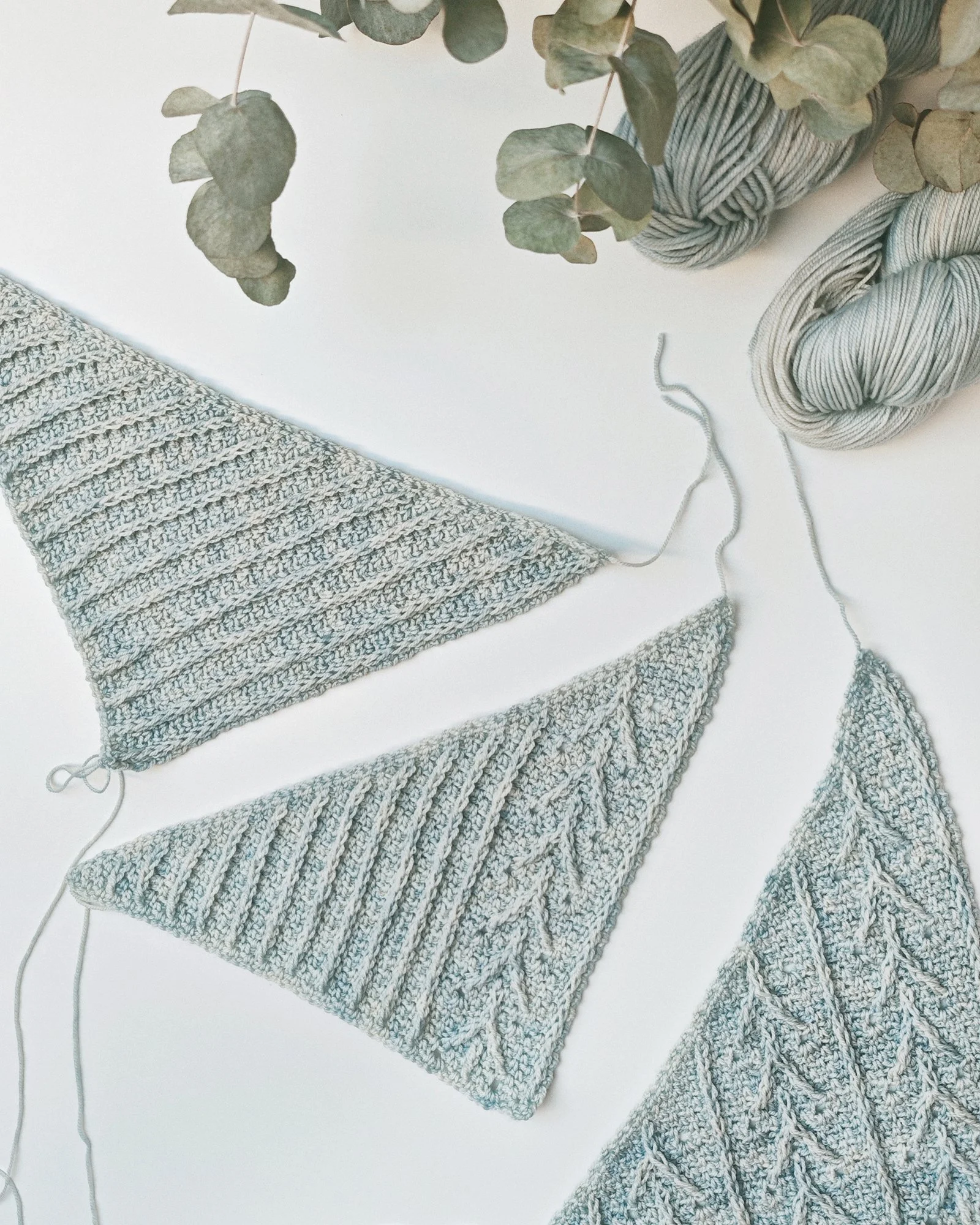
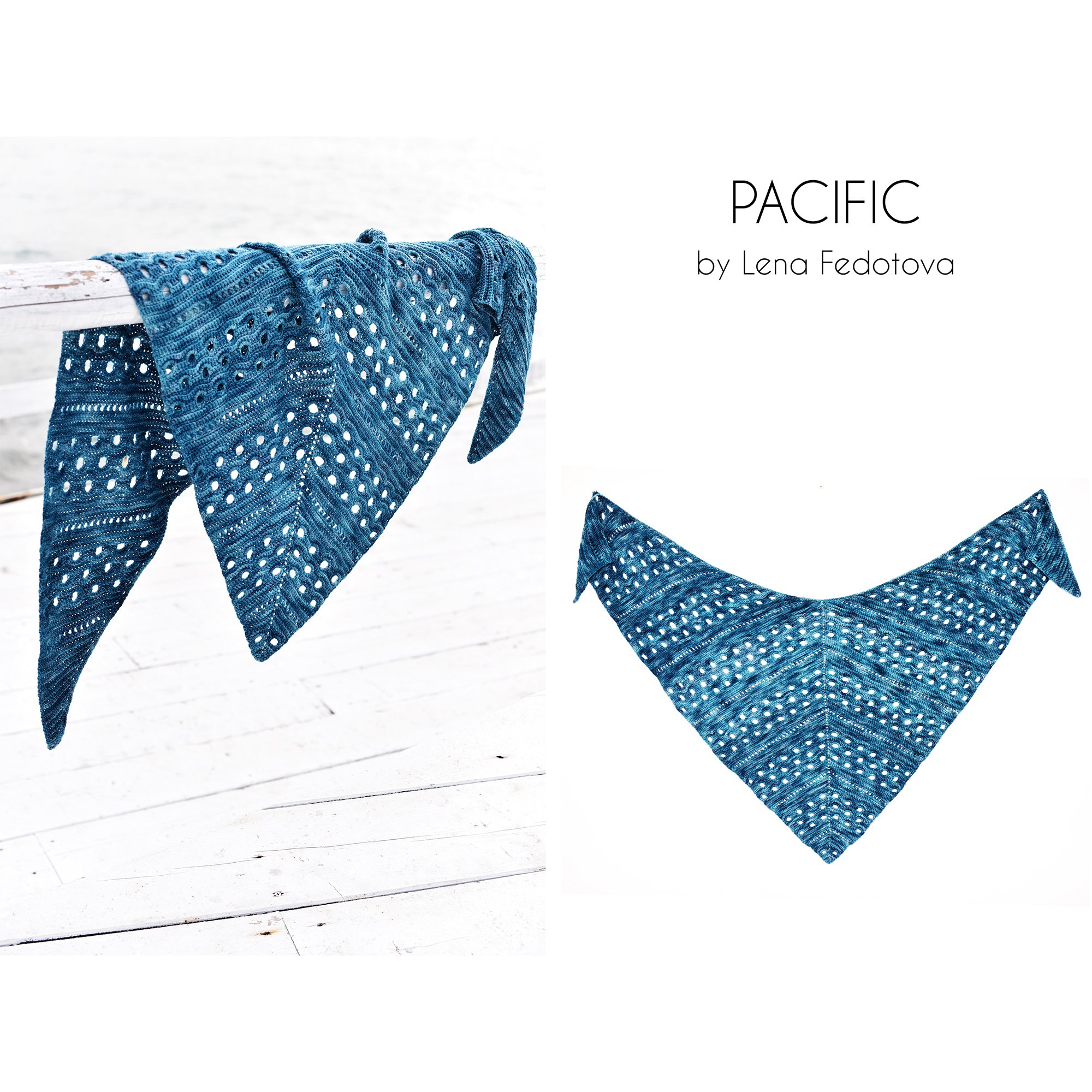
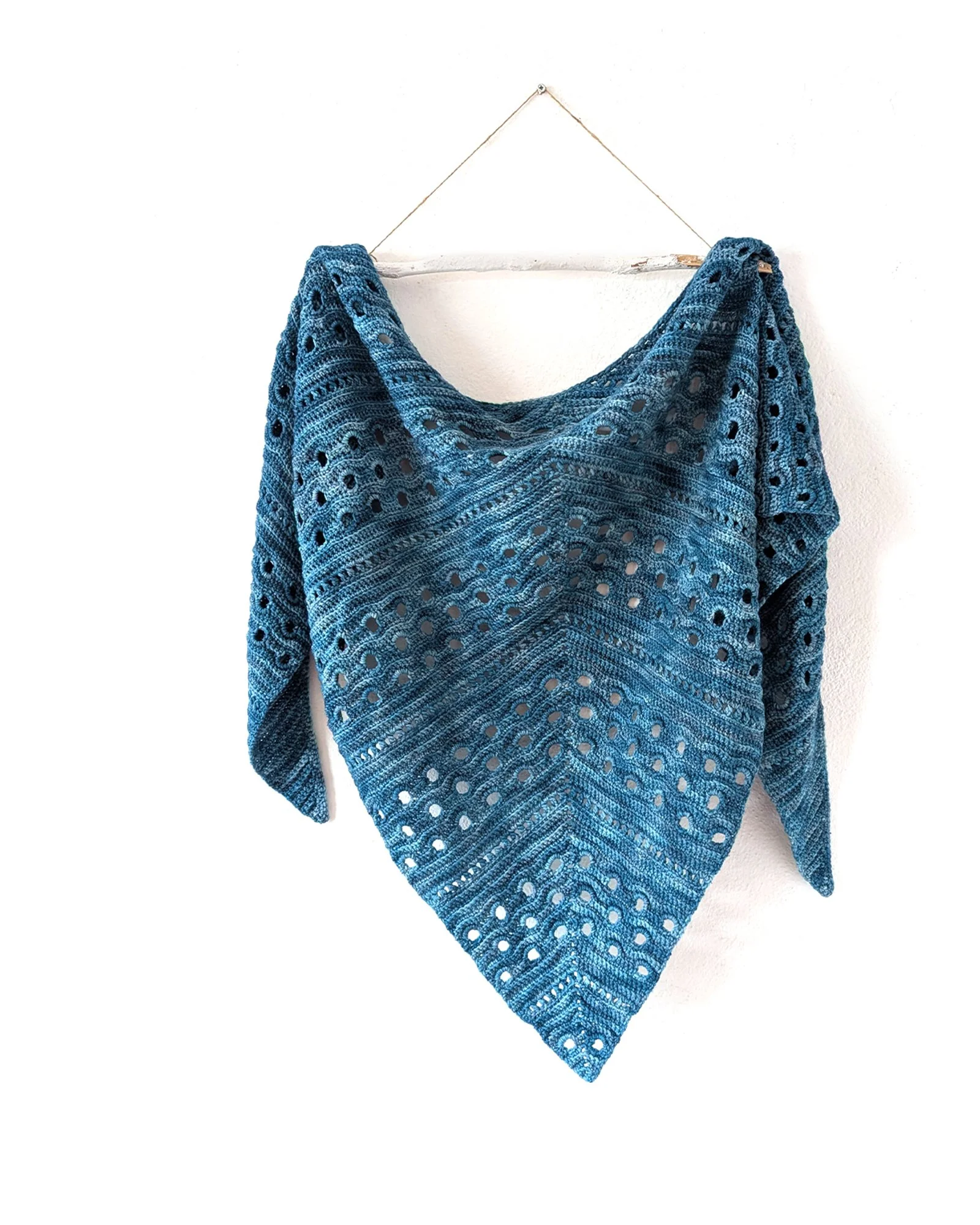
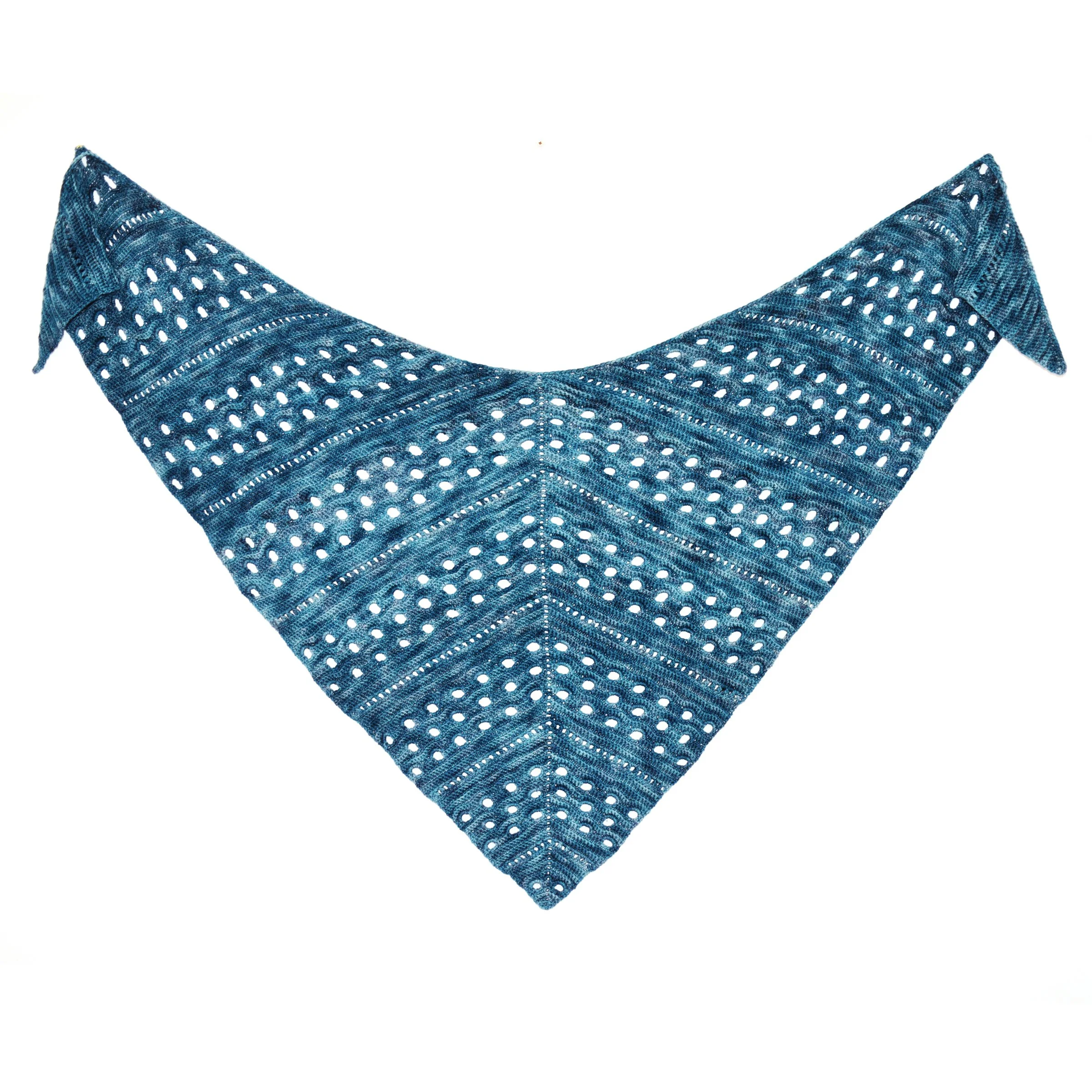
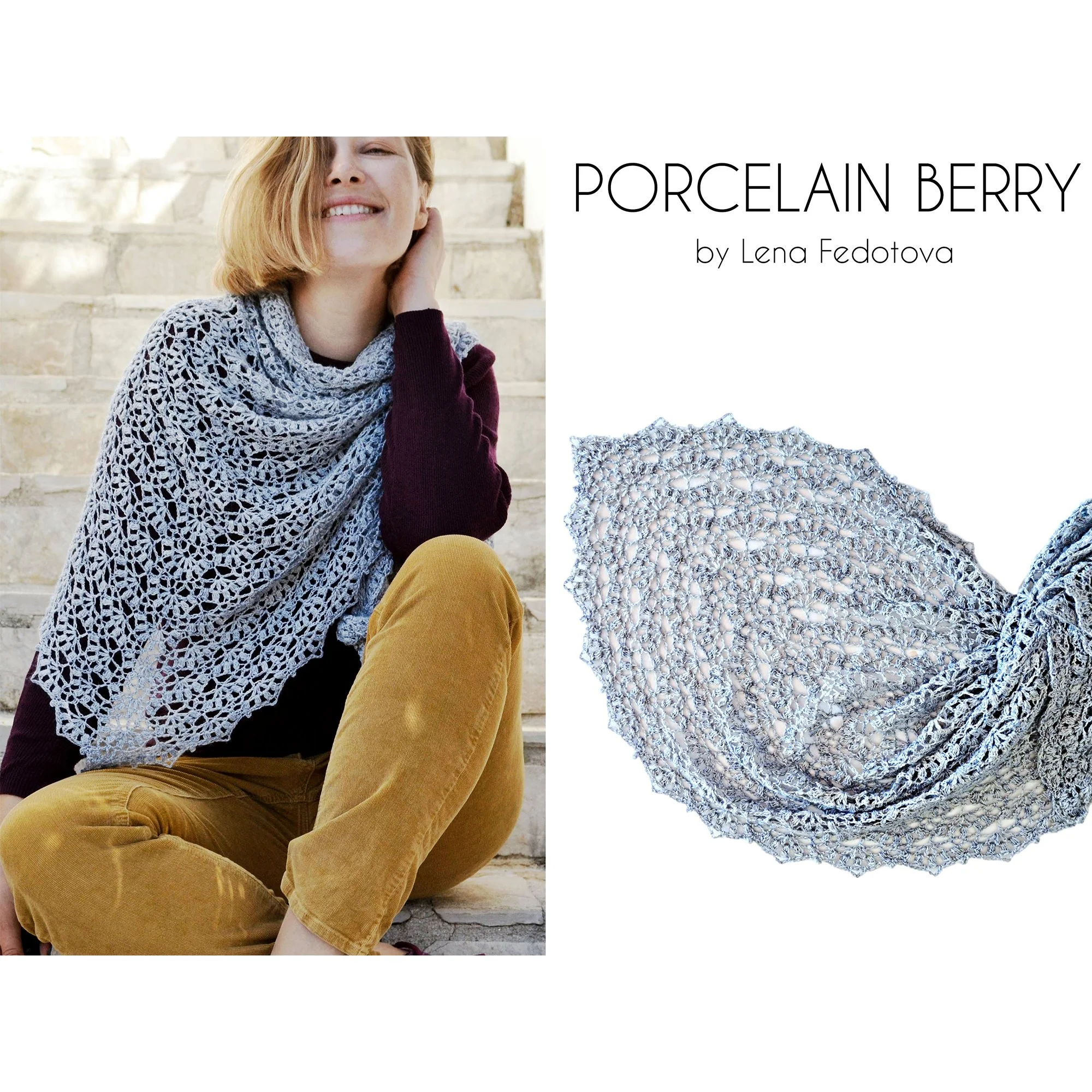
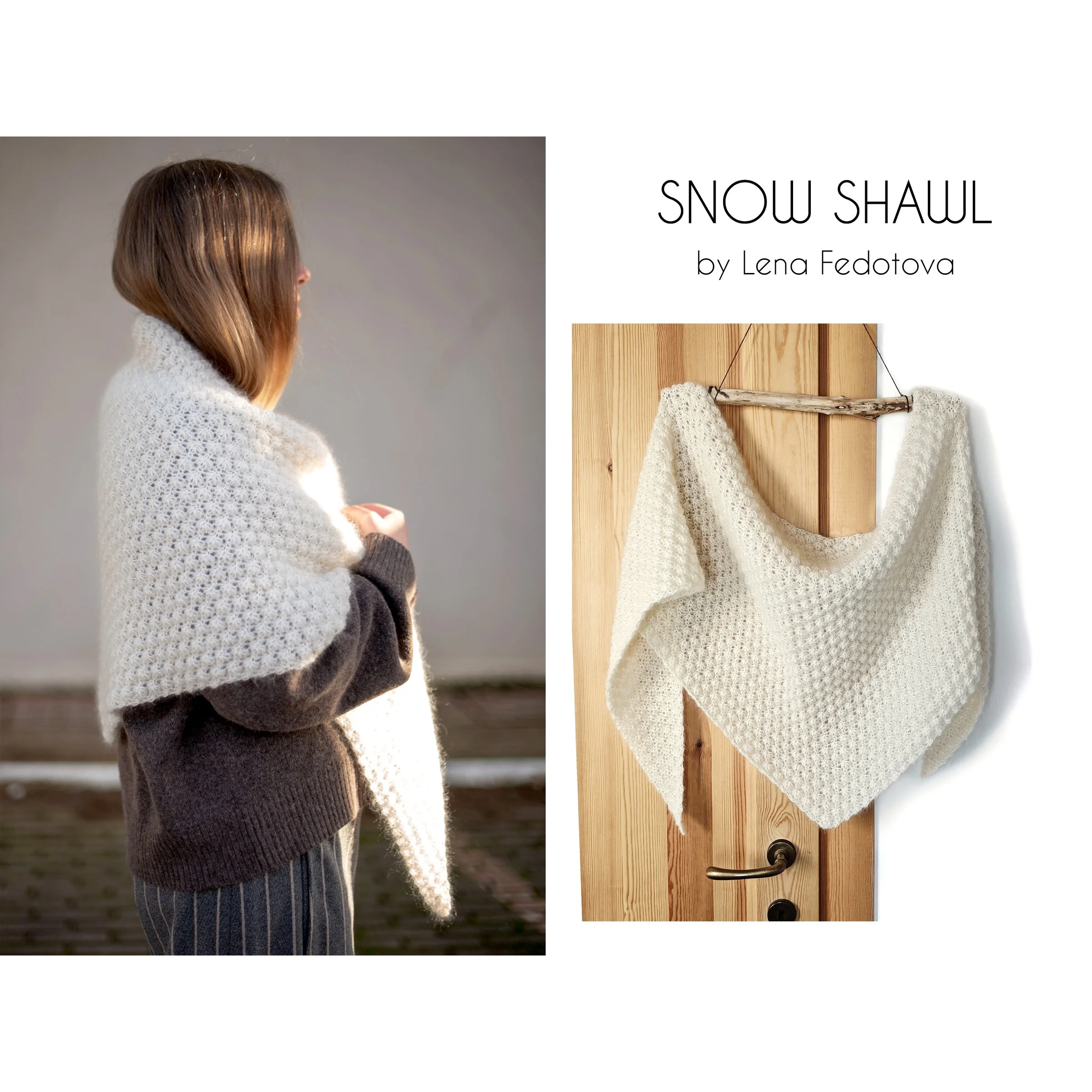
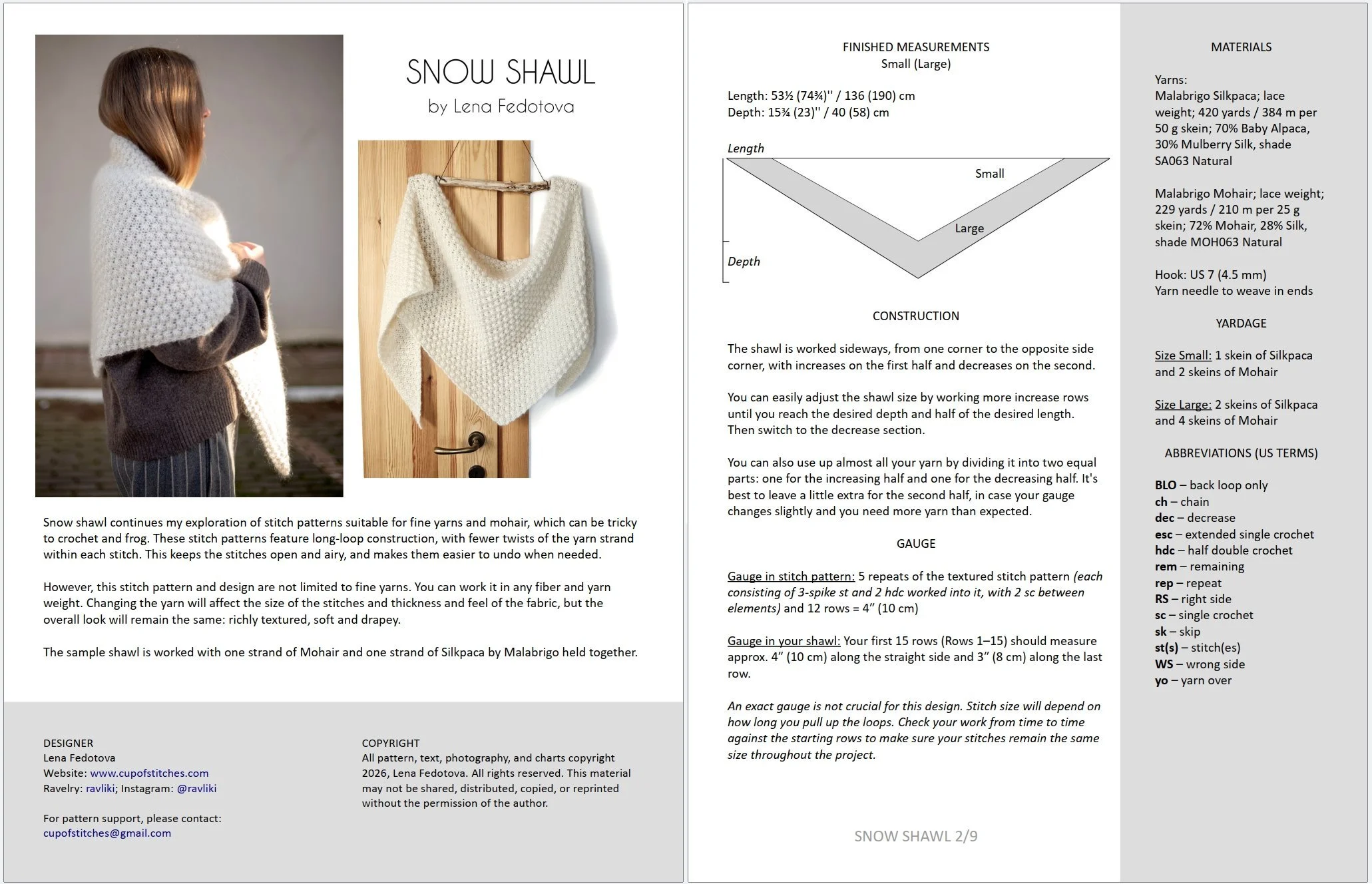
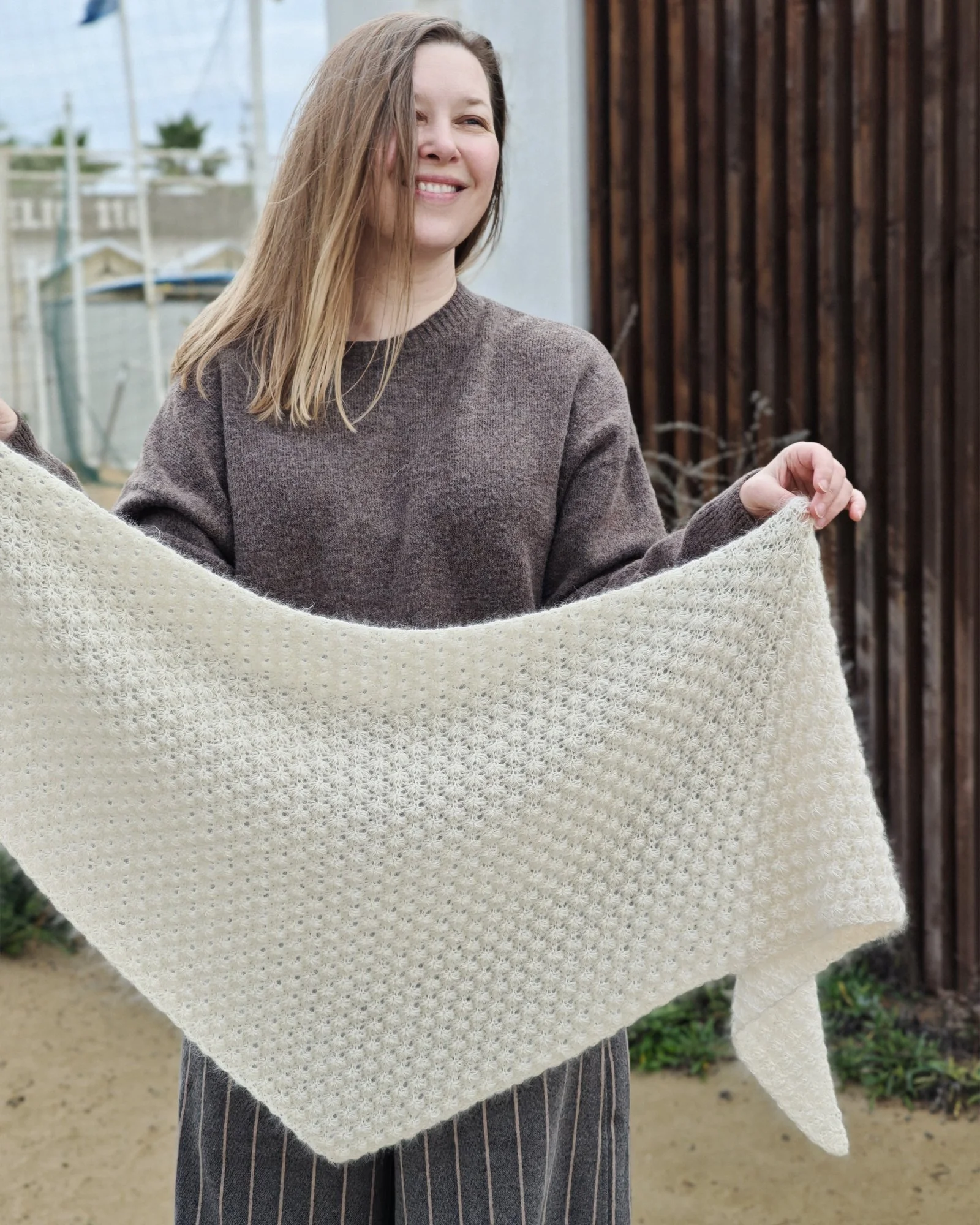
The shawl is worked sideways, from one corner to the opposite side corner, with increases on the first half and decreases on the second. You can easily adjust the shawl size by working more increase rows until you reach the desired depth and half of the desired length. Then switch to the decrease section.
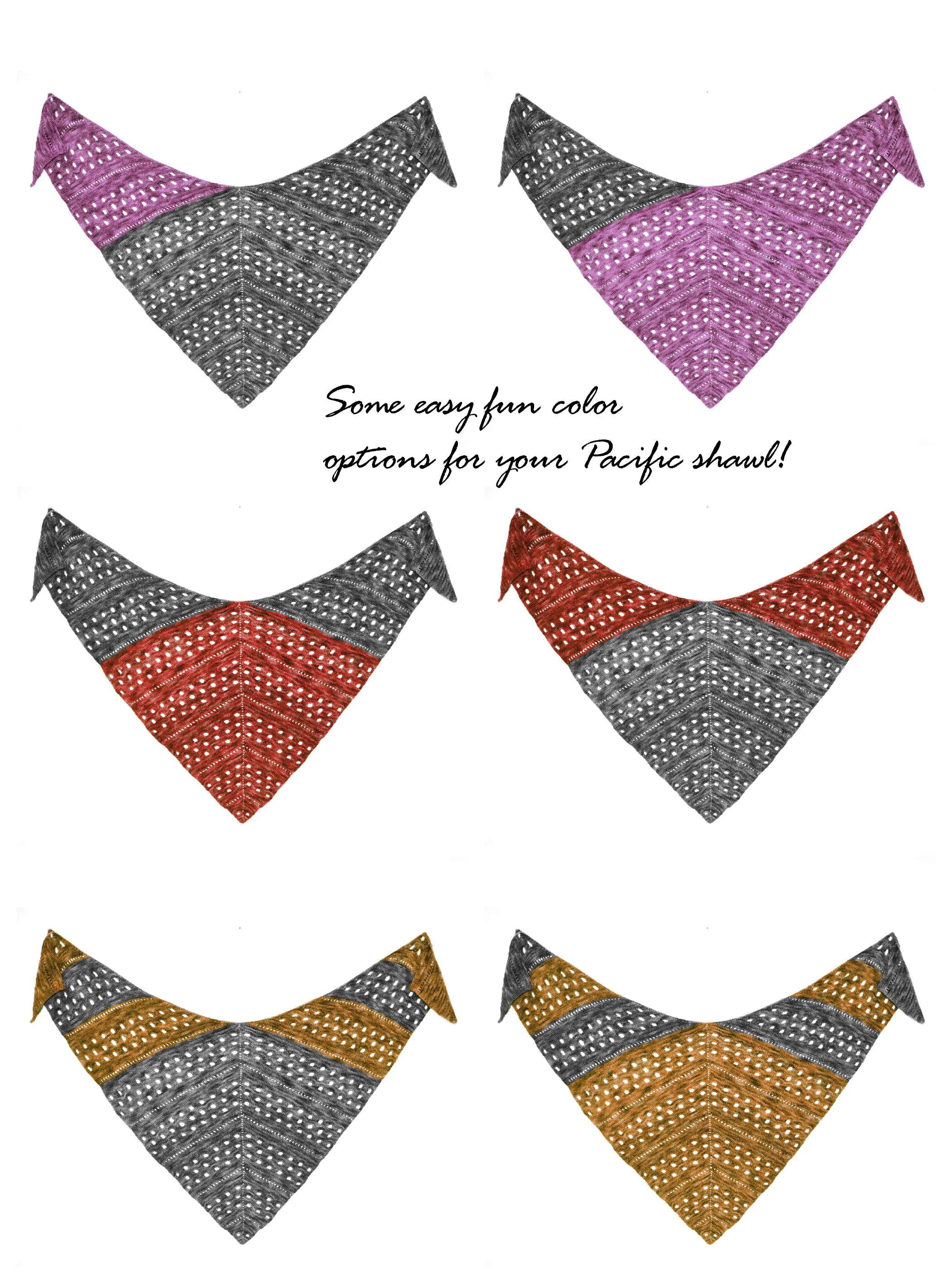
You can also use up almost all your yarn by dividing it into two equal parts: one for the increasing half and one for the decreasing half. It's best to leave a little extra for the second half, in case your gauge changes slightly and you need more yarn than expected.
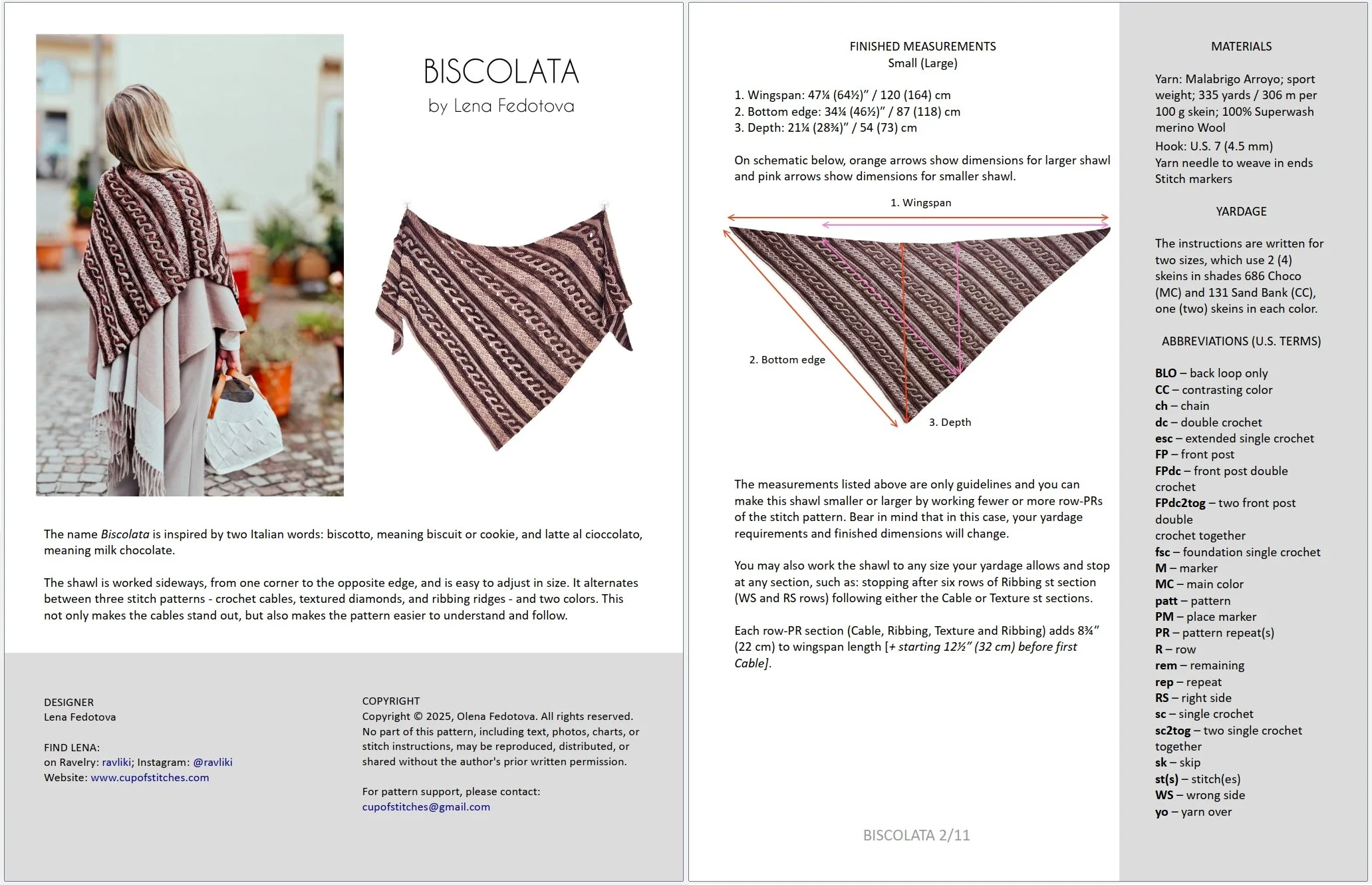
FINISHED MEASUREMENTS
Small (Large)
Length: 53½ (74¾)'' / 136 (190) cm
Depth: 15¾ (23)'' / 40 (58) cm
MATERIALS
Yarns:
Malabrigo Silkpaca; lace weight; 420 yards / 384 m per 50 g skein; 70% Baby Alpaca, 30% Mulberry Silk, shade SA063 Natural
Malabrigo Mohair; lace weight; 229 yards / 210 m per 25 g skein; 72% Mohair, 28% Silk, shade MOH063 NaturalHook: US 7 (4.5 mm)
Yarn needle to weave in ends
YARDAGE
Size Small: 1 skein of Silkpaca and 2 skeins of Mohair
Size Large: 2 skeins of Silkpaca and 4 skeins of Mohair
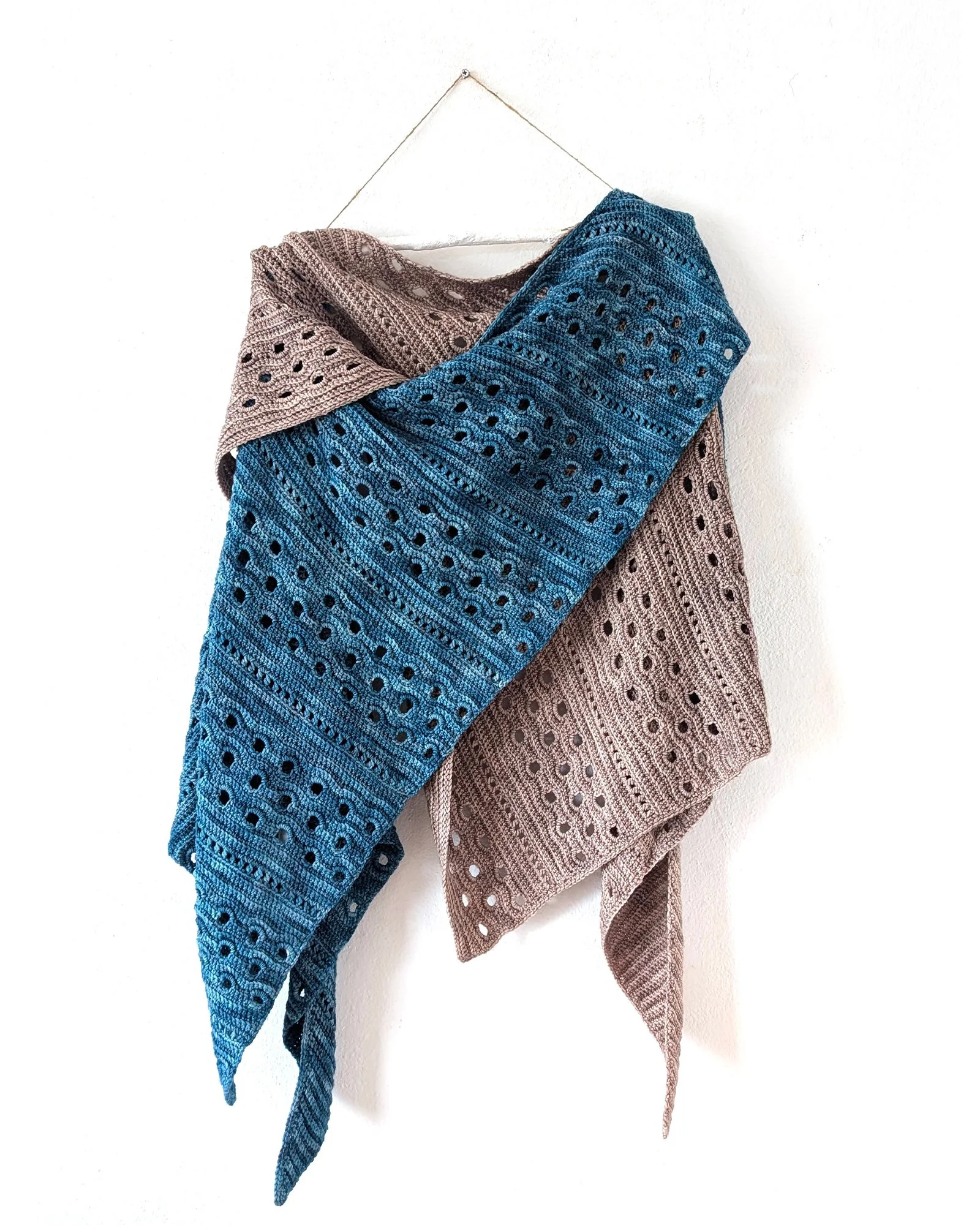
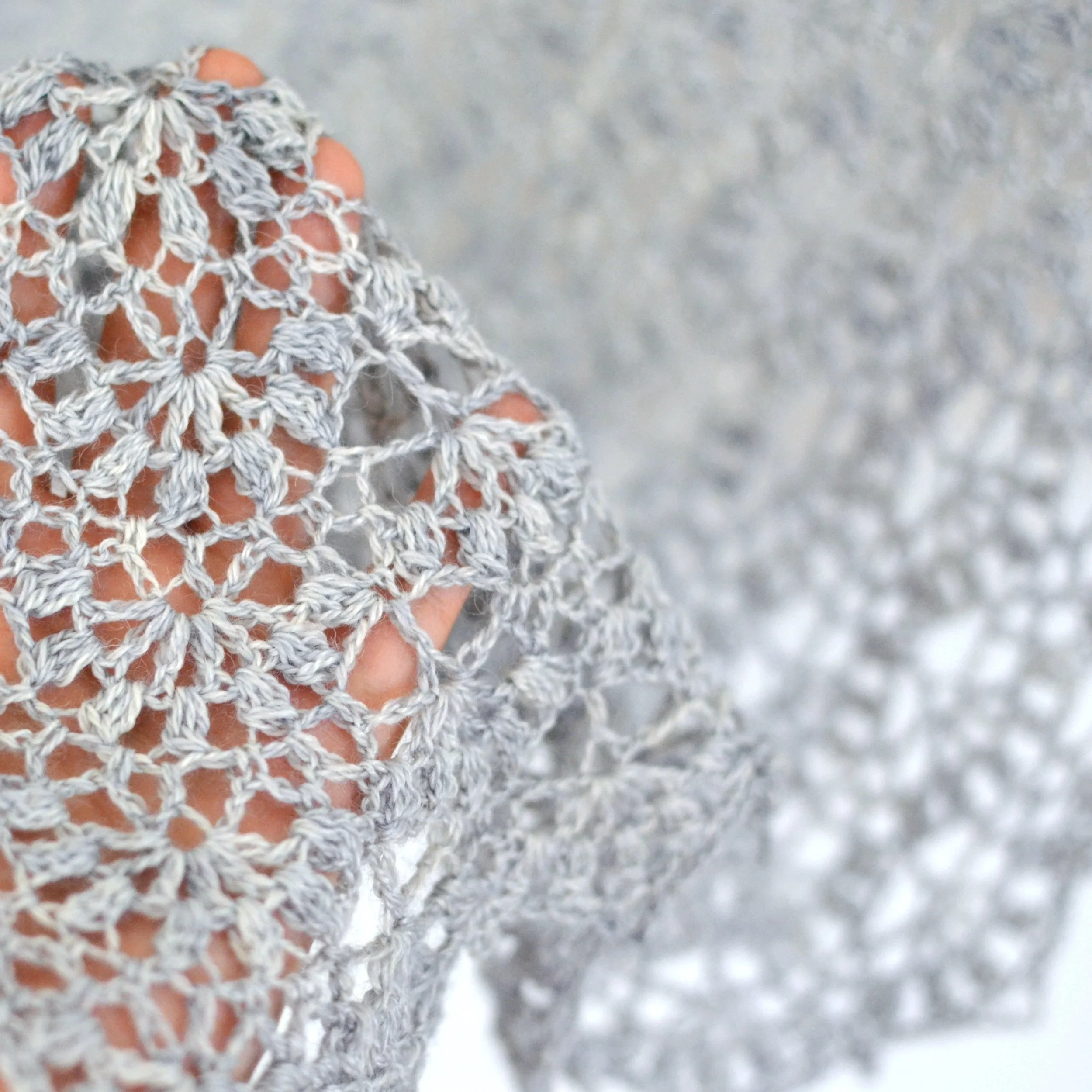
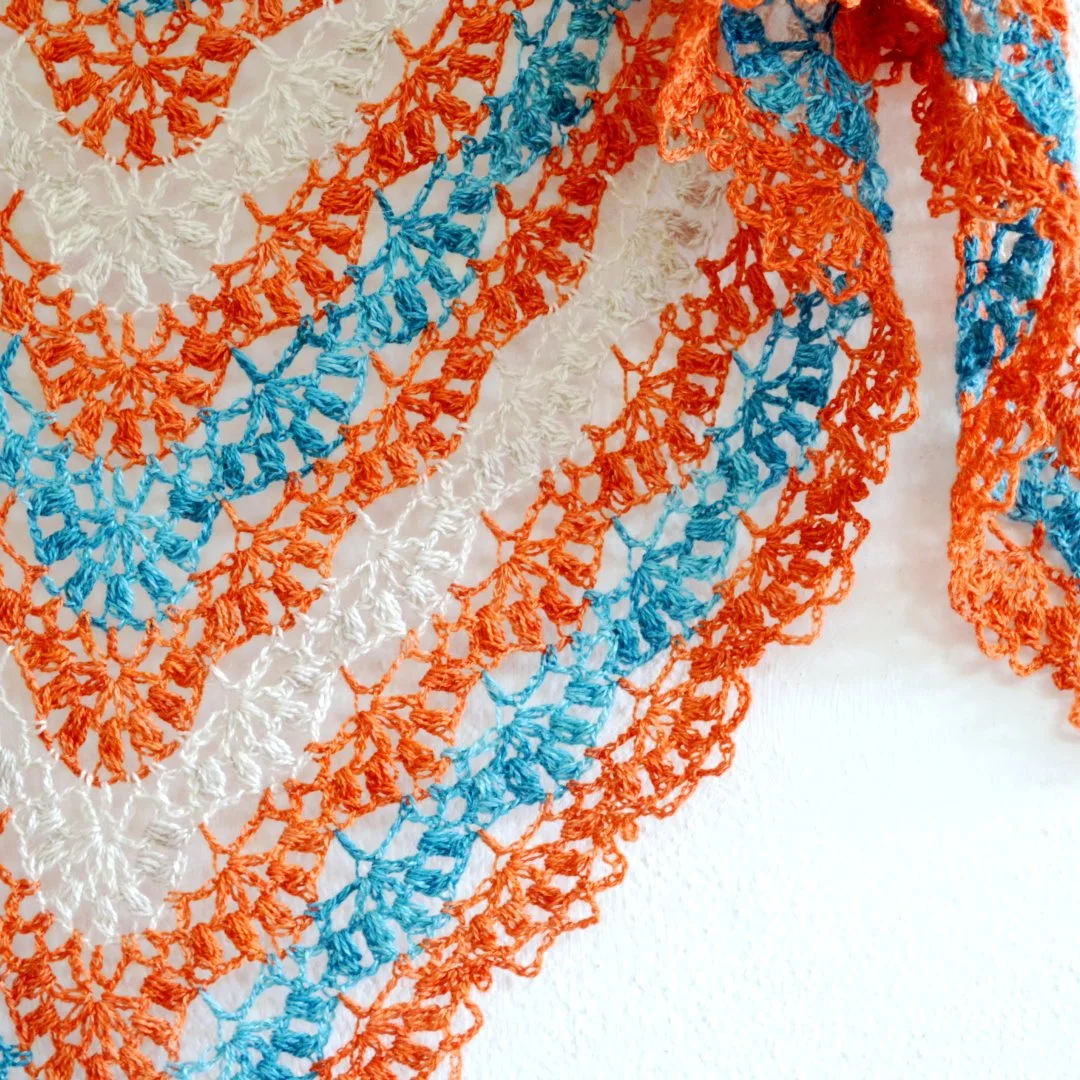
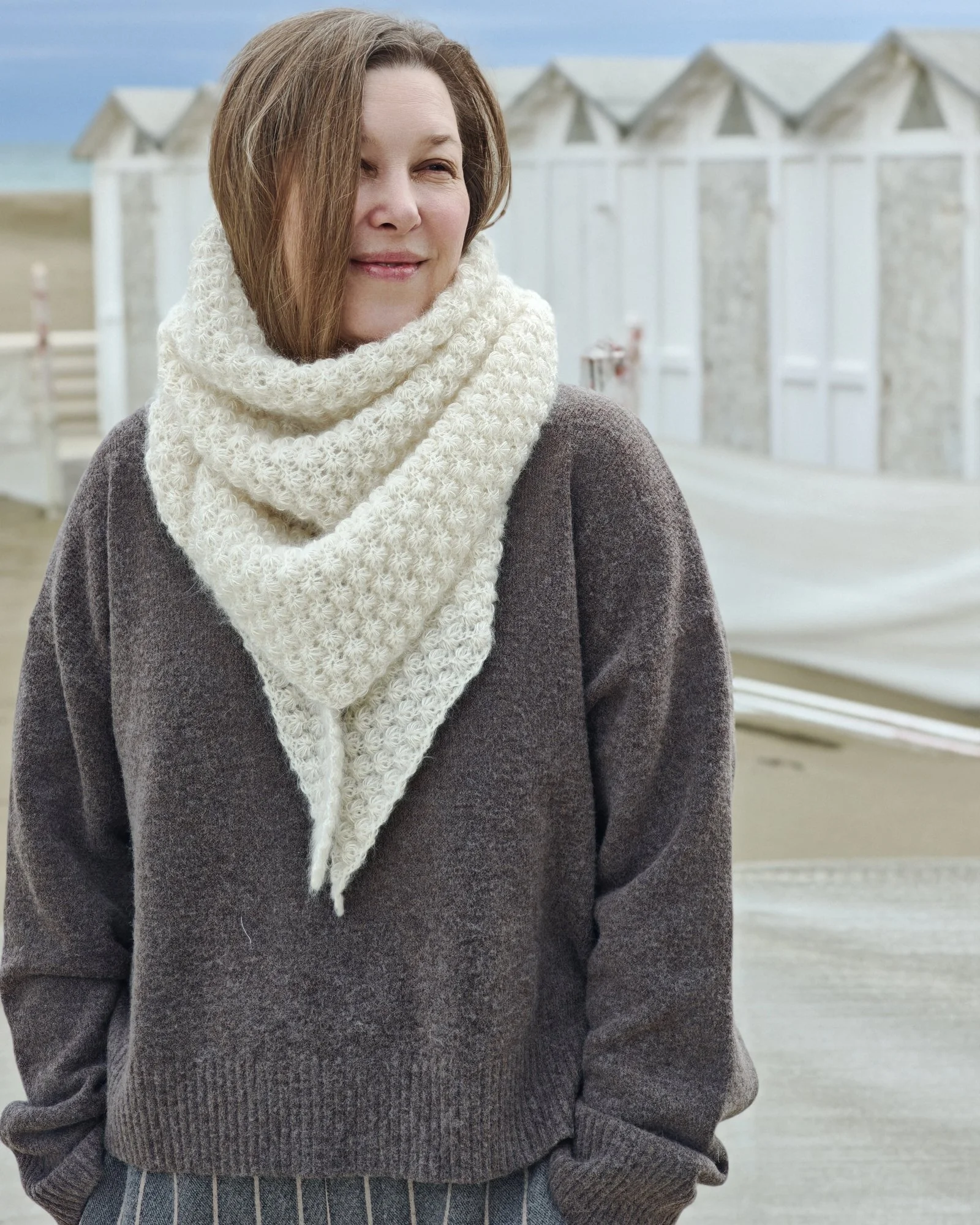
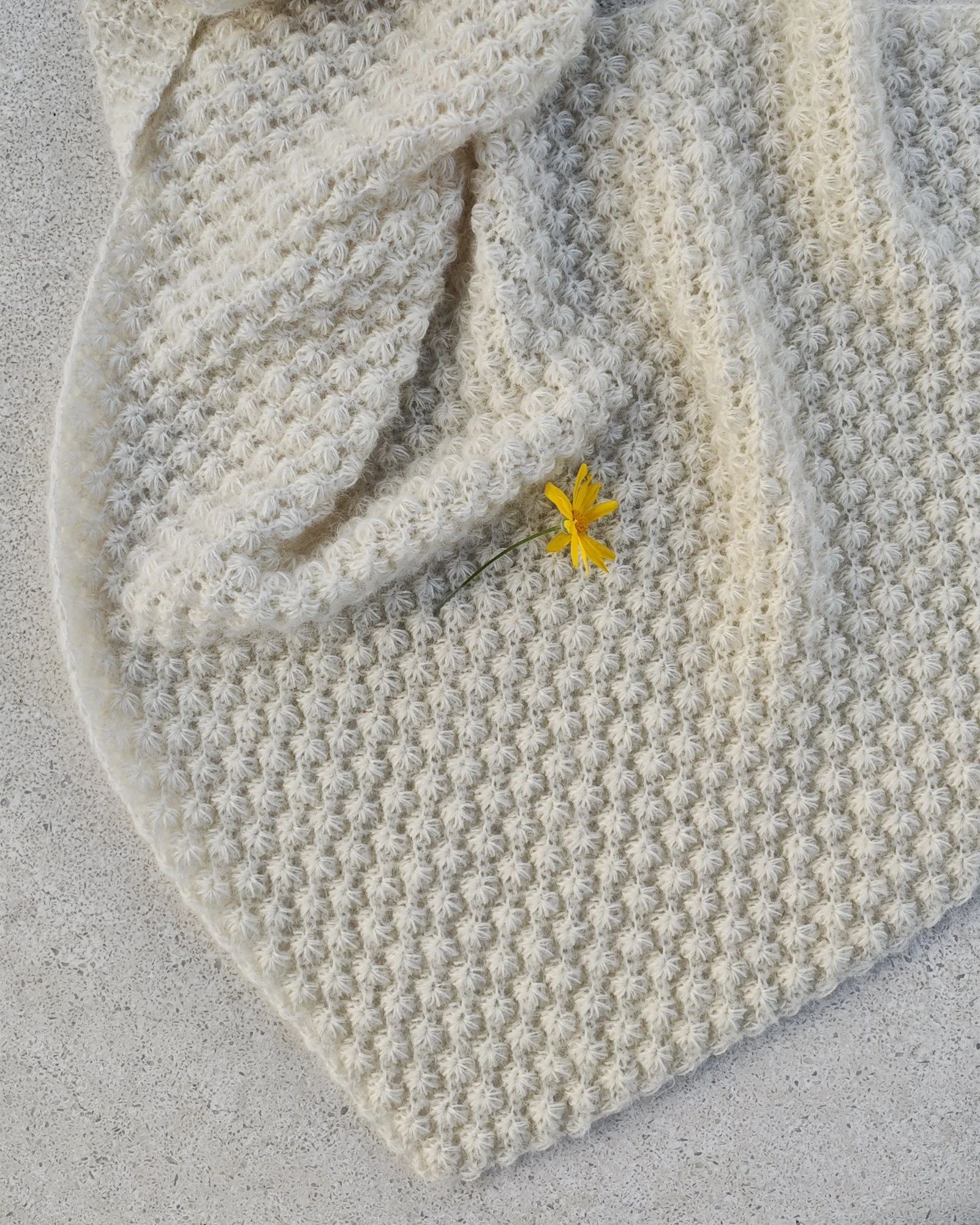
The sample shawl is worked with one strand of Mohair and one strand of Silkpaca by Malabrigo held together. However, this stitch pattern and design are not limited to fine yarns. You can work it in any fiber and yarn weight. Changing the yarn will affect the size of the stitches and thickness and feel of the fabric, but the overall look will remain the same: richly textured, soft and drapey.
I create new crochet stitches to show a quieter, softer side of crochet: calm, simple, and casual. My patterns may look unusual at first only because the technique is new to you, just like your first chain or single crochet once was. After a little practice, it feels easy and natural.