Yarn Choices for Today’s Crochet
Since I decided to fully destash and work with just one yarn brand, I’ve been living a bit in a yarn bubble. The yarn I usually use is perfectly suited for crochet, so I rarely question it anymore.
Recently, though, I went shopping for Italian yarns for some baby blanket ideas and after making a few swatches, I felt the need to share some thoughts about yarn and modern crochet.
Why do some projects truly shine in certain yarns, while others look far from the intended result?
Why can the same stitch feel beautiful in one yarn and stiff or flat in another?
Modern Crochet Is Structural
Modern crochet stitches (including mine) are often structural. They rely on ridges, overlays, post work, relief textures, and flowing surfaces. Even colorwork is worked differently today.
Just look at how many new techniques appear these days and how different they look compared to traditional stitches, plain rows of double crochet, or classic lace!
Because of this, yarn choice matters more than ever.
Stitches: then and now
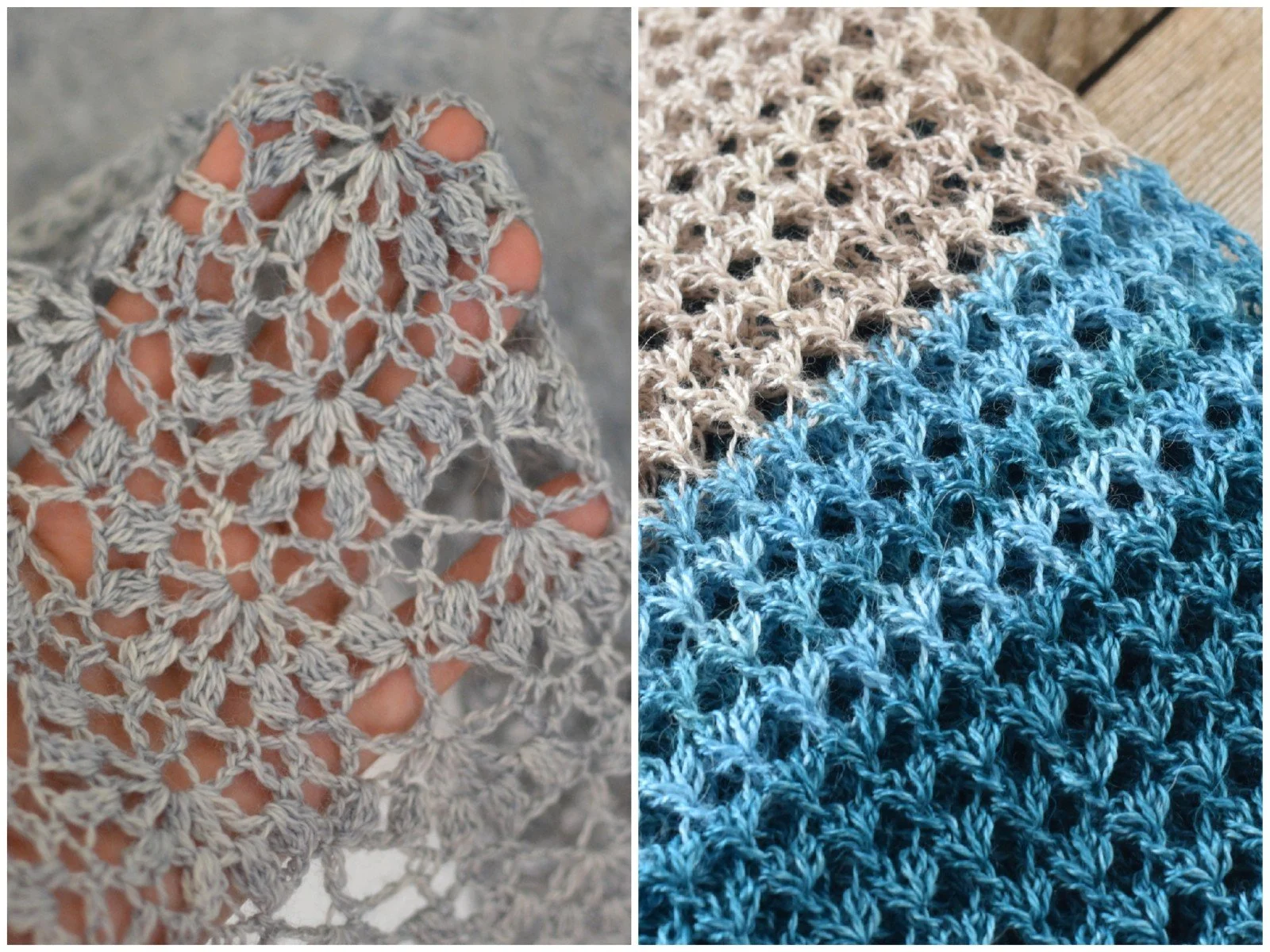
Traditional crochet usually builds beauty through clear, visible stitches and repeating patterns, such as:
granny squares
lace motifs
fans, shells, pineapples
even rows of dc, tr, etc
symmetry and regular rhythm
openwork and ornamental details.
Modern crochet builds beauty through fabric structure and surface texture. We become less focused on individual stitches, and instead on the fabric as a whole: its texture, flow, and drape, adapted for everyday wear and comfort.
What Works Well for Modern Crochet
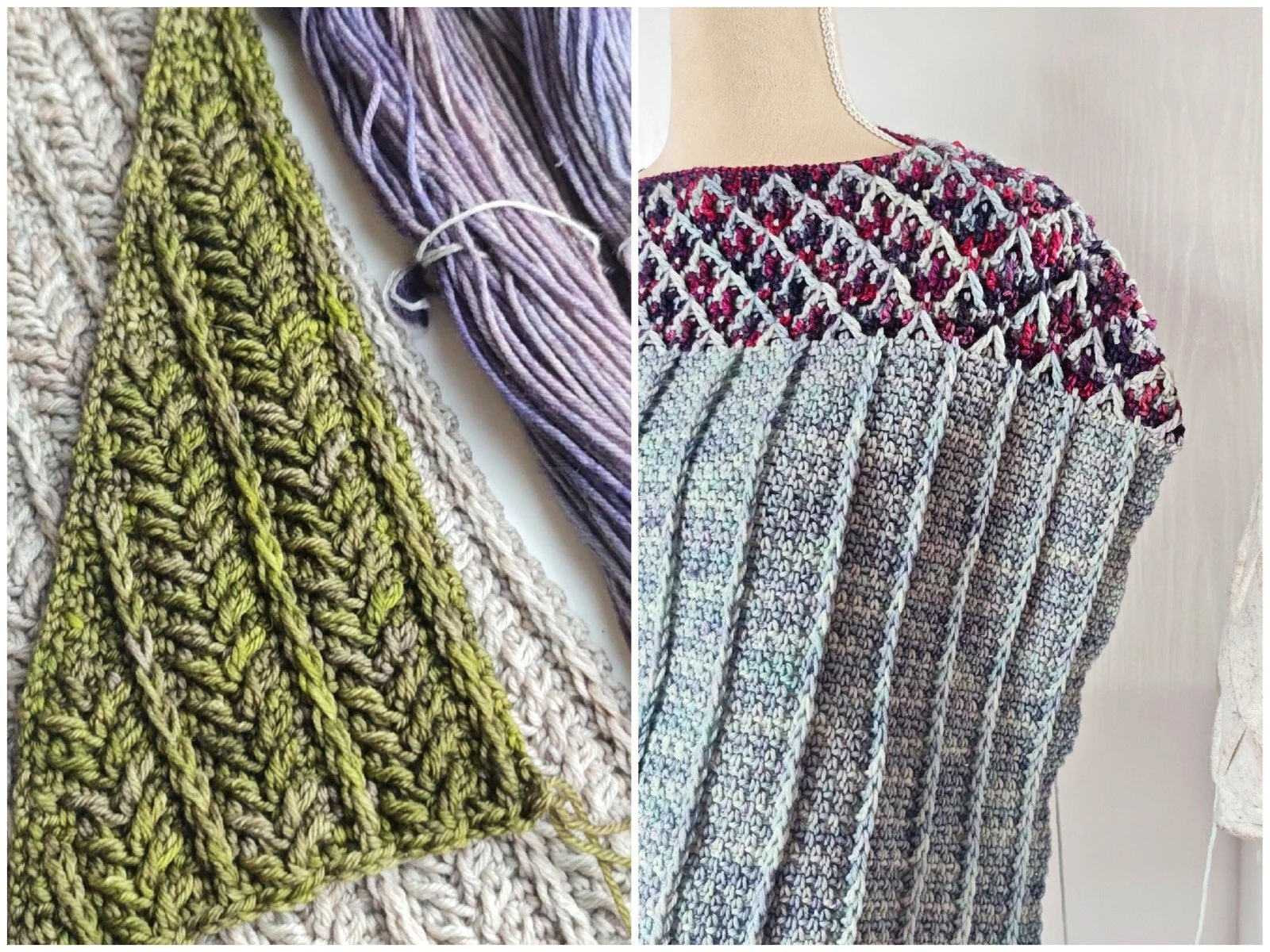
Good yarns for modern crochet tend to:
move under the hook (yarn should slide easily through your hook while crocheting, letting the stitch form naturally)
open slightly between stitches (yarn should relax a little, so each stitch has room to display its texture)
soften after blocking (making the fabric more flexible and drapey)
allow texture to cast soft shadows, not hard edges (making the stitches look three-dimensional and gentle)
This is why yarns often recommended for knitting (superwash wool, merino and alpaca blends, or wool & silk, etc) in the past, work so well for modern crochet designs now.
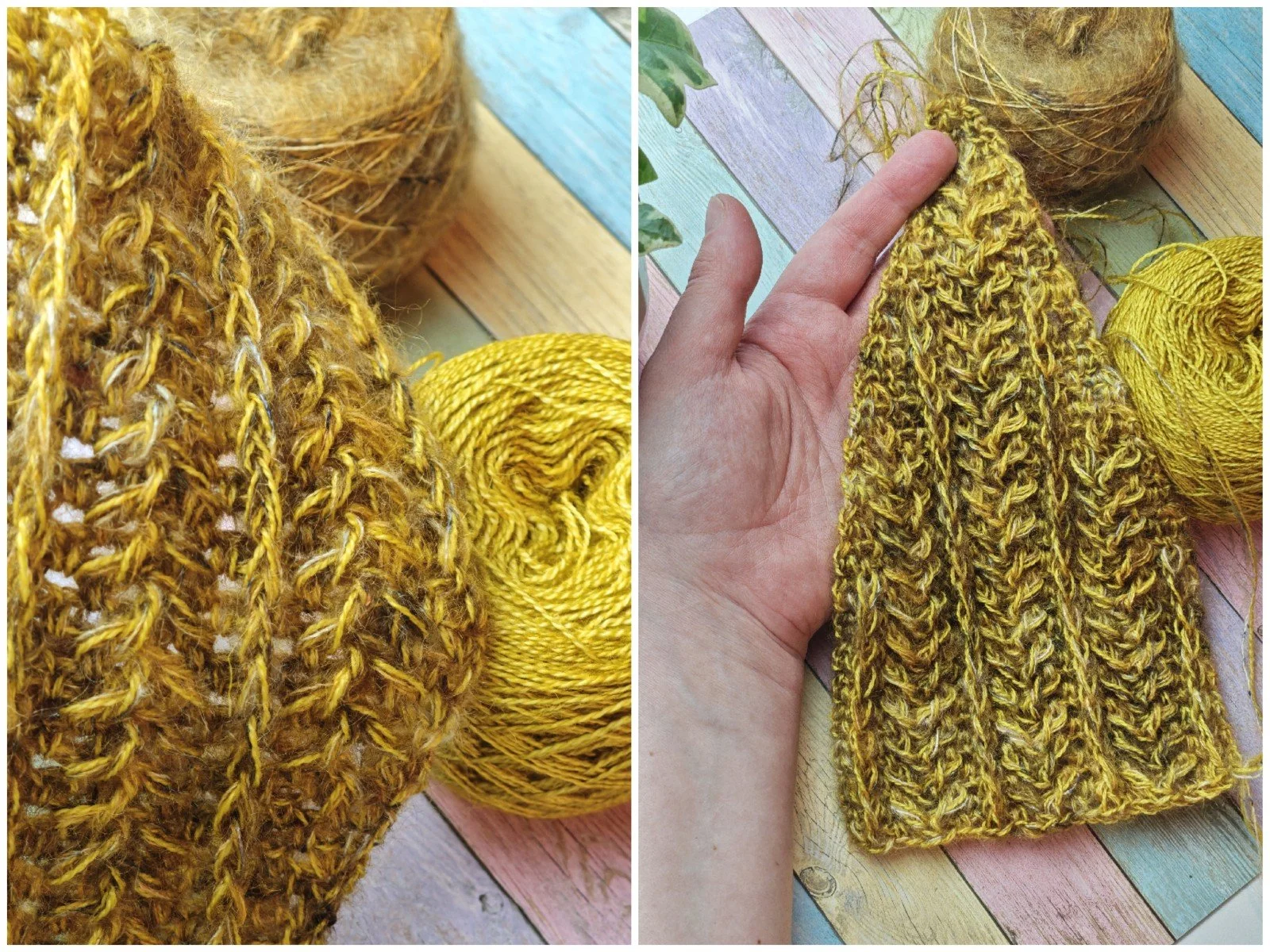
I am using one strand of alpaca & silk blend and one strand of mohair for my current project. It is so easy to crochet with, and it also frogged so smoothly! Can you imagine mohair behaving that way? Modern techniques make it possible.
Non-flexible yarns flatten modern stitch designs. This is one reason why cotton often feels outdated for contemporary crochet. I intuitively stopped using cotton and linen yarns years ago because their look and feel felt wrong, but only recently I understood why.
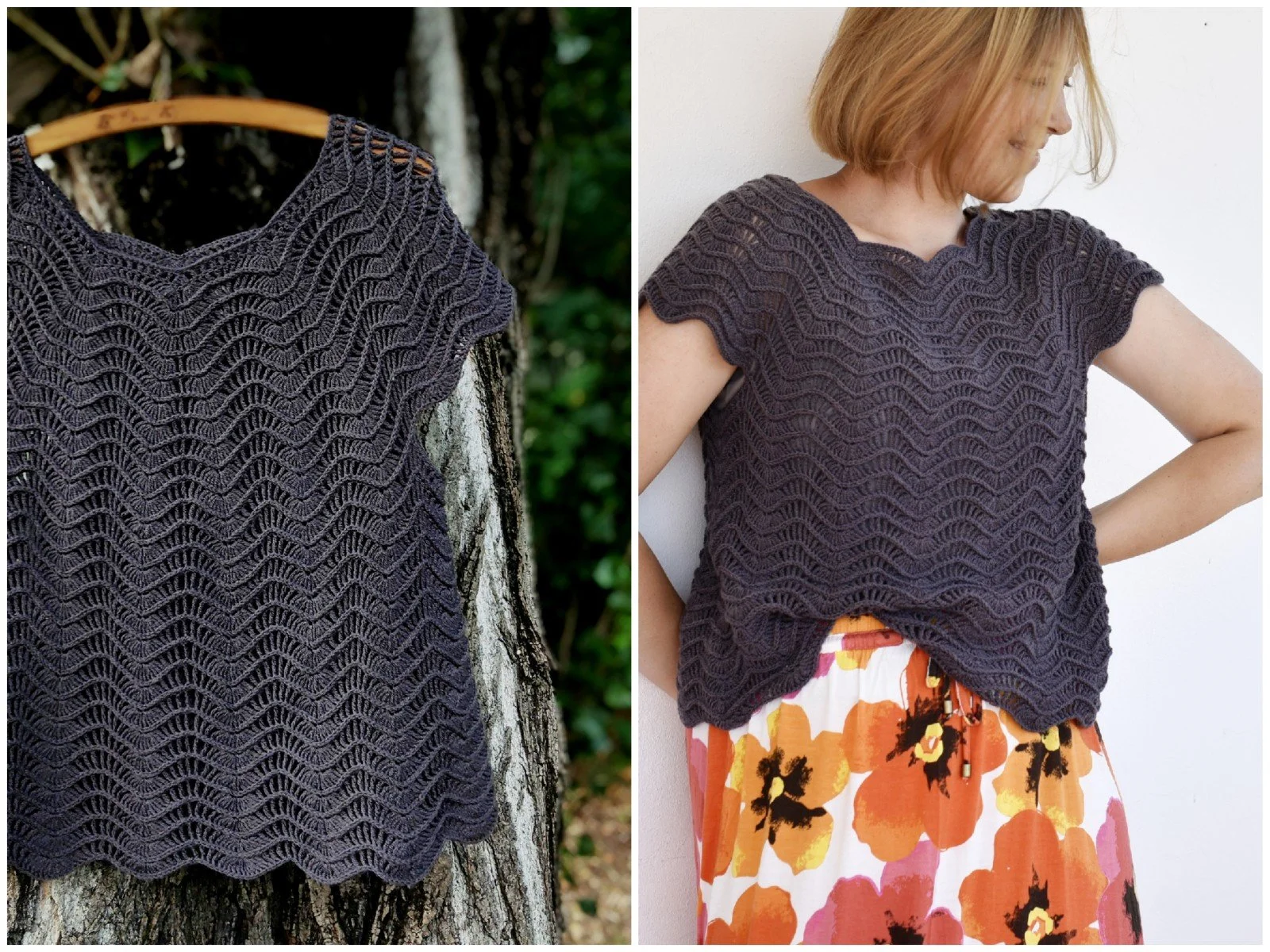
Chaitee top in 100% lace merino - breathable and light as a feather! In cotton, I would be red as a tomato and sweating. It makes me so sad to see cotton often suggested as the best yarn for crochet. In the past, yes, absolutely! But not now…
Drape Over Definition
We are also making different kinds of projects now (don’t forget: while using new kind of stitches!): warm sweaters, cozy shawls, etc. For these, drape becomes more important than sharp stitch definition.
Older crochet advice focused on neat, clearly defined stitches and that made perfect sense for those types of stitch patterns and projects. But modern crochet focuses more on fabric behavior.
For garments and shawls, we want:
vertical flow, a lot of drape
gentle stretch
fabric that settles naturally on the body
This is also why lighter yarns and slightly larger hooks often give better results with modern stitches. The fabric gains air and flexibility, and the texture feels modern rather than heavy, stiff, or purely decorative.
I often suggest working loosely and choosing the hook size that feels right for your crochet texture, not the label. We don’t really need sharp stitch definition anymore: modern techniques, yarns, and colors create their own magic.
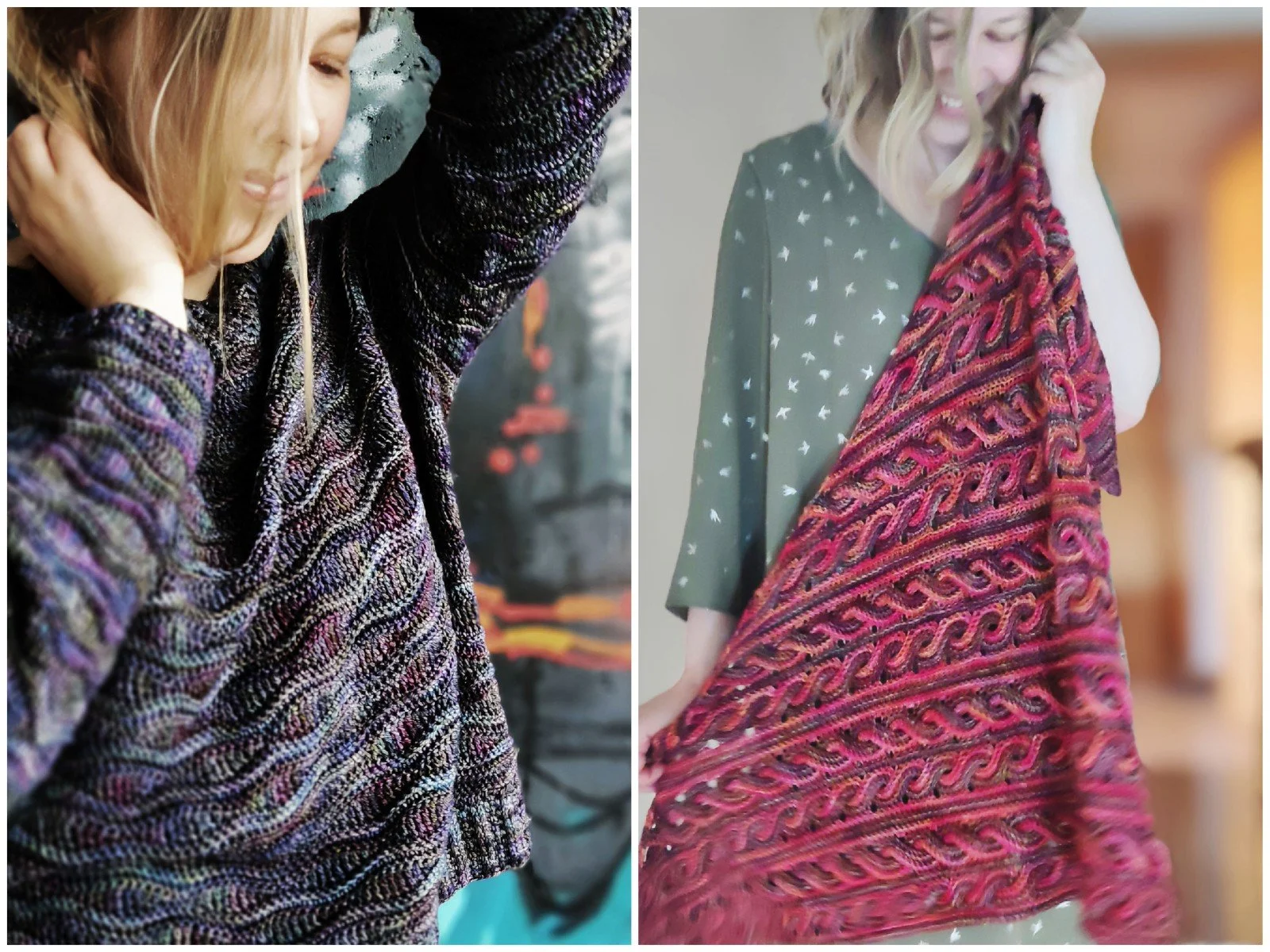
Yarn Twist
Even among modern merino and wool yarns, some work much better than others in crochet and a big reason is yarn twist.
Yarn twist describes how tightly the fibers are spun together. It affects how the yarn feels in your hands and how stitches behave in the finished fabric.
Crochet stitches already add structure. Because of this, yarn does not need an extreme twist to hold the fabric together.
A calmer twist allows:
smoother surfaces
softer edges
better drape
The tighter the twist, the less drape and softness the fabric has. Highly twisted yarns can be useful for accessories that need structure, but for modern garments and shawls they often feel too rigid.
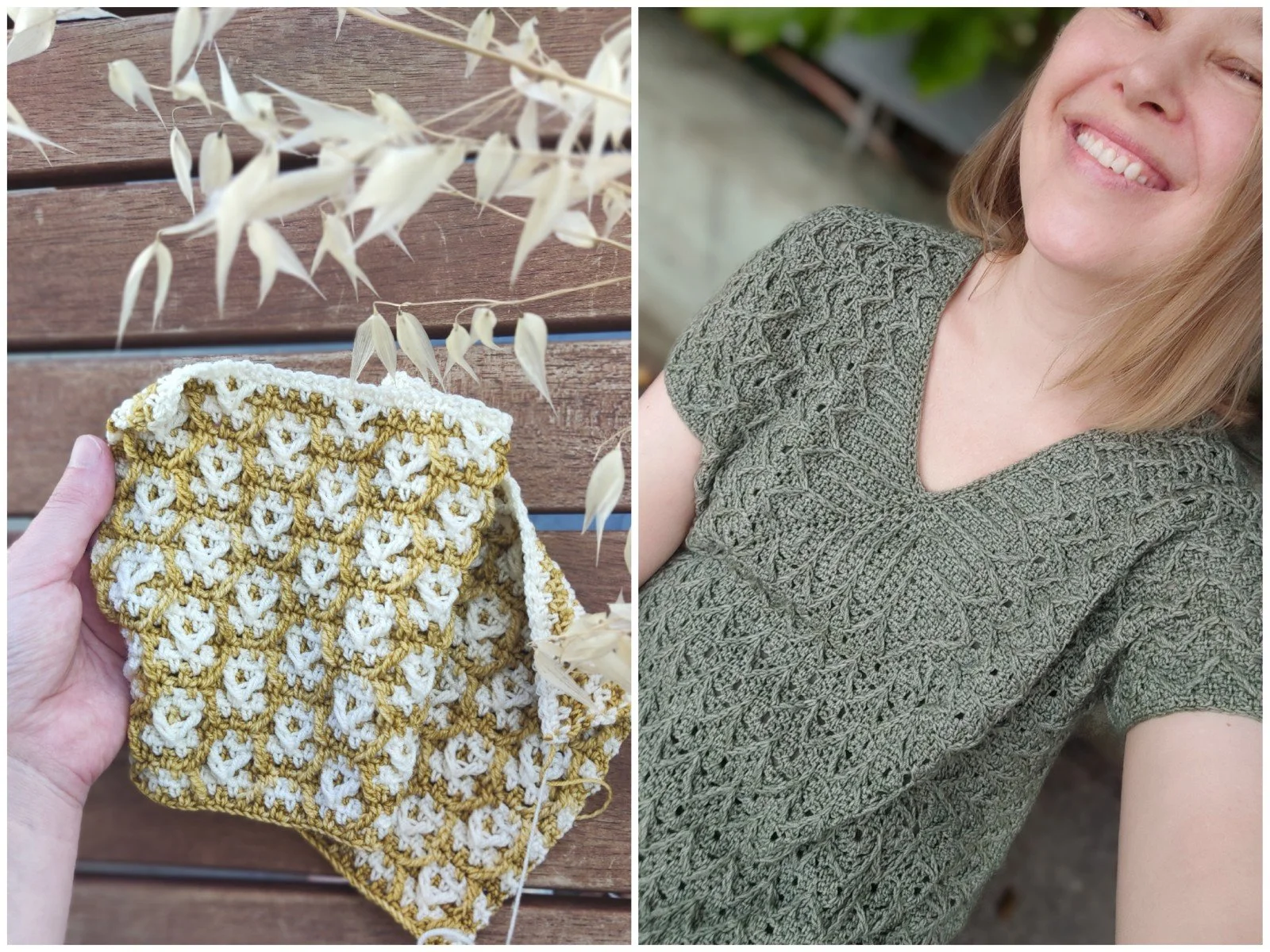
A Small Yarn Experiment
In a local yarn shop, I bought two very similar yarns: Adriafil Genziana and Mondial Baby Delicata.
Both are:
100% merino wool for baby items
sold in 50g balls
The differences were subtle:
Adriafil Genziana: 185m/50g
Mondial Baby Delicata: 215m/50g
Visually, they look the same thickness, and both feel very soft in the hands. But the difference in my swatches was dramatic :)
Genziana is twisted more tightly, while Baby Delicata has a calmer twist (which allows more length in the same weight). My swatch in Regina felt very stiff, while the other yarn produced a softer, more fluid fabric.
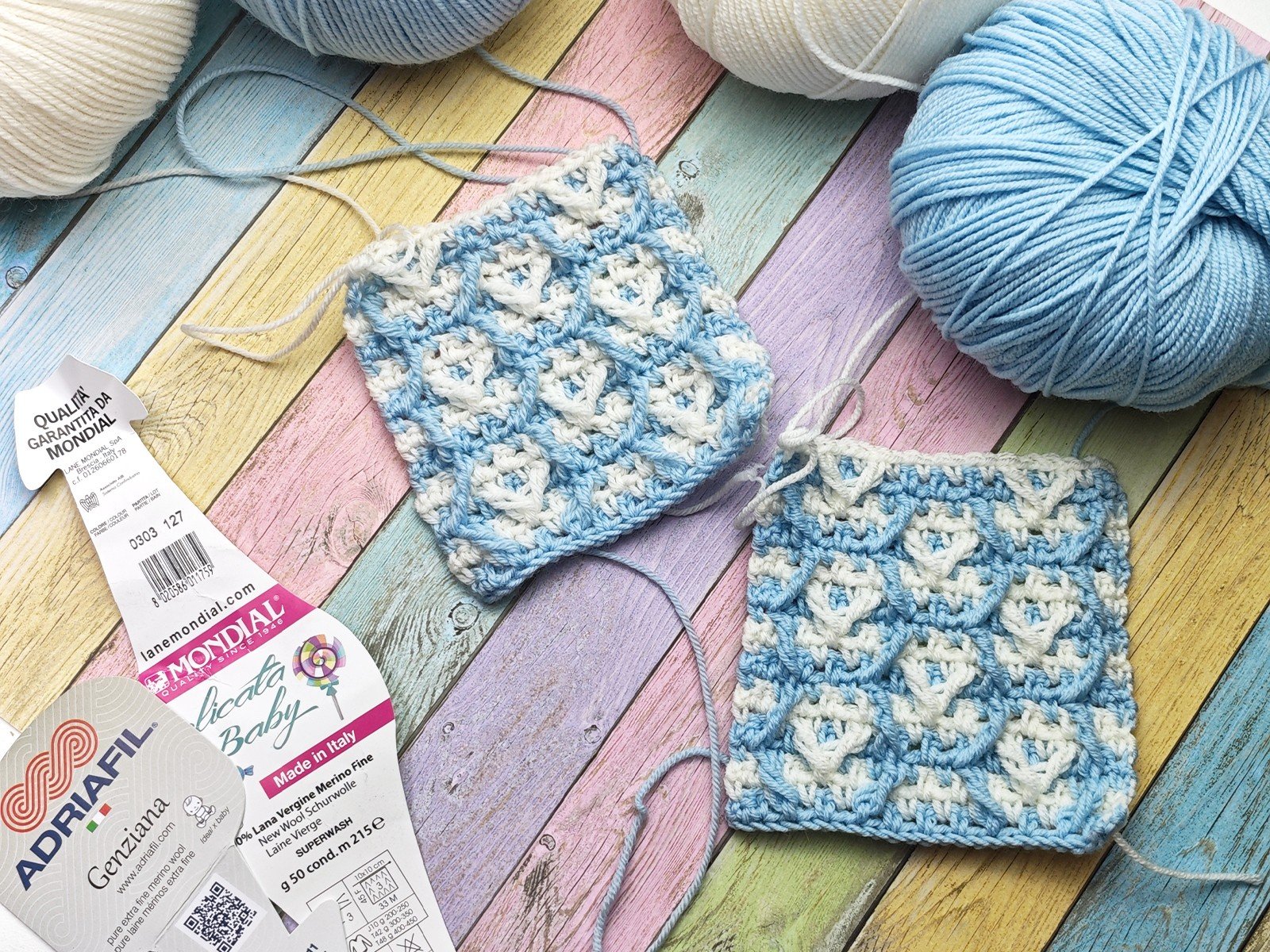
I think you can even see the difference in the photo (Mondial Baby Delicata on the left, Genziana on the right).
Z- and S-twist, as well as left- and right-handed crocheting, are another big topic on their own. I am already going on for quite a while, so I’ll stop here. ◍•ᴗ•◍
But I truly encourage you to experiment with different yarns: pay attention to how they behave, try a yarn other than cotton (if that’s your go-to crochet yarn), and explore ones with a lower level of twist.
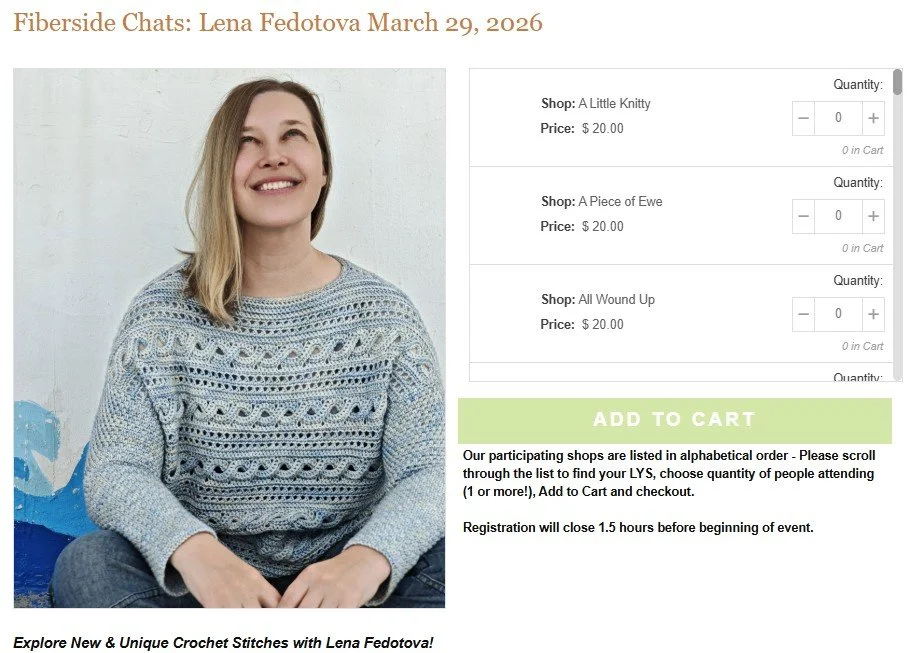
All of this is part of the thoughts I am rolling around in my mind while preparing for the upcoming Fiberside Chat on March 29! This is a live Zoom event where I will be sharing as much as possible about my stitches and designs, modern crochet choices (including yarn↑), and techniques from my book New Ways with Crochet.
Registration is $20 and supports both the designer and the participating yarn shops. You can find all the details and sign up here.