In the past, some stitches were beautiful to me, some were not. ◍•ᴗ•◍ For example, I never liked tall crochet stitches (starting from double crochet and longer), I could not see any beauty in those.
But over time I began to see stitches more like letters. And the actual beauty appears:
in what we make with them
how we combine them
and what comes out of that combination.
Letters make words, and we use stitches in much the same way to create fabrics, textures, and designs.
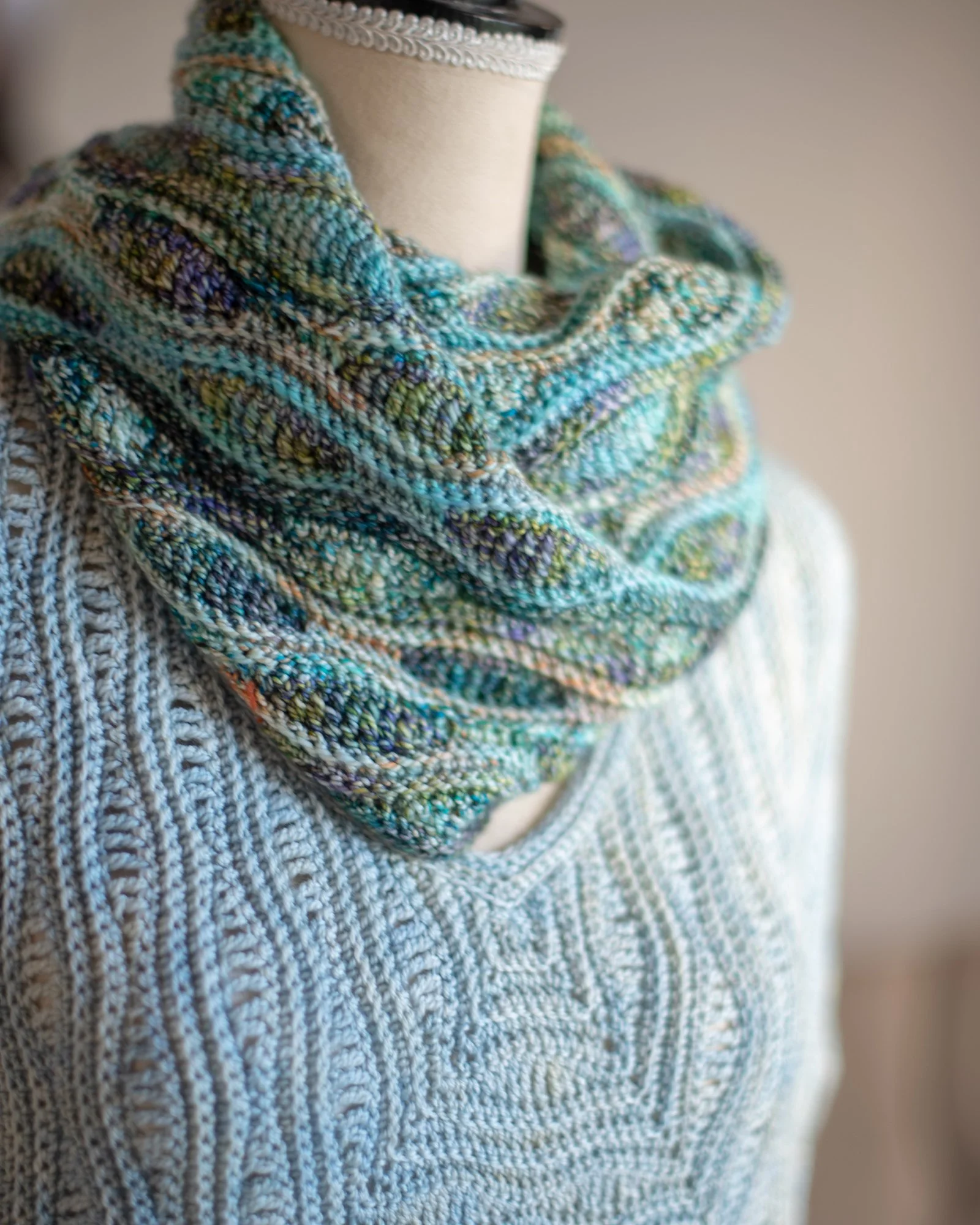
It’s simply impossible to avoid tall stitches in these textures above and all my old objections disappear when I use them this way. ◍•ᴗ•◍
This post is about back post single crochet. We don’t use it often, but in my designs, it has found three different ways to shine.
I use it in the linen stitch based patterns (sc, ch 1) by simply replacing the sc with back post single crochet (BPsc, ch 1).
As a Textured Devider
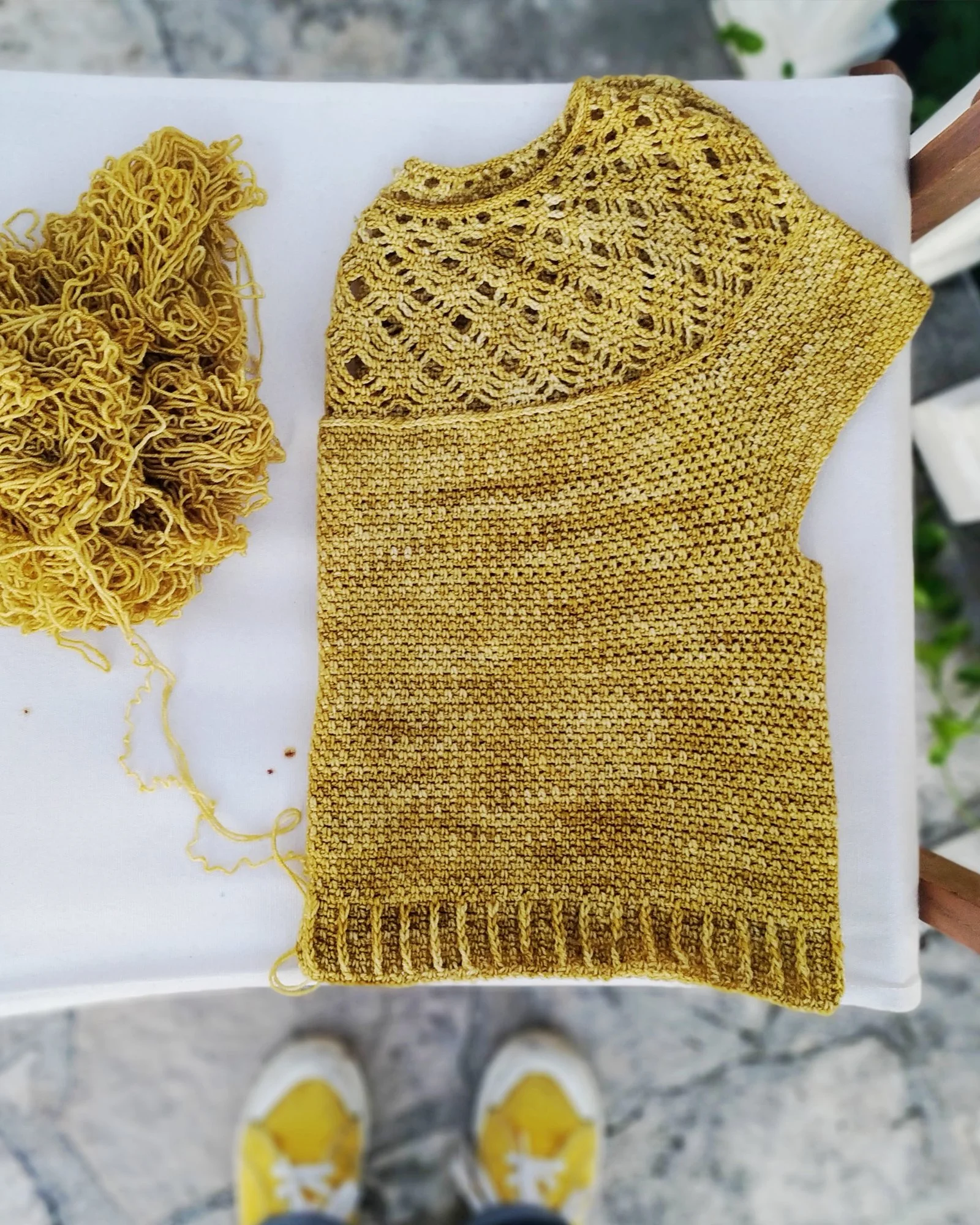
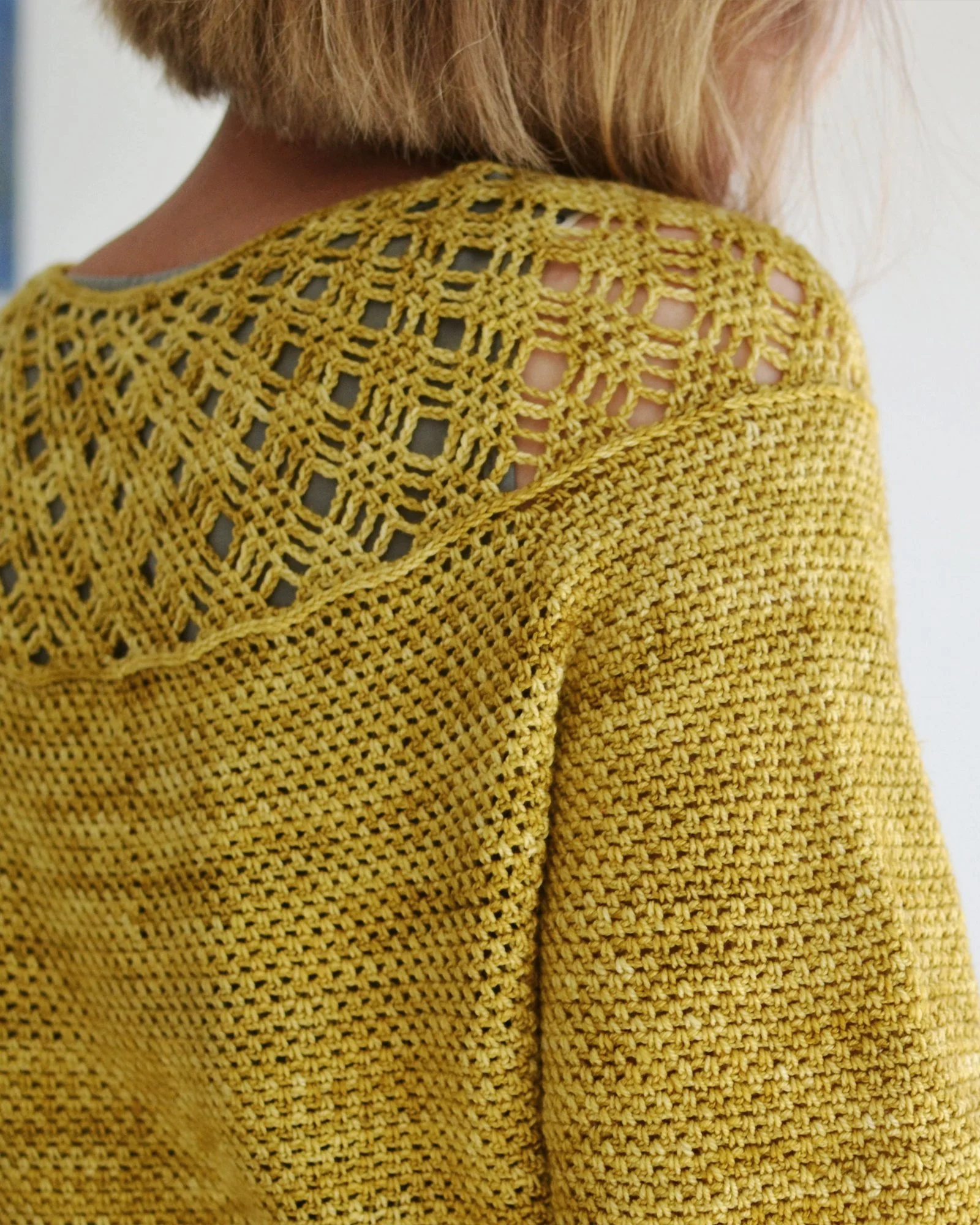
Just a single row of BPsc makes a perfect divider between two different stitch patterns when we cannot (or simply don't want to) make the patterns flow into one another.
In the Maraska pattern, this row separates the upper lace section from the linen stitch. It's not just a lovely detail; it also adds stability and firmness, preventing the large chain spaces at the bottom of the lace yoke from sagging.
As an Edging
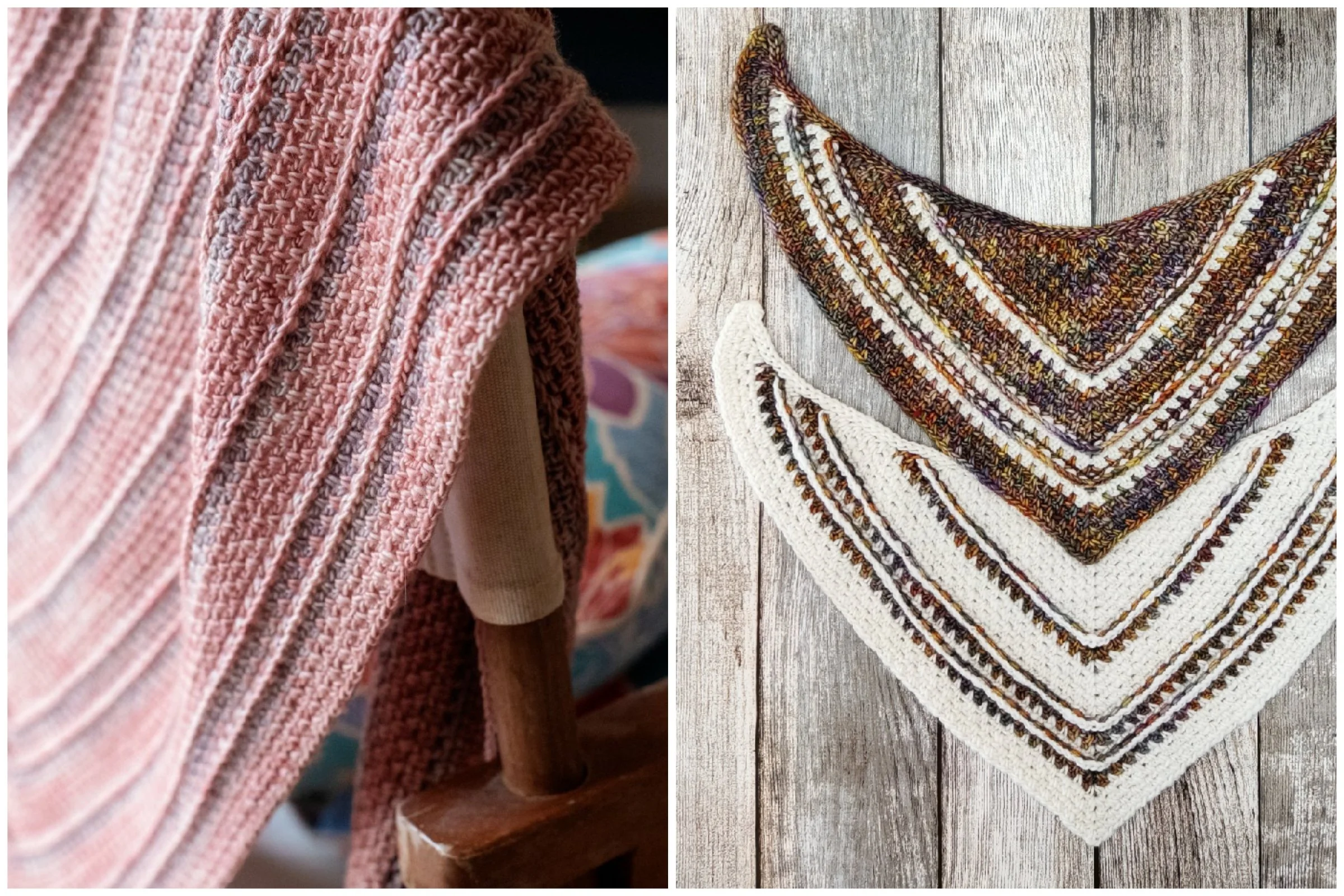
It makes a perfect edging for linen stitch-based patterns! It firms up an edge, can be worked tighter to reduce the circumference (for cuffs and hems), or relaxed (for shawl edges).
I use it often for pieces that don't need anything bold or eye-catching but would look unfinished without some kind of edging.
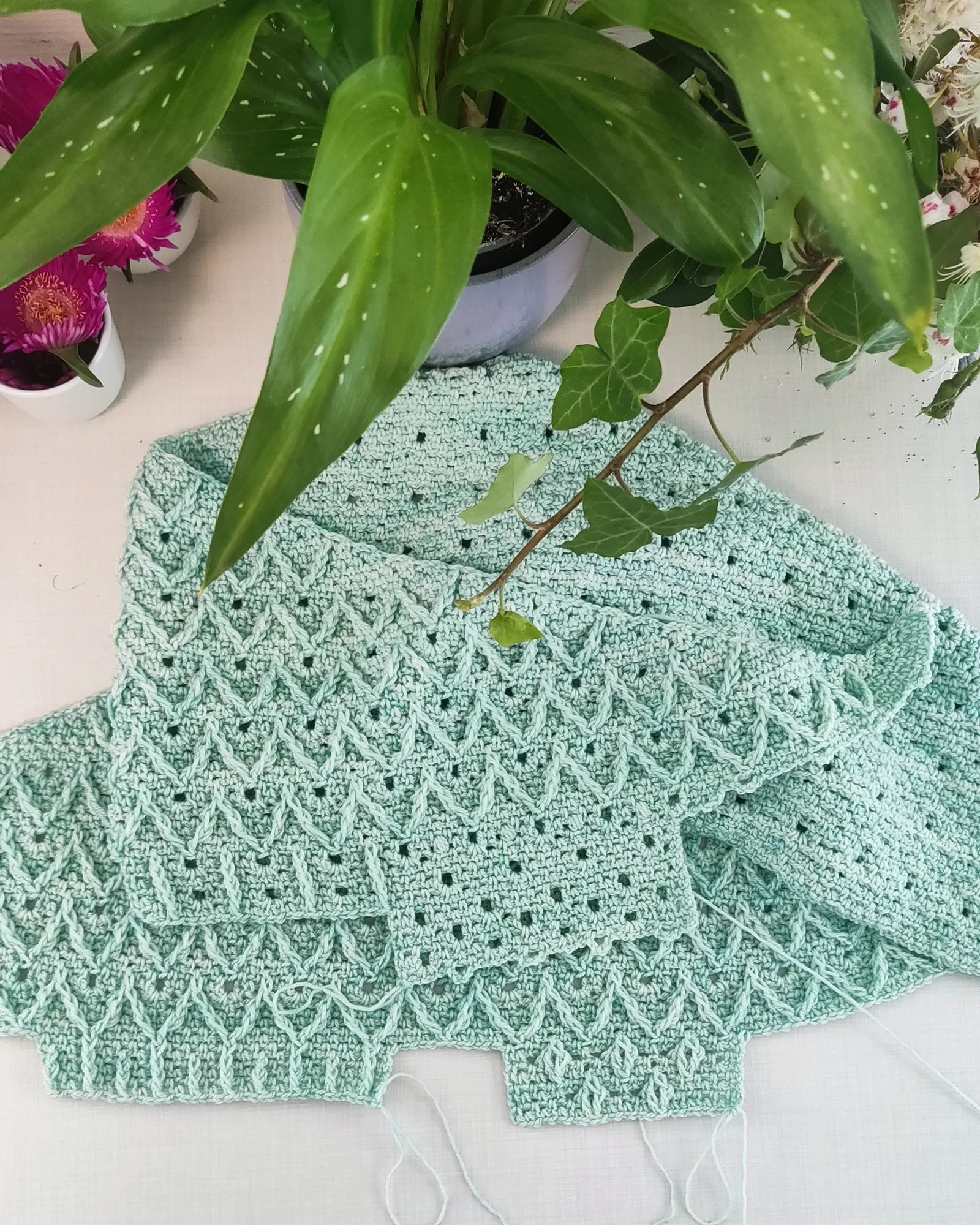
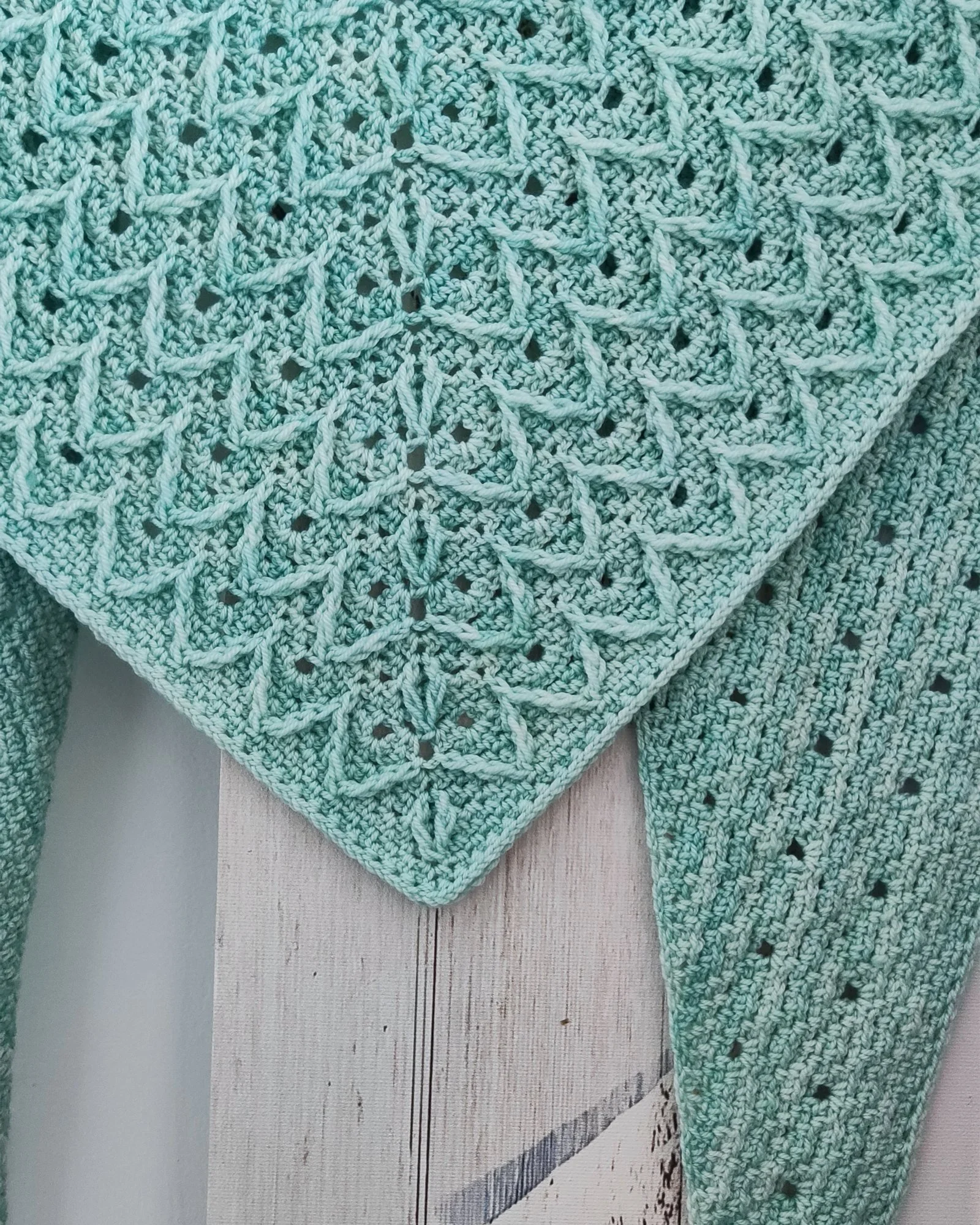
In the left pic above, you can see my attempts to find a suitable finishing for the Mint Leaf shawl, which ended with a row of BPsc (at right).
I used the same edging for the Mint Leaf top:
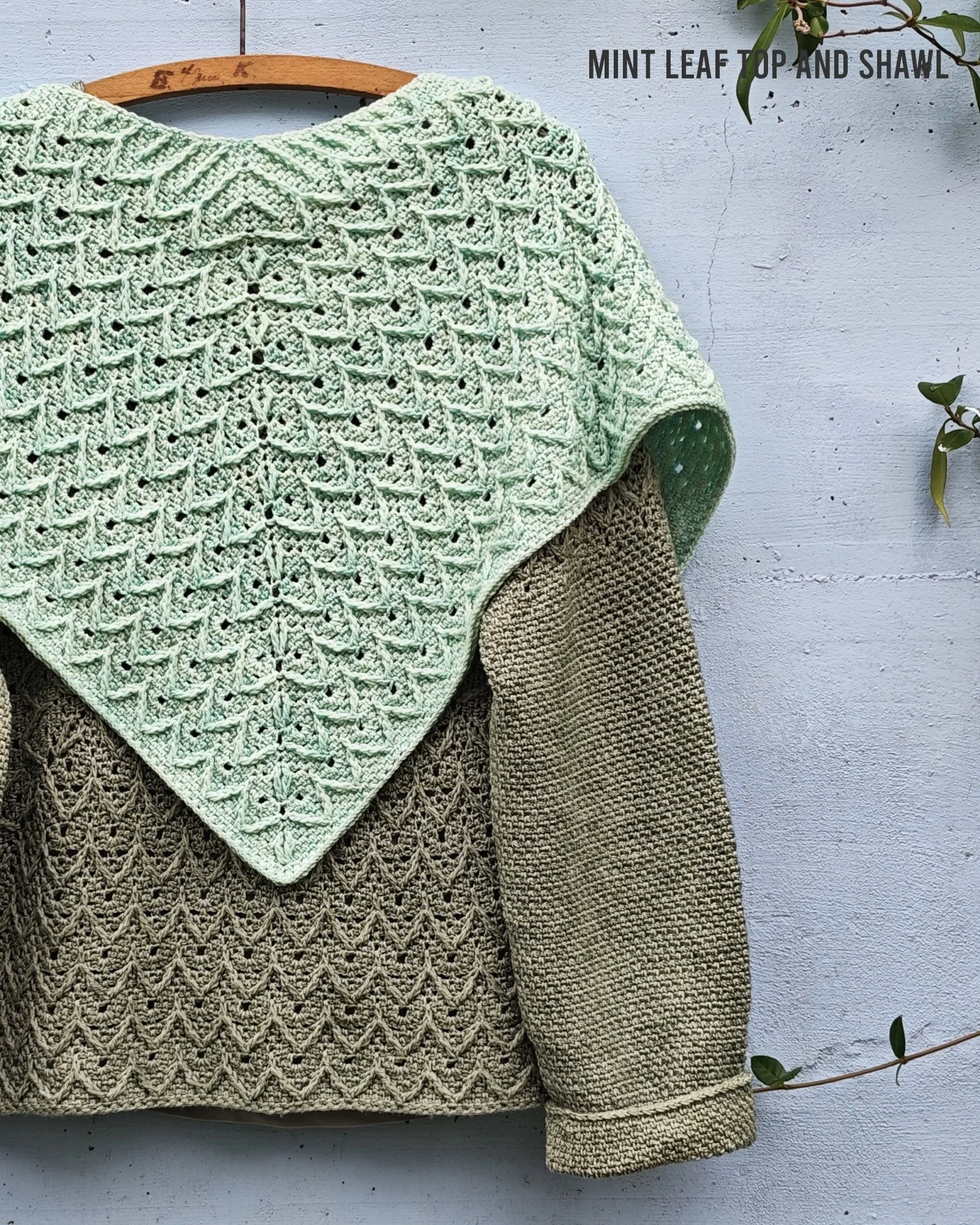
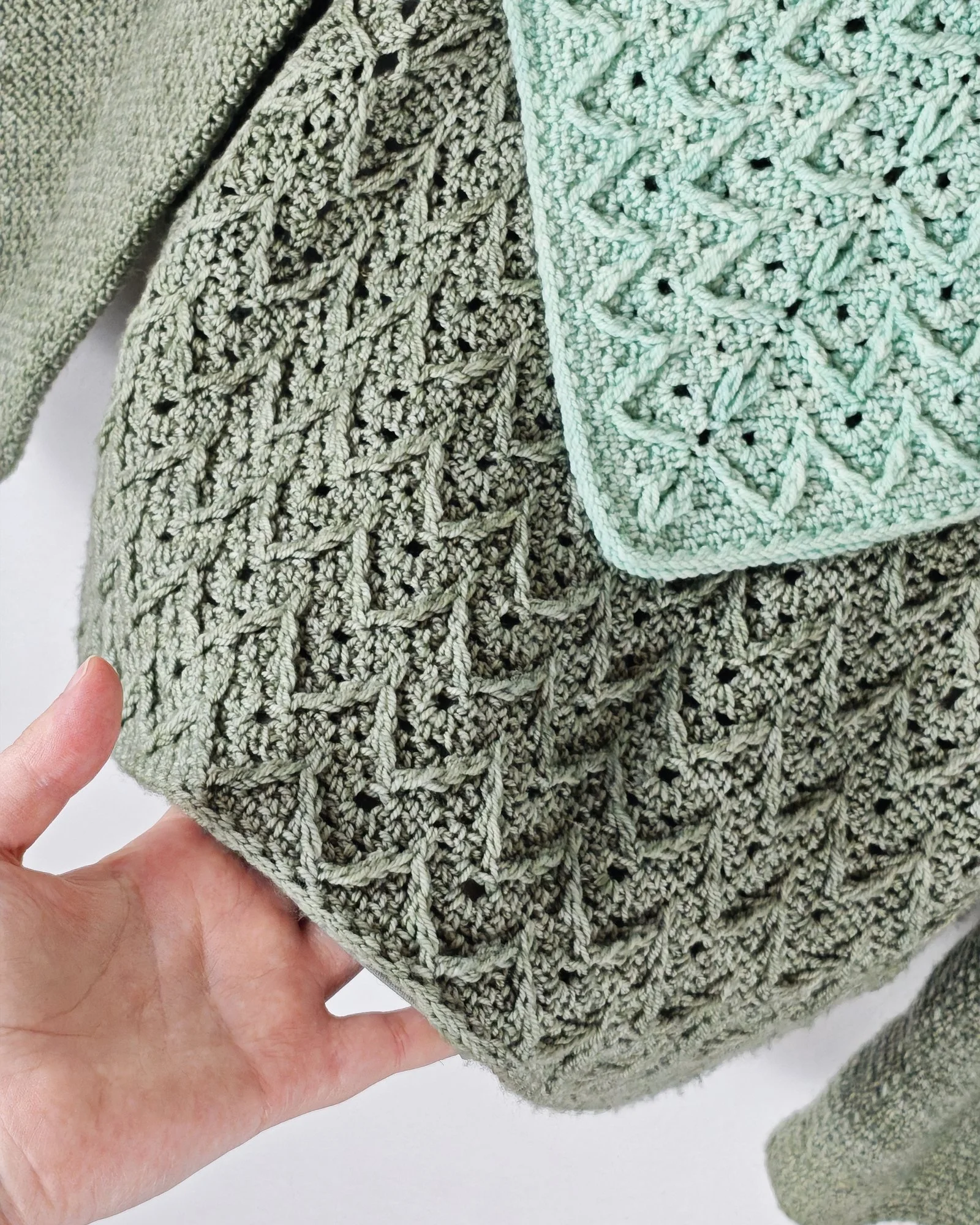
It looks very delicate, but it makes that perfect finishing touch. It almost looks like topstitching along the edge of a garment, doesn't it?
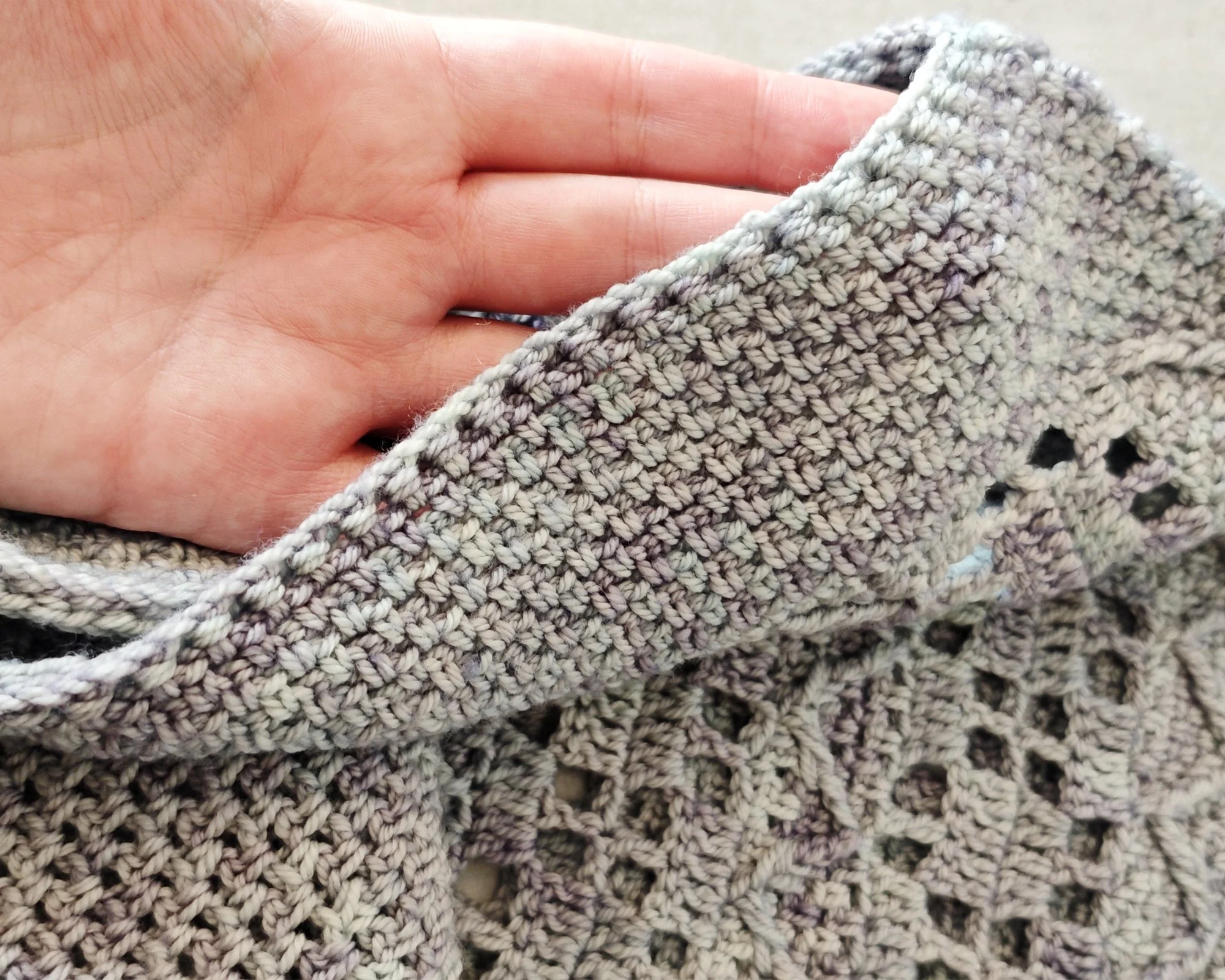
For Colorwork
And when this row is worked in a different color, it creates mesmerizing dashed lines. I love them so much!
I used the BPsc in my colorwork in different ways.
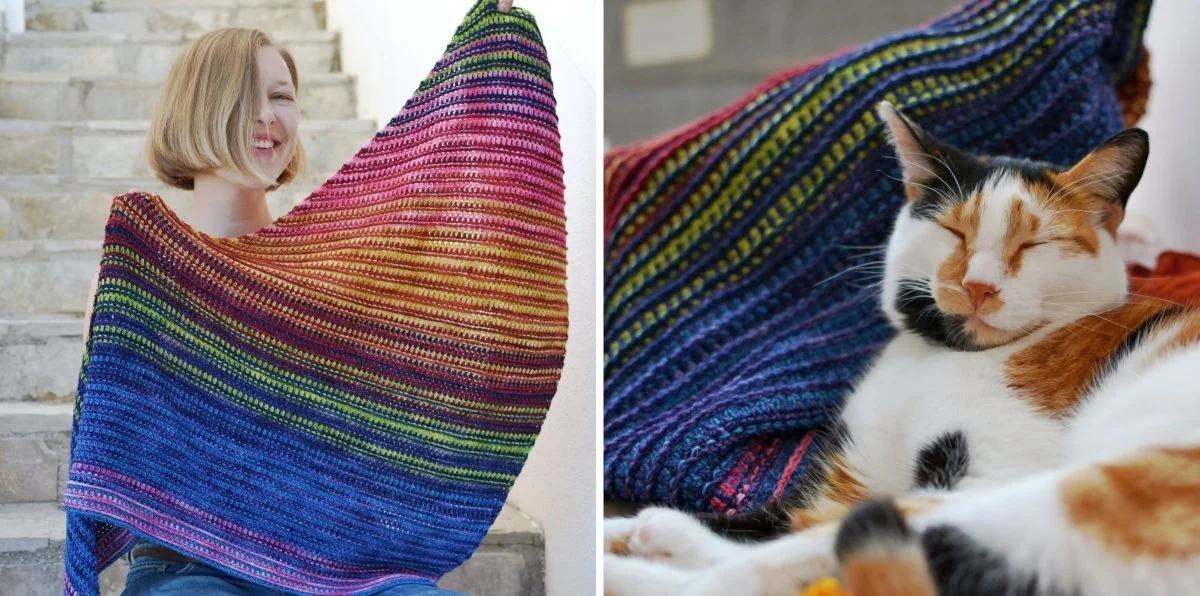
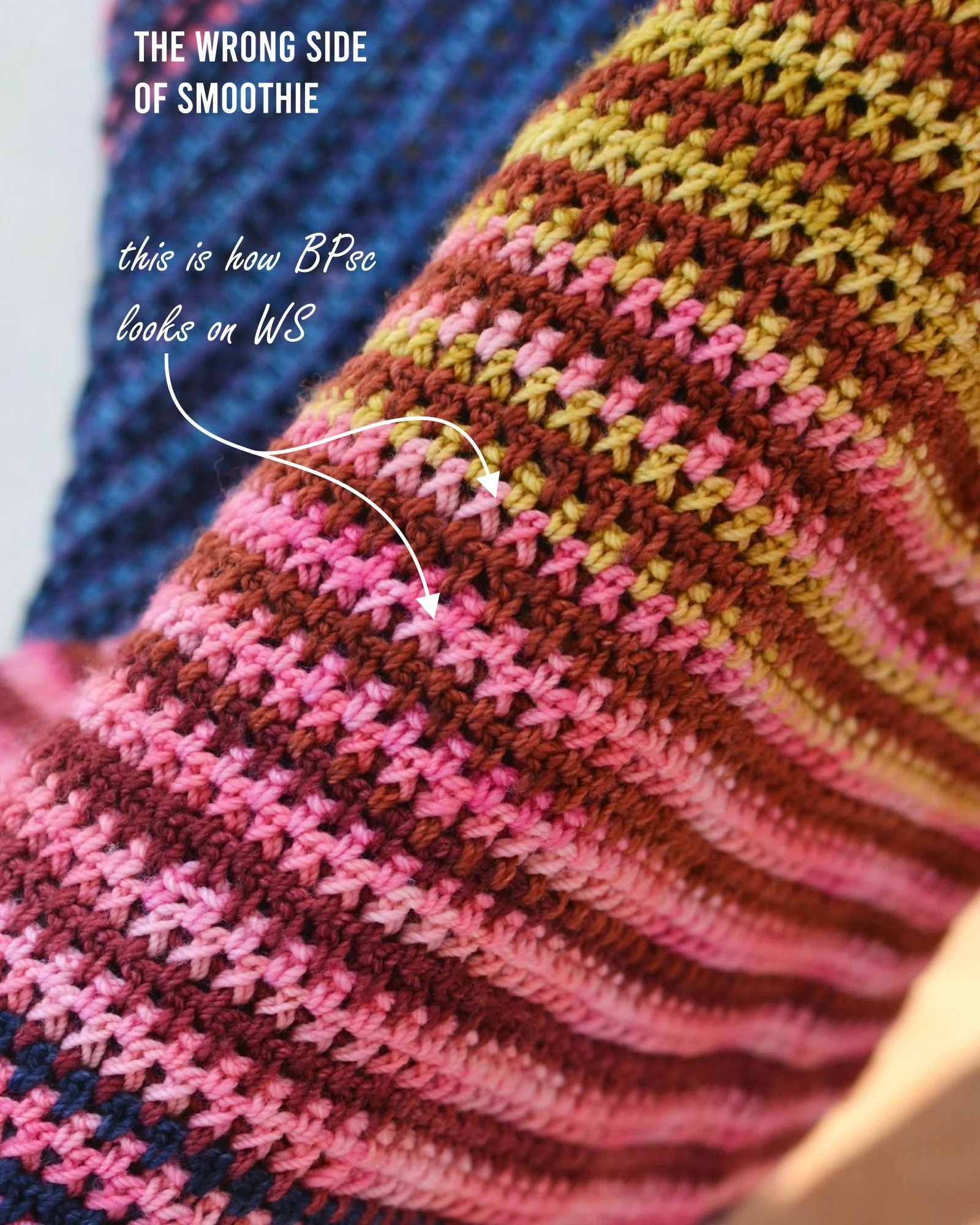
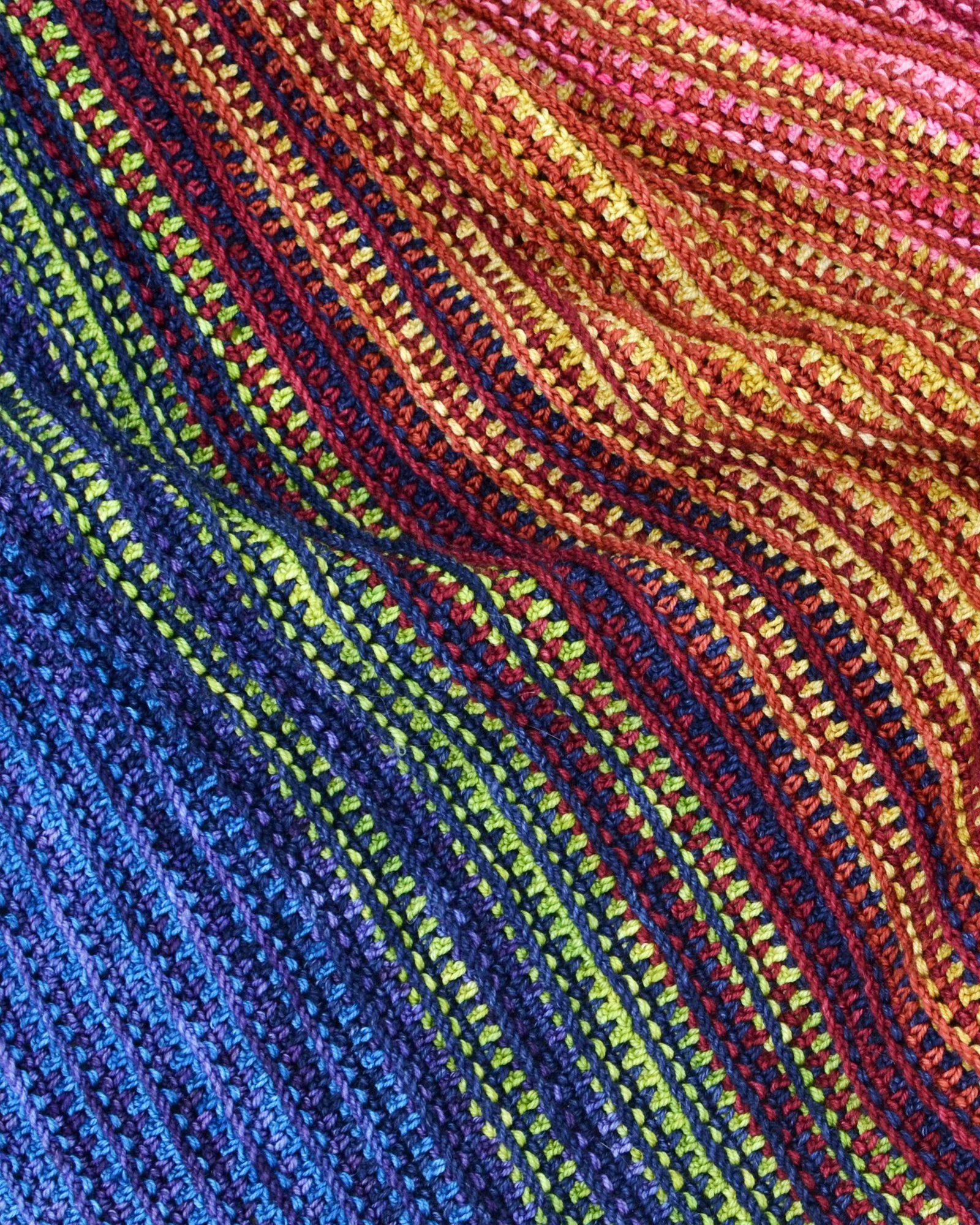
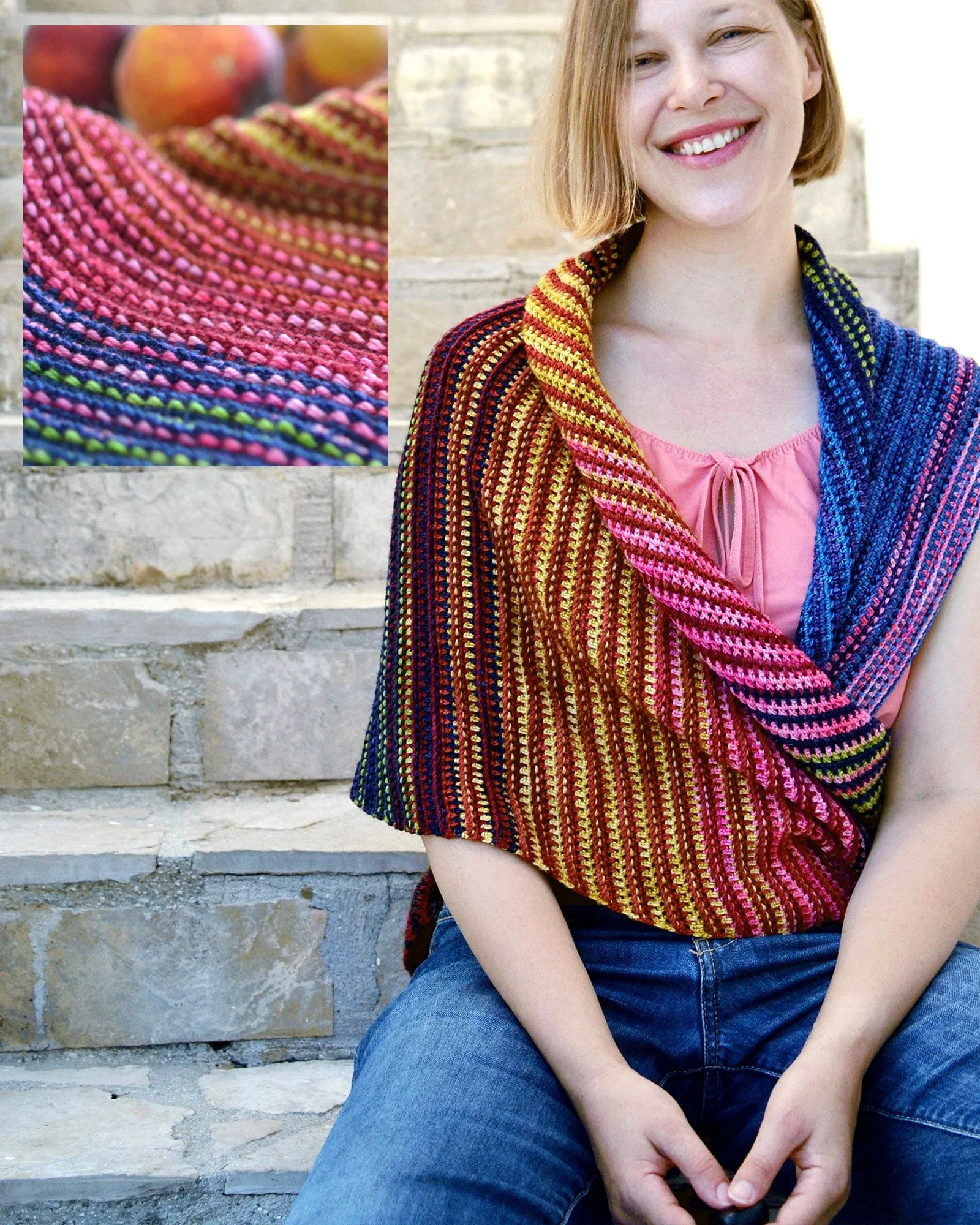
To mix various colors together and create softer color transition (like in the Smoothie shawl below).
P.S. If you ever plan to make a temperature project (or any other project that involves mixing lots of different colors), keep this idea in mind!
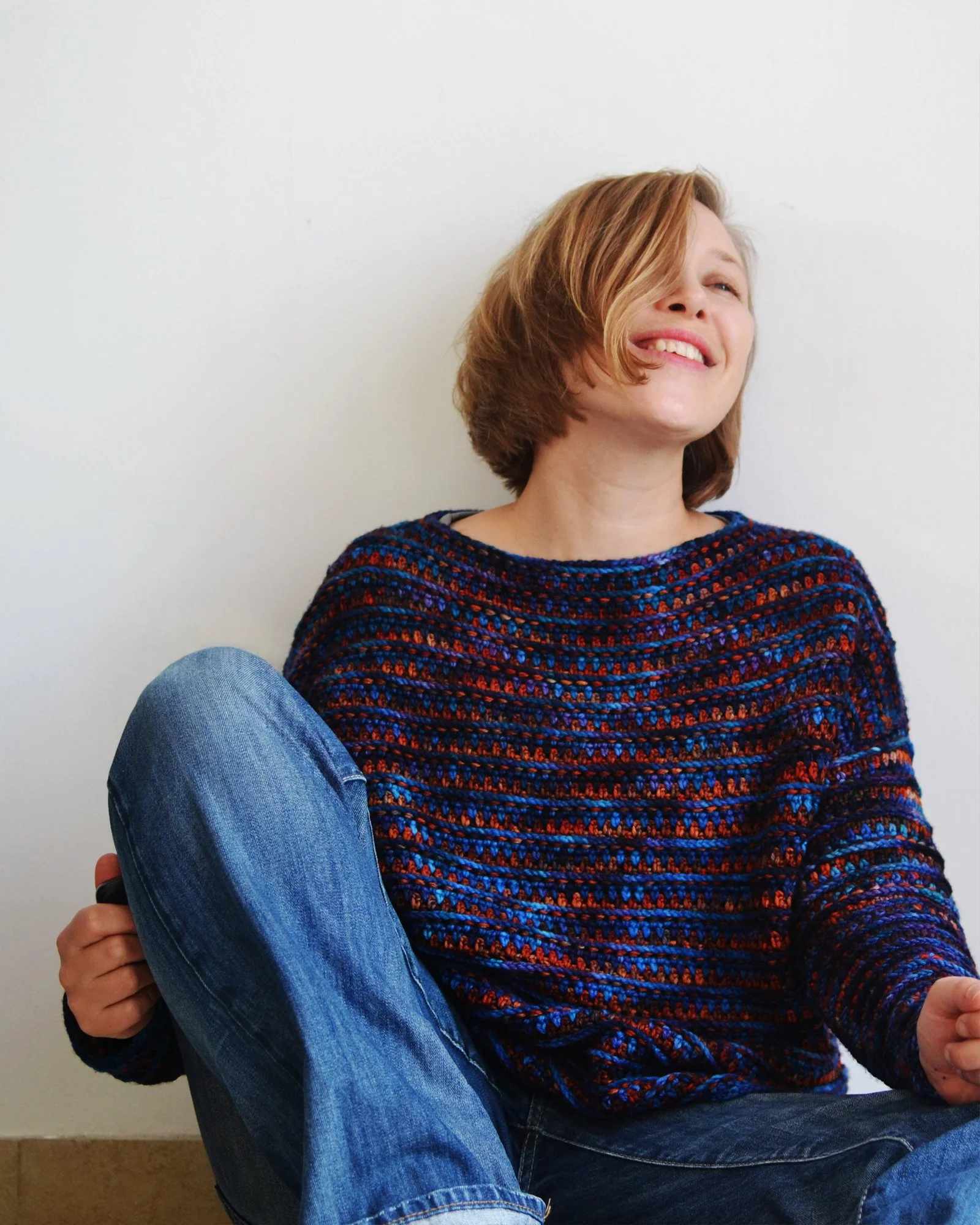
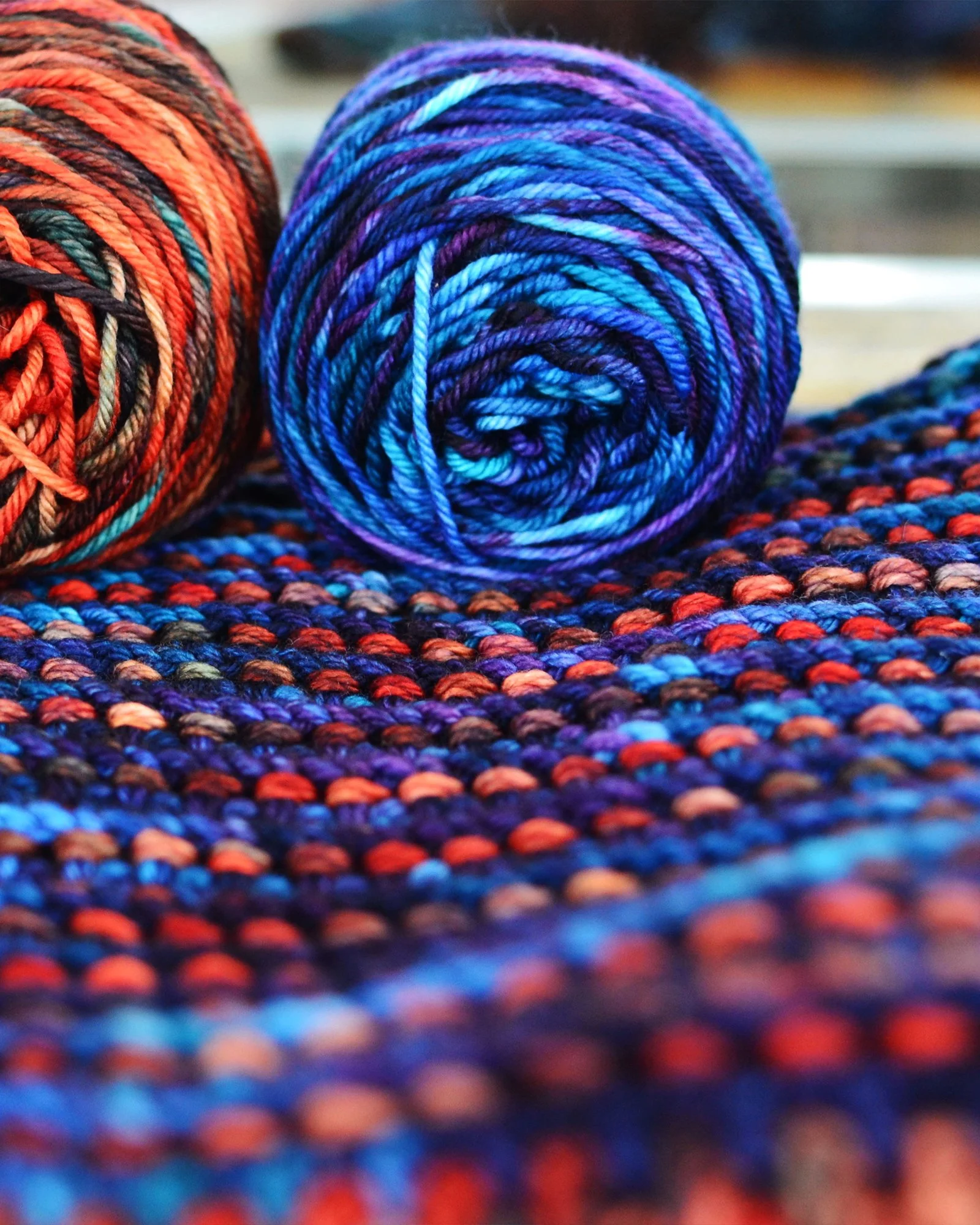
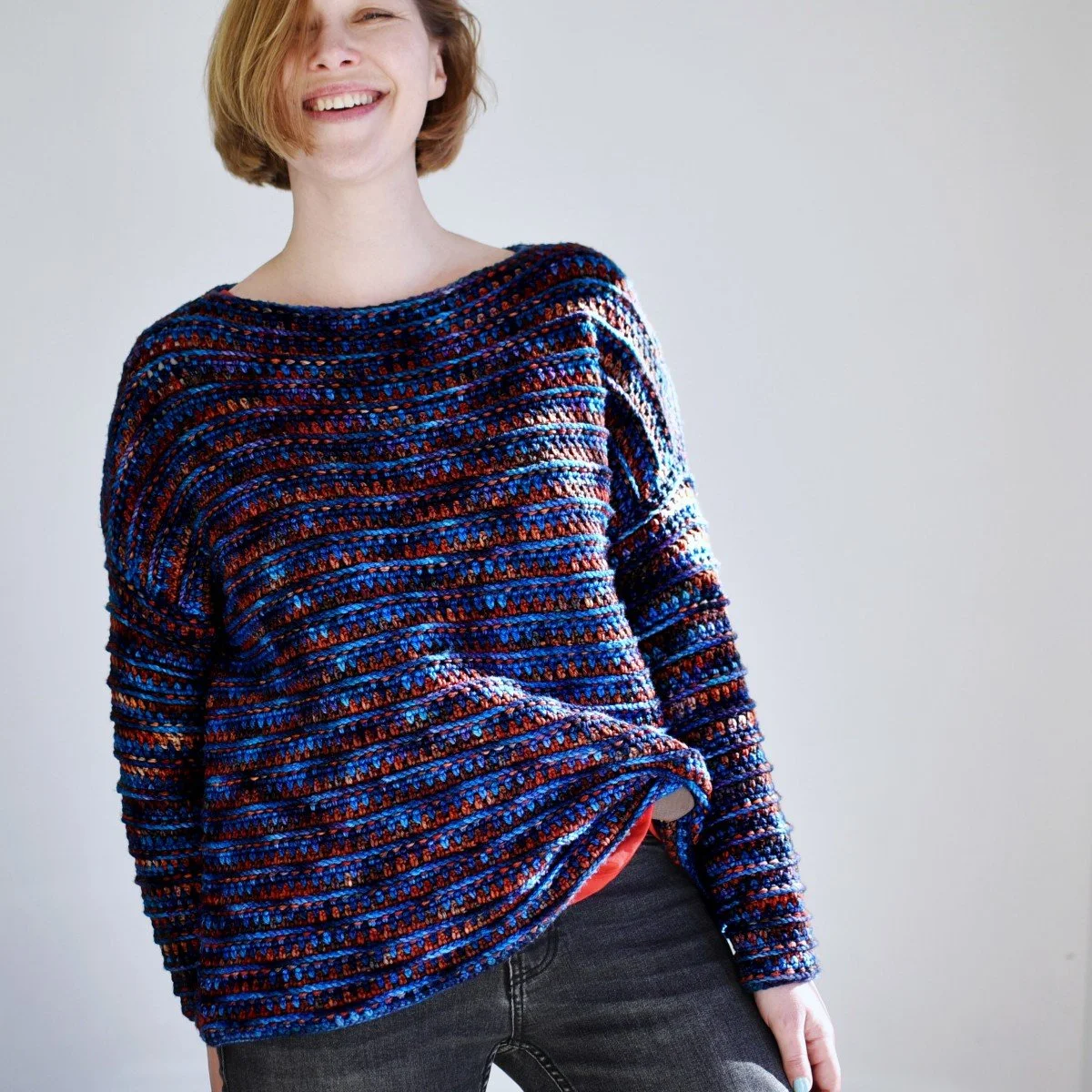
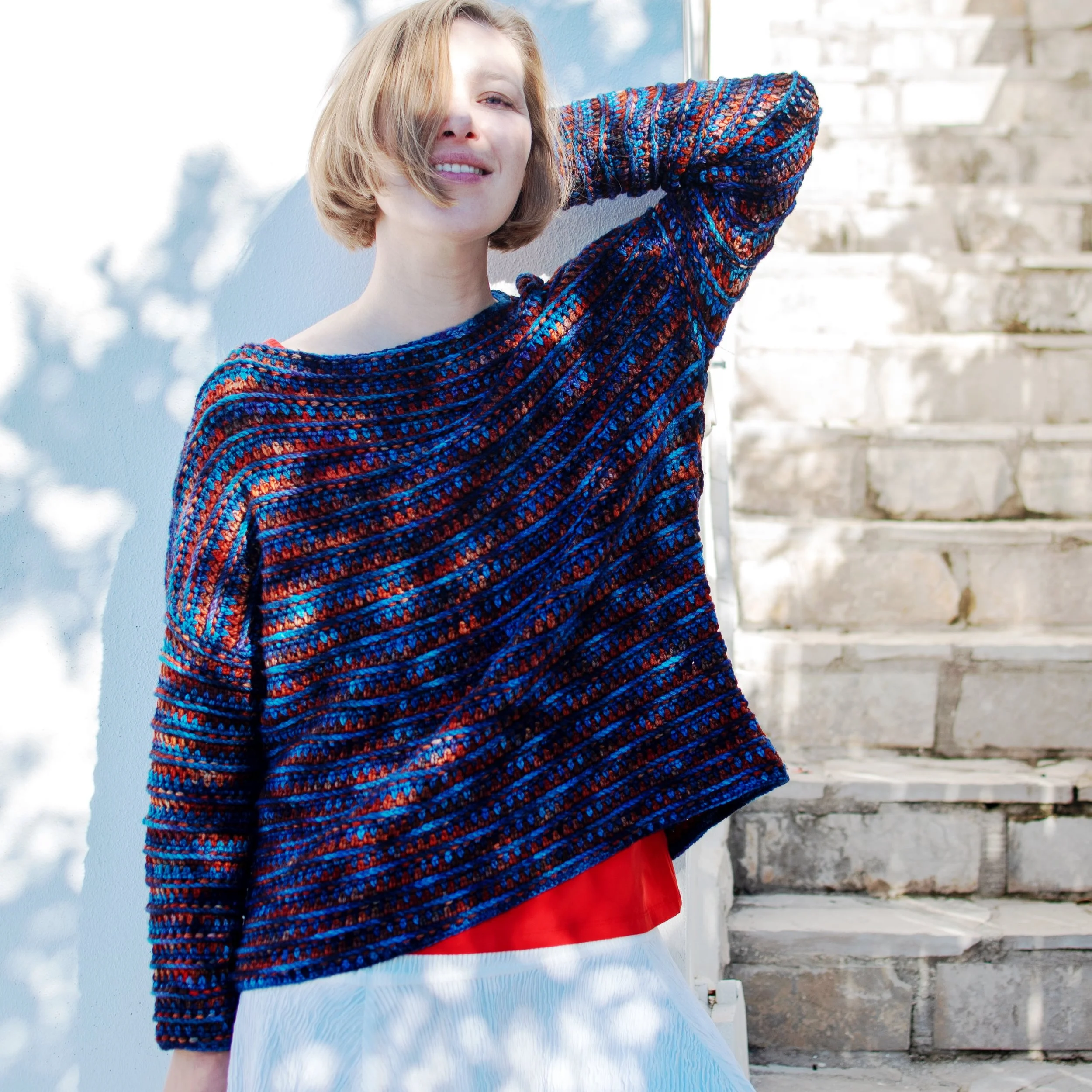
To mix complex multicolor yarns (like in the Kraynebo sweater below).
Both colorways of Malabrigo Rios (Whales Road and Marte) used in it are multicolor shades, and just look what a lovely effect this technique creates! This is my go-to solution for such variegated yarns. It always works!
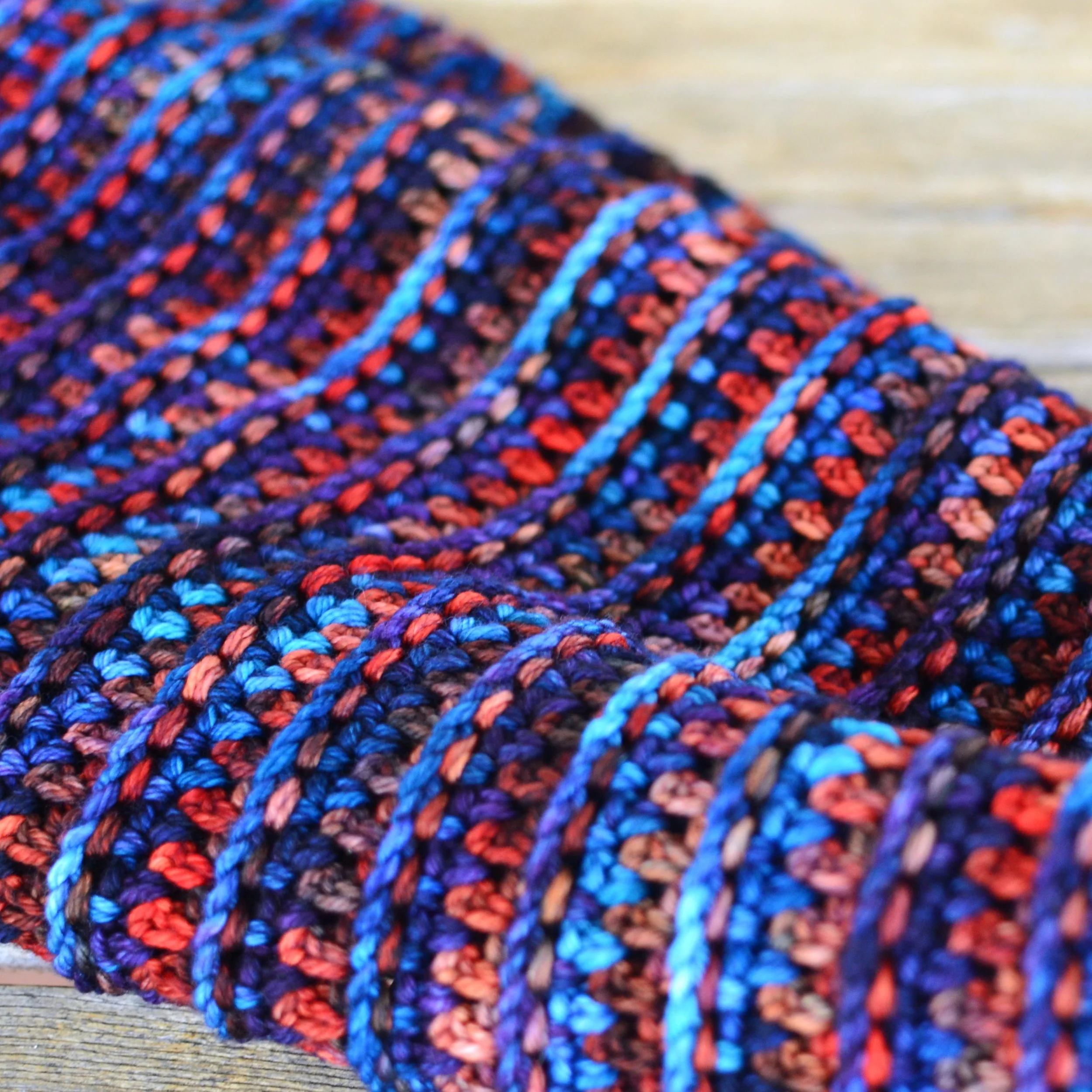
To add just a bit of interest and texture to a simple linen stitch. And it works both ways: with variegated yarn as the background, or as a colorwork row.
Linen Flowers
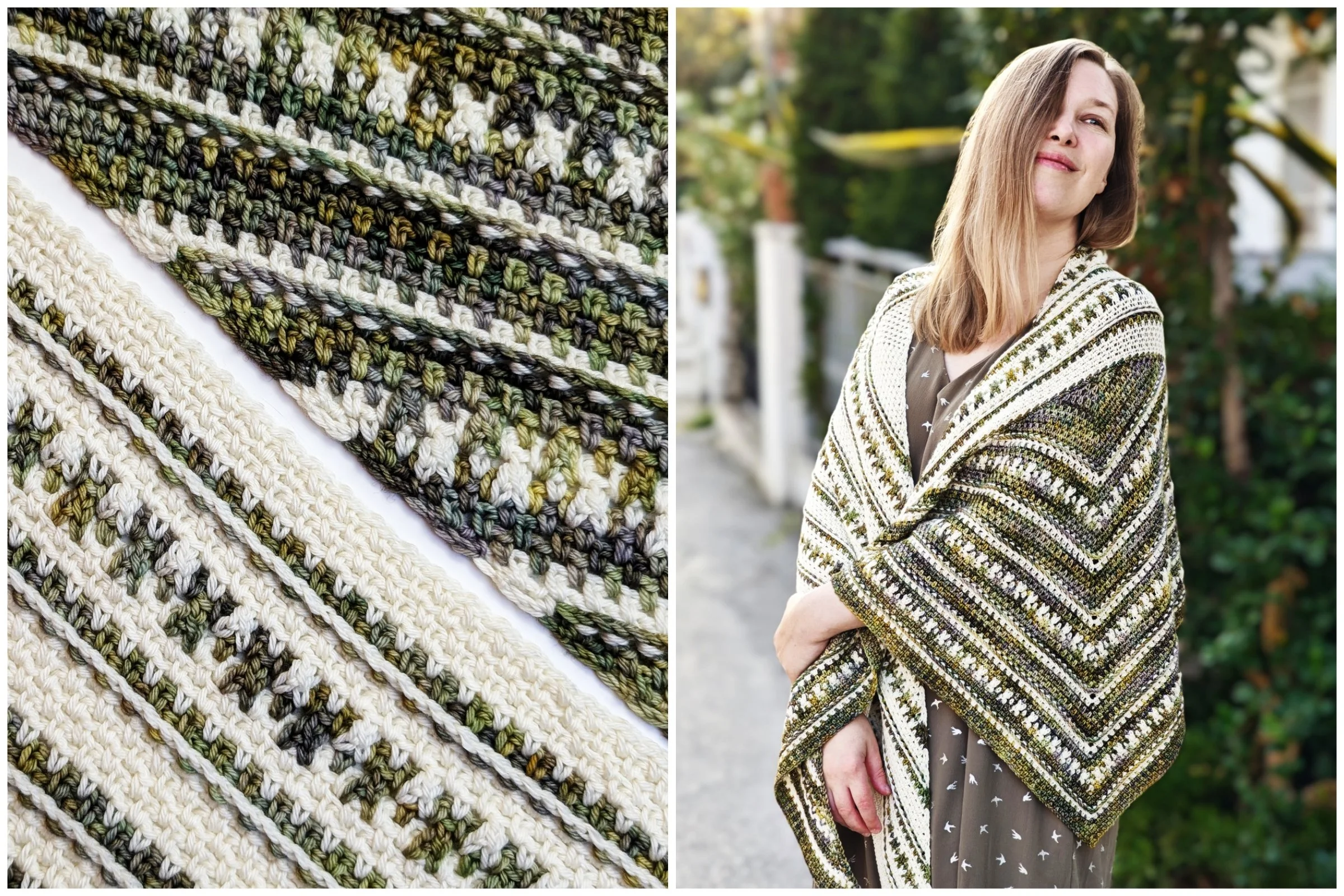
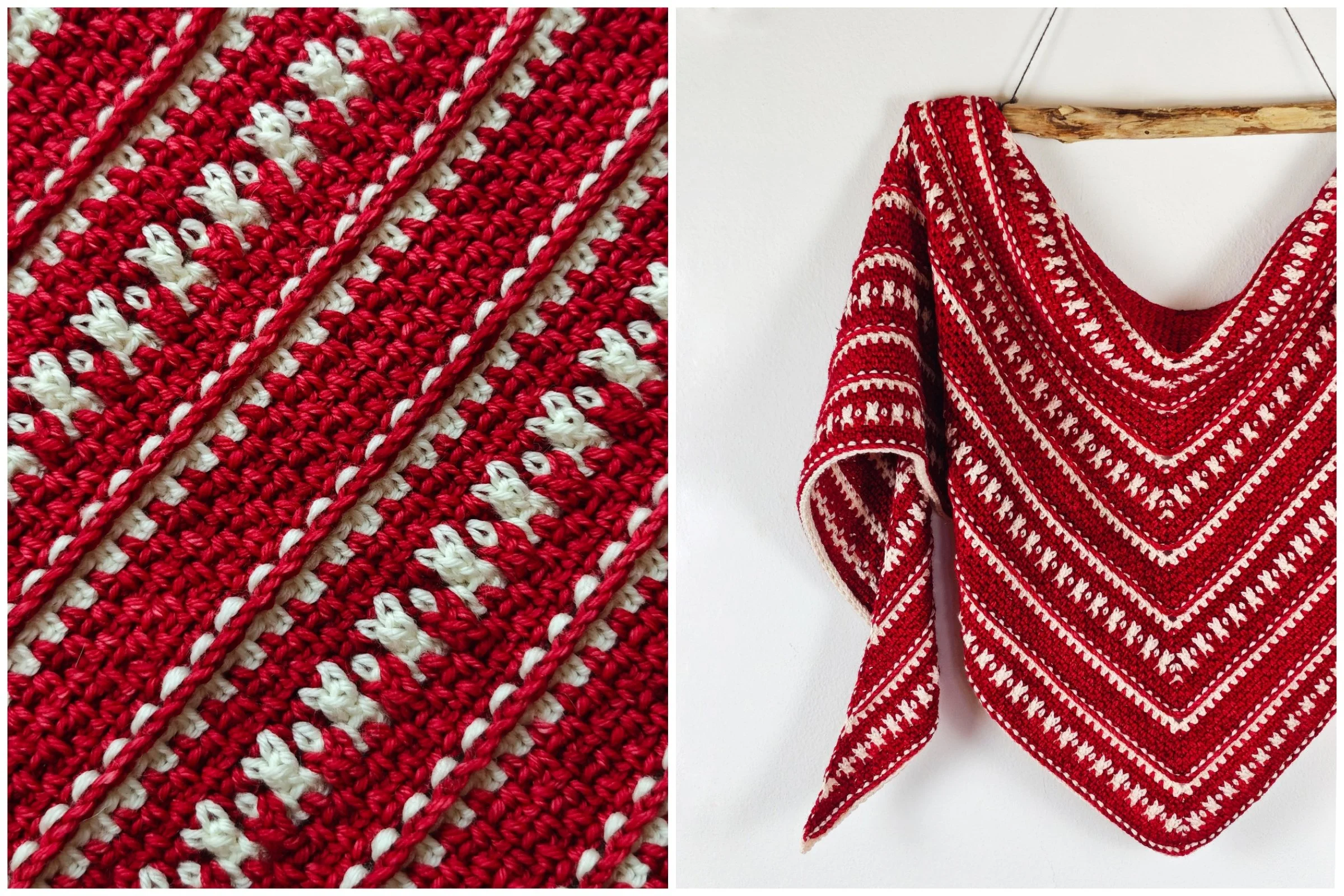
In my latest design, BPsc is used for all kinds of things:
for dashed-line colorwork
to add texture
as a divider between stitch patterns
and finally, as the edging.
All at once! :D
You can see me working
the edging for the Linen Flowers shawl in this Instagram reel (it’s a bit different: I simply worked this row twice to get a thicker edge)
and the stitch itself in this Instagram post.
I hope this was interesting and useful, and I’d like to talk about another stitch one day!
~ Lena
Other Linen Flowers reels on Instagram:
Joining both shawls into a wrap
Linen Flowers colorwork (close-up)
Green and white colorwork
How to: Linen Flowers colorwork (stitchwork)
How to: Switching colors in linen st based patterns
